
 效果预览
效果预览
 切换至版画销售渠道
 分享
分享 分享
分享
 详情
详情

 下载
下载
 相似作品
相似作品 X射线
X射线 幻灯片播放
幻灯片播放 统计数据
统计数据

 展开详情
展开详情
每份数字图像订单均包含
专业数字图像交付,品质保障
选择 OriginalUniqueArt.com,您获得的不仅仅是一张图像——您收到的是经过专业级增强、精雕细琢的数字艺术作品,并享有满意保证。以下是您的订单中自动包含的所有内容:

邮件快速送达
您的高分辨率数字图像文件将在下单后 72 小时内通过电子邮件发送给您 —— 即可立即使用。

AI 增强型数字文件
您的艺术品经过专业优化,结合先进的 AI 技术与人工修饰,确保呈现极致的细节、清晰度与色彩准确度。

终身免费重发服务
不小心删除了文件或找不到了?没关系——我们将随时为您免费重发。

无需进口费用,始终如一
即刻拥有您的艺术作品,无需支付任何关税、税费或运费——数字下载始终免税。

色彩精准保证
我们通过专业工具与色彩管理技术,确保您的数字图像尽可能真实地还原原作色彩。

100天满意保证
如果您对所购数字图像不满意,我们将在100天内为您进行修改或提供100%的全额退款——无需任何理由。

100% 退款保证
不满意?在收到数字文件后的100天内,您可以申请全额退款——无需任何理由。

批量订单优惠
购买 3 张图片可享 10% 折扣 - 购买 5 张可享 15% 折扣 - 购买 10+ 张可享 20% 折扣。非常适合创意项目、画廊和机构使用。
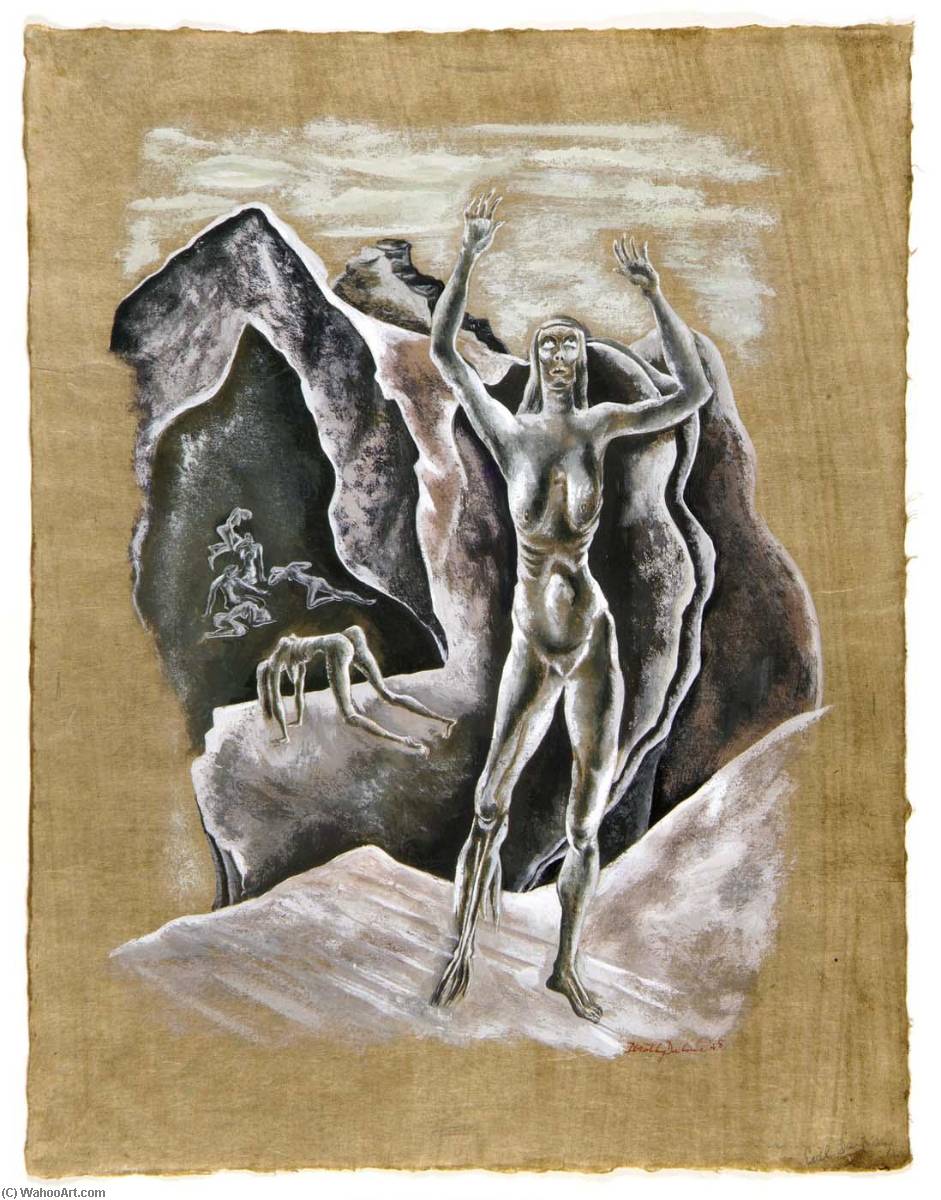
The painting "Evil" by Dorothy Dehner is a thought-provoking artwork that has sparked intense debate and curiosity among art enthusiasts. Created in 1948, this gouache painting measures 41 x 32 cm and is currently housed at the Smithsonian American Art Museum in the United States.
The painting "Evil" by Dorothy Dehner is a fascinating example of mid-20th-century American art, offering a glimpse into the artist's unique vision and creative process. As a handmade oil painting reproduction, it can be appreciated in a new light, allowing viewers to experience the intricate details and textures of the original artwork.
Understanding the Artist's Vision
Dorothy Dehner was an American artist known for her unique style, which blended elements of abstraction and surrealism. Her paintings often featured bold colors and distorted forms, inviting viewers to interpret their meanings. In "Evil", Dehner employs a vibrant color palette and abstract shapes to convey a sense of tension and unease. Key Elements of the Painting The painting features two main figures standing on a mountain, with their arms raised in a gesture that could be interpreted as either celebratory or ominous. The presence of a spider in the bottom left corner adds an air of mystery and foreboding to the scene. The use of gouache as a medium gives the painting a sense of texture and depth, drawing the viewer's eye into the intricate details of the composition.Interpreting the Meaning of "Evil"
The title "Evil" suggests that the painting is meant to evoke a sense of malevolence or darkness. However, Dehner's intention may have been more nuanced, inviting viewers to consider the complexities of human nature and the blurred lines between good and evil. As with many abstract artworks, the meaning of "Evil" is open to interpretation, leaving viewers to ponder its significance and symbolism.- View more artworks by Dorothy Dehner on OriginalUniqueArt.com
- Learn about the Smithsonian American Art Museum and its collection on Wikipedia
The painting "Evil" by Dorothy Dehner is a fascinating example of mid-20th-century American art, offering a glimpse into the artist's unique vision and creative process. As a handmade oil painting reproduction, it can be appreciated in a new light, allowing viewers to experience the intricate details and textures of the original artwork.
艺术家简介
Dorothy Dehner: Sculpting the Echoes of Experience
Dorothy Dehner (1901-1994) wasn’t a name that frequently echoed through the halls of 20th-century art history until relatively recently. Yet, beneath the surface of her prolific career—spanning sculpture, drawing, and printmaking—lies an artist deeply attuned to the complexities of human emotion and the enduring power of memory. Born in Cleveland, Ohio, into a family profoundly shaped by loss and resilience, Dehner’s life became a crucible for her artistic vision, forging a unique style that blended Surrealist intuition with Constructivist rigor and a profound connection to the natural world. Her work isn't easily categorized; it resists simple labels, instead offering a deeply personal dialogue between abstraction, symbolism, and the lived experience of a woman navigating both personal tragedy and the evolving landscape of modern art.Early Life and Influences: A Foundation Forged in Loss
Dehner’s childhood was marked by significant upheaval. The untimely deaths of her father and mother within a few years of each other, coupled with the subsequent care provided by her aunts, instilled in her a sensitivity to loss and a quiet determination to find meaning amidst hardship. This early experience profoundly shaped her artistic approach – a willingness to confront difficult emotions through abstract forms and symbolic imagery. She initially pursued an acting career, finding herself drawn to the theatrical world before realizing that her true calling lay in visual art. A brief sojourn in California exposed her to burgeoning modernism, including exposure to European avant-garde movements like Cubism and Surrealism. Crucially, her travels through Europe in 1925 proved transformative, igniting a passion for the work of artists like Jan Matulka, whose emphasis on emotional expression resonated deeply with Dehner’s own artistic sensibilities. The influence of Russian Constructivism, particularly its focus on geometric abstraction and the exploration of social themes, also became a significant touchstone in her development.The Bolton Landing Years: Totems of Memory
Following her marriage to sculptor David Smith in 1927, Dehner and Smith established a farm at Bolton Landing in upstate New York, a location that would become central to her artistic output for nearly two decades. This period witnessed the evolution of her most recognizable work – the “totem” sculptures. These monumental, often vertical structures, constructed from wax, bronze, wood, and steel, are not simply decorative objects; they’re complex visual narratives rooted in memory, personal experience, and a deep engagement with the natural world. The early totem sculptures, created during her marriage to Smith, frequently depicted fragmented figures—a poignant reflection of their troubled relationship. The use of layered wax slabs, often incorporating small metal pieces or pebbles, created tactile surfaces that invited close examination, inviting viewers to decipher the symbolic language embedded within each form. During this time, Dehner’s work began to incorporate elements of mythology and classical iconography, reflecting a desire to connect with universal themes of human experience.Post-Smith: A Return to Introspection and Line
The separation from David Smith in 1950 marked a significant turning point in Dehner’s artistic trajectory. Following this personal upheaval, she returned to New York City, where she continued to explore her artistic interests through drawing and printmaking. Her later work during the 1970s and 80s saw a shift towards smaller, more intimate pieces—often characterized by delicate lines and subtle color palettes. These drawings, frequently inspired by the landscape surrounding Bolton Landing, offered a quieter, more introspective reflection on themes of memory, loss, and the passage of time. The “Folk Song” series, for example, captures the essence of her surroundings with an understated elegance, utilizing ink and watercolor to evoke the textures and rhythms of nature.Legacy and Significance: A Quiet Voice in Modern Art
Dorothy Dehner’s artistic legacy has been steadily gaining recognition in recent decades. While she remained largely outside the mainstream art world during her lifetime, her work is now celebrated for its emotional depth, innovative use of materials, and profound engagement with themes of memory, loss, and the human condition. Her “totem” sculptures stand as powerful testaments to her ability to translate complex personal experiences into universal symbols. Dehner’s influence extends beyond her own creations; she fostered a supportive environment for emerging artists, including David Smith, and contributed significantly to the development of American abstract sculpture in the mid-20th century. Her work continues to resonate with viewers today, offering a quiet but compelling invitation to contemplate the echoes of experience that shape our lives.
dorothy dehner
1901 - 1994
基本信息
- Artistic Movement Or Style: Abstract Expressionism
- Artists Or Movements Influenced By This Artist:
- Constructivism
- European Modern Art
- Artists Who Influenced This Artist:
- Graham
- Matulka
- Nicolaides
- Date Of Birth: 1901-12-23
- Date Of Death: 1994
- Full Name: Dorothy Dehner
- Nationality: American
- Notable Artworks:
- The People in the Story
- Evil
- Folk Song
- Place Of Birth: Cleveland, Ohio