
 实景预览
实景预览
 发送
发送 分享
分享
 详情
详情 指南
指南

 下载图片
下载图片
 相似作品
相似作品 X射线
X射线 幻灯片播放
幻灯片播放 统计数据
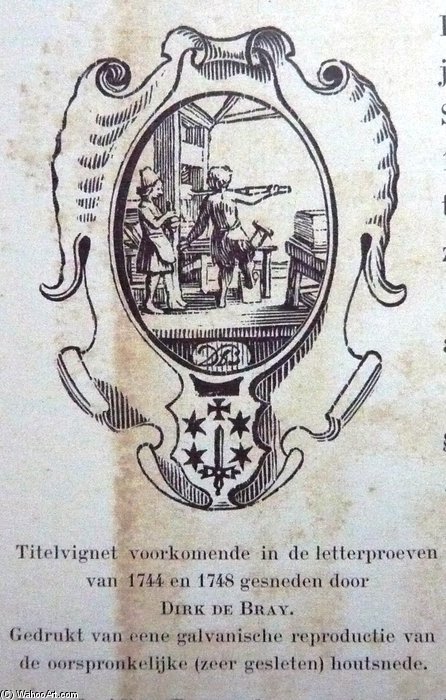
统计数据Illustration From Haarlem Printing
 阅读全文
阅读全文
手工油画复制品
由我们的艺术家按需定制,为您提供您所选尺寸及画框的布面手工油画。 ( 切换至版画销售渠道 切换至数字图像销售渠道)




































您可以从与原作比例一致的预设尺寸中进行选择。

您可以输入自定义尺寸,以适配特定的画框或空间。如果所选尺寸与原图比例不符,我们将通过裁剪作品或添加手绘元素来扩展画面。数字样稿将在制作开始前发送给您确认。
请注意,屏幕预览无法准确反映实际的裁剪或扩展效果,只有样稿才能真实呈现最终的构图。
虽然我们提供定制尺寸服务,但为了保留原作比例,建议您从预设列表中选择尺寸。
下单后,OriginalUniqueArt.com 团队将通过电子邮件联系客户获取具体要求,并提供效果预览图


 玻璃选项仅适用于110厘米以下的尺寸。

Illustration From Haarlem Printing
复制品材质
复刻品尺寸说明
-


总计金额
$ 325
艺术家简介
A Legacy of Floral Brilliance and Artistic Family Ties
Dirck de Bray (1635 – 1694) stands as a prominent figure within the Dutch Golden Age, celebrated primarily for his masterful depictions of flowers—a genre he elevated to unparalleled levels of detail and beauty. Yet, his artistic journey extended far beyond botanical illustration; he was a multifaceted talent deeply rooted in a distinguished artistic lineage and marked by a contemplative life dedicated to monastic pursuits. Born into Haarlem’s vibrant artistic milieu, Dirck’s very existence was intertwined with the pulse of the Netherlands' most creative era.
His father, Salomon de Bray, was himself a celebrated painter and architect—a connection that profoundly shaped his formative years. This familial influence instilled in him an appreciation for artistic excellence and fostered a collaborative spirit within the Bray family. His brother Jan became a successful painter, while his mother, Anna Westerbaen, provided an intellectual richness to his upbringing as the sister of the renowned poet Jan Westerbaer. These connections ensured that Dirck was immersed in a world where art, poetry, and architecture breathed as one.
Mastery of Form and the Sculptor's Touch
De Bray's artistic training began under Salomon’s tutelage, honing skills in both painting and sculpture. This dual mastery allowed him to approach the canvas with a unique understanding of three-dimensional form. A remarkable testament to his skill was his carving of a wooden bust of his father's head, an achievement so meticulously documented by Houbraken that it was utilized for Salomon’s engraving in the famous Schouburg. This ability to manipulate medium—from the delicate grain of wood to the fluid transparency of oil—demonstrated a keen understanding of texture and printmaking techniques alongside his artistic prowess.
His artistic style is characterized by meticulous observation and painstaking execution, traits most evident in his stunning flower paintings. Unlike many contemporaries who favored looser, more impressionistic brushstrokes, De Bray achieved a profound realism through the layering of thin glazes of color. This technique allowed him to capture the subtle nuances of petal textures, the dewy sheen on a leaf, and the complex light play within floral arrangements with breathtaking accuracy. His compositions often incorporate dramatic lighting that elevates his still lifes from mere botanical studies to profound meditations on life.
Symbolism, Spirituality, and the Vanitas Tradition
Beyond the surface beauty of his blooms, De Bray’s work often whispered of deeper, more somber truths. In masterpieces such as Still Life with a Bouquet in the Making (1674), he utilized the vibrant colors of tulips, daffodils, and primroses to create a sense of springtime vitality, yet he frequently infused these scenes with elements of Vanitas—the reflection on mortality. A solitary butterfly or a wilting petal served as a poignant reminder of the ephemeral nature of existence, a theme that resonated deeply with his own spiritual journey.
This contemplative nature was further deepened by his later life; Dirck eventually became a monk in the Benedictine monastery at Gaesdonck near Goch. This transition from the vibrant studios of Haarlem to the quiet, disciplined life of a monk imbued his later perspective with a certain quiet dignity and spiritual depth. Whether painting a lush basket of flowers on a marble ledge or capturing the symbolic weight of religious icons, De Bray’s work remains a testament to a soul that found the divine in the minute details of the natural world.

Dirck de Bray
1635 - 1694 , Netherlands
快速概览
- Artistic Movement Or Style: Dutch Golden Age
- Artists Or Movements Influenced By This Artist: ['Hals']
- Artists Who Influenced This Artist: ['Salomon de Bray']
- Date Of Birth: 1635
- Full Name: Dirck de Bray
- Nationality: Dutch
- Notable Artworks:
- Still Life with a Bouquet in the Making
- Portrait Of Salomon De Bray
- A still life of a basket of flowers on a large marble ledge
- Place Of Birth: Haarlem, Netherlands
