

 实景预览
实景预览
 发送
发送 分享
分享
 详情
详情 指南
指南

 下载图片
下载图片
 相似作品
相似作品 X射线
X射线 幻灯片播放
幻灯片播放 统计数据
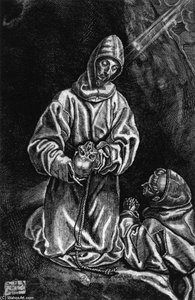
统计数据Sts Peter and Paul


 阅读全文
阅读全文
艺术微喷/版画
博物馆级艺术微喷或帆布版画,制作高效,并提供多种饰面选择。 ( 订购此收藏品的纯手工复刻画作 切换至数字图像销售渠道)




P118B ¥10

P118H ¥10

P118W ¥10

P438Z ¥10

P508JH ¥12

P508YH ¥12

P805H ¥10

P805Z ¥10

P919BZ ¥10

P919G ¥10

P919XJ ¥10

P959ZH ¥10

P968JZ ¥12

W106C ¥8

W218G ¥10

W218JH ¥8

W218Y ¥10

W307PJ ¥10

W316G ¥10

W316PJ ¥8

W316Y ¥10

W398PJ ¥8

W4111J ¥10

W500HY ¥15

W500JH ¥15

W692G ¥12

W849H ¥8

W940BG ¥15

W953PJ ¥8




您可以从与原作比例一致的预设尺寸中进行选择。

请输入您所需的宽度和高度,以适配您的画框或墙面。由于印刷品只能进行裁剪,无法超出原图尺寸,因此若比例不一致,画面的一部分将会被裁切。在正式印刷之前,我们会为您发送一份数字效果图供您确认。本页面显示的图片并非最终裁剪后的效果——只有效果图才能展示真实的裁剪情况。


 玻璃选项仅适用于110厘米以下的尺寸。

Sts Peter and Paul
艺术微喷/版画
复刻品尺寸说明
-


总计金额
¥ 538
艺术家简介
The Baroque Echo of El Greco’s Vision
Diego de Astor stands as a profound bridge between the ethereal mysticism of the late Renaissance and the dramatic intensity of the Spanish Baroque. Born in Mechelen, Netherlands, around 1587, Astor’s artistic identity was forged in the crucible of one of history's most transformative eras. While his origins trace back to the Low Countries, his soul became inextricably linked to the Spanish Golden Age through his formative years in Toledo. It was here that he entered the studio of the legendary Domenico Theotocopuli, known universally as El Greco. This apprenticeship was more than mere technical training; it was an immersion into a visual language of elongated forms, spiritual tension, and a divine use of light that would become the heartbeat of Astor’s entire body of work.
As a master engraver, Astor possessed the rare ability to translate the fluid, painterly strokes of El Greco onto the rigid medium of copper plates. His technique was characterized by a meticulous attention to detail and a command over line that allowed him to capture the very essence of his mentor's vision. He did not merely replicate; he interpreted. Through the delicate interplay of shadow and light—the chiaroscuro that defines the Baroque period—Astor breathed new life into religious iconography, making the celestial palpable to a wider audience. His engravings served as vital conduits for the dissemination of sacred imagery, allowing the profound emotional depth of Toledo's masterpieces to travel far beyond the walls of Spanish cathedrals.
Technical Mastery and the Art of the Line
The brilliance of Astor’s work lies in his ability to navigate the complexities of religious narrative through the precision of engraving. His development as an artist saw him move from a student following instructions to a sophisticated creator capable of handling diverse subject matter, ranging from the deeply devotional to the highly functional. One of his most remarkable technical achievements was his contribution to the field of communication; he produced a series of plates for Juan Pablo Bonet’s groundbreaking manual on the alphabet for deaf education, demonstrating a versatility that extended far beyond the pulpit.
His professional prestige was further cemented by significant official appointments and high-profile commissions. The breadth of his influence can be seen in several key areas of his career:
- Official Engraver to the Mint: His role at the Mint of Segovia required an unparalleled level of precision, as he was tasked with the delicate work of engraving royal seals and official currency.
- Patronage of the Elite: Astor’s talent earned him the respect of powerful figures such as Cardinal Alessandro Farnese, placing his work within the highest circles of the papal court.
- Historical Documentation: His plates contributed to significant historical texts, such as Colmenares' Historia de Segovia, ensuring his artistic legacy was woven into the very fabric of Spanish history.
A Legacy of Devotion and Detail
To look upon an Astor engraving, such as the celebrated 1608 depiction of Sts Peter and Paul, is to witness a masterclass in Baroque composition. In these works, the viewer is met with dynamic figures that seem to emerge from the darkness, draped in heavy, textured fabrics that Astor rendered with uncanny realism. The emotional weight of the subjects—the gravity of their faith and the intensity of their martyrdom—is conveyed through subtle facial expressions and a masterful use of contrast. This ability to evoke empathy and awe is what distinguishes Astor as more than just a technician; he was a storyteller of the divine.
Ultimately, the historical significance of Diego de Astor lies in his role as a preserver and propagator of the Spanish Baroque spirit. While the original paintings of El Greco remained anchored in specific sacred spaces, Astor’s prints traveled across borders, influencing the aesthetic sensibilities of Europe. He captured the fleeting light of a transformative era and etched it into permanence, leaving behind a legacy that continues to resonate with anyone moved by the intersection of technical perfection and spiritual fervor.
Diego De Astor
1587 - 1650 , Netherlands
快速概览
- Full Name: Diego de Astor
- Nationality: Dutch
- Date Of Birth: 1587
- Date Of Death: 1650
- Place Of Birth: Mechelen, Netherlands
- Notable Artworks:
- Sts Peter and Paul
- St Francis and Brother Leo Meditating on Death
- Artistic Movement Or Style: Baroque
- Artists Who Influenced This Artist: ['El Greco']
- Artists Or Movements Influenced By This Artist: ['Nuevo tango']
相关文章

保罗·克利25幅杰作:色彩与形式的艺术之旅 | OriginalUniqueArt
探索保罗·克利25幅杰作,领略抽象艺术的魅力!深入了解克利作品背后的故事、色彩构成与艺术灵感。OriginalUniqueArt.com提供高清油画复制品,为您的家居装饰增添艺术气息。立即在线探索完整系列!

About Us
Discover our story! We bring world-class art into your life through expert curation, personalized creations, and free previews. Trusted by individuals and businesses since 2000.

戈雅大师25幅杰作:西班牙灵魂的艺术之旅| OriginalUniqueArt
探索戈雅大师的25幅杰作!深入了解西班牙绘画巨匠Francisco Goya的艺术世界,从洛可可到浪漫主义风格,感受黑加仑时代的情感力量。OriginalUniqueArt.com提供高品质油画复制品和家居装饰灵感。立即在线发现所有名画!

Peter De Wint: A Master of British Landscape & Quiet Pastoral Beauty
Discover the serene landscapes of Peter De Wint (1784-1849), a master of British Romanticism. Explore his life, technique & investment potential with expert insights from OriginalUniqueArt.

保罗·塞尚:25幅大师杰作,重塑现代艺术与家居美学 | OriginalUniqueArt
探索保罗·塞尚25幅经典杰作!深入了解后印象派大师的艺术生涯、独特技法与色彩运用。OriginalUniqueArt提供高清油画复制品,为您的家居带来博物馆级艺术体验。立即发现更多名画,点亮生活空间!