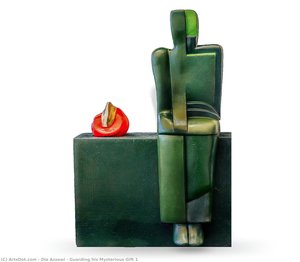
效果预览
效果预览
 购买手绘画作
 分享
分享 分享
分享
 详情
详情

 下载
下载
 相似作品
相似作品 X射线
X射线 幻灯片播放
幻灯片播放Fishermen
 Oil On Canvas
- WallArt
- Modernist abstraction
 1963
1963 65.0 x 45.0 cm
 Ibrahimi Collection
 展开详情
展开详情




P118B $10

P118H $10

P118W $10

P438Z $10

P508JH $12

P508YH $12

P805H $10

P805Z $10

P919BZ $10

P919G $10

P919XJ $10

P959ZH $10

P968JZ $12

W106C $8

W218G $10

W218JH $8

W218Y $10

W307PJ $10

W316G $10

W316PJ $8

W316Y $10

W398PJ $8

W4111J $10

W500HY $15

W500JH $15

W692G $12

W849H $8

W940BG $15

W953PJ $8




从与原作比例一致的预设尺寸中进行选择。

您可以输入自定义尺寸,以适配特定的画框或空间。如果您选择的尺寸与原图比例不符,我们将对作品进行裁剪,或通过镜像填充/纯色填充边缘的方式来扩展图像。在开始制作之前,我们会向您发送一份数字效果图供您确认。
请注意,屏幕上的预览并不能反映实际的裁剪或扩展效果。只有效果图才能准确展示最终的构图。
虽然我们提供定制尺寸,但为了保持原图比例,我们建议您从预设列表中选择尺寸。


 玻璃选项仅适用于110厘米以下的尺寸。

Fishermen
艺术微喷/版画
复制品尺寸
-


最终总价
$ 80
藏品详情
A Tapestry of Struggle and Sustenance
Dia al-Azzawi’s Fishermen, painted in 1963, is far more than a mere depiction of men at work; it is a profound meditation on human resilience set against the backdrop of Mesopotamian life. The painting immediately draws the viewer into a world rendered through bold, angular forms and an intensely warm palette. One senses not just the physical act of casting a net, but the weight of history and the enduring spirit of community. The composition itself guides the eye across three figures arranged in a dynamic triangle, their forms simplified to essential planes of color. This abstraction allows al-Azzawi to bypass mere realism, inviting us instead into an emotional landscape where struggle and livelihood are inextricably linked.Mastery of Modernist Abstraction
Technically, Fishermen showcases al-Azzawi’s command over modernist principles. The artist eschews polished detail for the raw energy found in visible brushstrokes. The paint application is tactile, giving the canvas a rich, uneven texture that speaks to the labor of creation itself. Notice how strong, angular lines define the figures, suggesting fragmentation—a visual echo perhaps of the turbulent times surrounding its creation. Depth is deliberately flattened; the forms exist on a single, charged plane. This choice forces the viewer to confront the painting’s structure and emotional weight rather than getting lost in illusory space. The use of geometric shapes reduces the human figure to its most elemental components, making the universal—the fisherman, the worker—speak louder than any specific portrait could.The Language of Earth Tones and Symbolism
The color palette is crucial to the painting’s emotional resonance. Dominated by deep reds, burnt oranges, and rich browns, these earth tones ground the piece in a sense of primal connection to the land. These warm hues evoke both the heat of the sun beating down on the riverbank and the enduring warmth of human camaraderie. The fishing net, central to the foreground, acts as a potent symbol—it represents not only sustenance but also the delicate, necessary structure that supports life. Al-Azzawi layers symbolism over literal subject matter; the angularity might suggest hardship or the constant tension of survival, while the overall glow hints at an unquenchable hope for renewal.An Echo of Iraqi Soul
To understand this work is to appreciate its context. Born in Baghdad, Dia al-Azzawi’s art is deeply rooted in the cultural memory of Iraq and Mesopotamia. His vision absorbs the echoes of ancient civilizations while speaking with the urgency of a modern artist navigating profound change. Fishermen captures that tension: the deep respect for enduring tradition juxtaposed against the sharp, fragmented energy of contemporary existence. For collectors or designers seeking art with narrative depth, this piece offers an immediate focal point—a vibrant conversation starter that speaks volumes about cultural endurance without uttering a single word. It is a powerful acquisition that carries the weight and beauty of a storied artistic heritage.艺术家简介
根植于美索不达米亚的回响
迪亚·阿尔-阿扎维(Dia al-Azzawi)出生于1939年的巴格达,他远不止是一位画家;他是阿拉伯世界的视觉诗人,一位其生命与作品与伊拉克动荡的历史和持久的文化遗产密不可分联结的艺术家。他的成长岁月是在一个深刻的政治和社会变革时期展开的,这一背景深深地影响了他的艺术视野。从童年时期浸润在伊拉克的民间传说和美索不达米亚古代文明的宏伟遗迹中,阿尔-阿扎维培养出对象征意义和叙事力量的敏锐感知力。这为他进入巴格达美术学院奠定了基础,在那里他接受了正规训练,掌握了技术技能,同时也吸收了艺术史的潮流——这是一个知识库,日后他将其与自己独特的审美语言进行了精彩的综合。即便在当时,也显而易见,阿尔-阿扎维的目的绝不仅仅是复制现有的风格;他渴望发掘和振兴祖先的视觉文化。独特视野的诞生
阿尔-阿扎维的艺术征程始于对抽象表现主义的探索,但这一阶段仅仅是通往更具特色的事物的垫脚石。他很快被一种大胆地将阿拉伯书法融入其构图的创新风格所吸引。这并非单纯的装饰;而是一种刻意的夺回行为,是在全球艺术版图中对阿拉伯身份的有力宣示。阿尔-阿扎维成为了“胡鲁菲亚”(Hurufiyya)运动的核心人物,这是一项集体努力,旨在将阿拉伯字母从其传统的语言功能中解放出来,探索它们作为抽象形式所固有的美学潜力。他的画布开始脉动着古老文字的能量,这些文字被转化为具有历史厚重感和当代相关性的动态形状与图案。他采用的调色板往往充满活力且情感饱满,这不仅反映了他个人的激情,也体现了他对周围政治现实的深刻参与。他不回避直面艰难的主题;相反,他将它们引导到具有深层美感和令人不安力量的作品中。开辟新径:新视野小组
1963年,阿尔-阿扎维认识到伊拉克需要一种更具进步性的艺术声音,于是与人共同创立了“新视野小组”(Jama’at al-Ru’ya al-Jadida)。这个由伊拉克艺术家组成的集体旨在摆脱传统规范,使阿拉伯艺术现代化。这是一项大胆的尝试,挑战着既有的体制,倡导实验精神。阿尔-阿扎维在小组中的领导作用,对于培养一个充满活力的艺术社群和激励新一代创意人才起到了至关重要的作用。“新视野小组”不仅仅关乎风格上的创新;它关乎重新定义在一个快速变化的世界中,做一个阿拉伯艺术家意味着什么,开辟一条通往更大文化自主性和自我表达的道路。通过展览、出版物和合作项目,他们力求提升现代伊拉克艺术在国内和国际上的地位。遗产、冲突与流亡的主题
在其丰硕的职业生涯中,迪亚·阿尔-阿扎维始终关注着遗产、身份、冲突和流亡等主题——这些都是与阿拉伯世界经历息息相关的议题。他的作品是对伊拉克历史所经历的政治动荡和社会剧变的深刻反思,这些变动至今仍在塑造着其当下。他精湛地驾驭着多种媒介——绘画、雕塑、版画和数字艺术——展现出对艺术创新的坚定承诺。像“阿明·哈萨宁·阿尔-伊布拉希米”(Amin Hasanain Al-Ibrahimy)这样为著名伊拉克诗人献上的深情致敬,以及纪念黎巴嫩泰尔扎塔尔难民营大屠杀受害者的令人心碎的“身体颂歌(Nasheed Al Jassad) Tel el Zaatar”系列等杰作,都强有力地证明了他的艺术良知。他的合作精神也体现在如黎巴嫩纳布博物馆这样的项目中,这证明了他致力于为后代保存和弘扬阿拉伯艺术和文化的奉献精神。镌刻于书法与勇气的传承
如今,迪亚·阿尔-阿扎维被公认为现代阿拉伯世界最重要、最具影响力的艺术家之一。他开创性地运用阿拉伯书法,并结合其毫不退缩地探索复杂的社会政治主题,给后世的艺术家留下了不可磨灭的印记。尽管他现在居住在伦敦,但他仍然是当代艺术领域一股重要的力量,持续在全球舞台上倡导阿拉伯艺术表达。他的作品在国际上展出,并收藏于众多著名的馆藏中,巩固了他在中东艺术乃至全球艺术史宏大叙事中的重要地位。迪亚·阿尔-阿扎维的遗产不仅仅关乎审美创新;它关乎勇气——敢于直面艰难的真相、重塑文化认同,并将艺术用作推动社会变革的强大工具。
迪亚·阿尔-阿扎维
1939 - , 伊拉克
艺术家简介
- Artistic Movement Or Style: 胡鲁菲雅,抽象表现主义
- Artists Or Movements Influenced By This Artist: ['现代阿拉伯艺术家']
- Date Of Birth: 1939
- Full Name: 迪亚·阿尔-阿扎维
- Nationality: 伊拉克人
- Notable Artworks:
- 阿明·哈萨宁·阿尔-易卜拉希米
- 身体颂歌
- 眼之愉悦
- 我们不被看见,只剩尸体
- Place Of Birth: 伊拉克,巴格达
相关文章
Sandstone & Sunlight: 10 Masterpieces of Earth-Toned Art |
Journey through 10 iconic paintings bathed in 'sand' tones – from Van Gogh to Monet. Explore the stories, techniques & warm palettes of these timeless masterpieces. Find museum-quality art reproductions at and bring classic beauty home.
The Resonance of Earthly Tones: Exploring Nuance, History & Emotional Impact in Art
Explore the captivating world of earth tones in art! Discover historical context, emotional resonance & artistic techniques behind these timeless colors. Find inspiration for your home decor and museum-quality reproductions.

抽象表现主义:十幅定义艺术史的杰作
探索抽象表现主义的十幅经典杰作!波洛克、罗斯科等大师作品,揭秘艺术史上的重要瞬间。OriginalUniqueArt.com为您呈现高品质艺术品复制和精选家居装饰方案,感受现代艺术的力量与魅力。立即浏览全系列!

Kandinsky's Masterpieces: 25 Paintings That Define Abstract Art | OriginalUniqueArt
Journey through Wassily Kandinsky's 25 most iconic abstract paintings. Explore his revolutionary use of color, form & spiritual expressionism. Find museum-quality Kandinsky reproductions and elevate your home decor with OriginalUniqueArt.com. Discover all masterpieces on OriginalUniqueArt.com!
Earthy Hues & Masterpieces: Top 10 Paintings with 'Mushroom' Tones |
Explore 10 iconic paintings with captivating 'mushroom' tones! Discover Van Gogh, Monet & Rembrandt’s masterpieces—earthy palettes, rich history & artistic techniques. Find museum-quality art reproductions and curated decor ideas at