
 实景预览
实景预览
 发送
发送 分享
分享
 详情
详情 指南
指南

 下载图片
下载图片
 相似作品
相似作品 X射线
X射线 幻灯片播放
幻灯片播放 统计数据
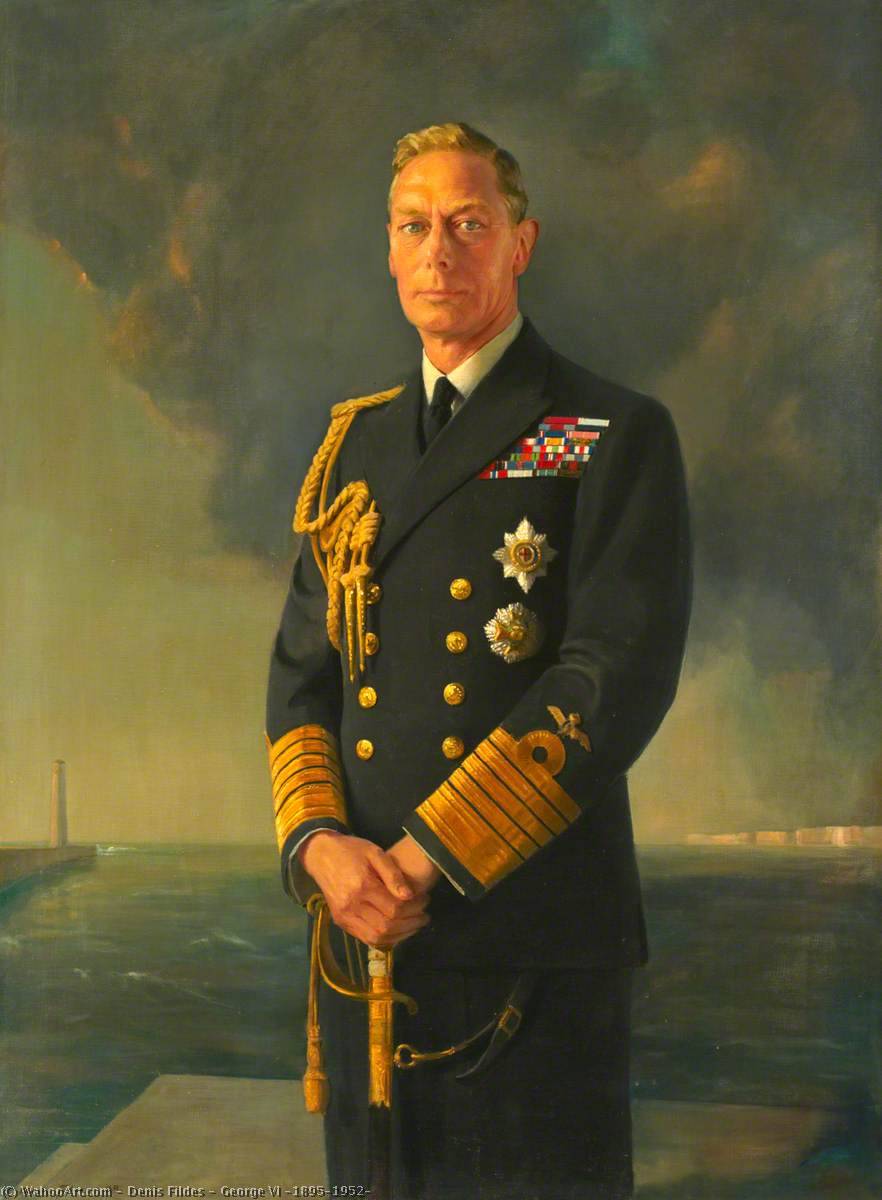
统计数据George VI (1895–1952)
 1950
1950 152.0 x 117.0 cm
 Ministry of Defence
 阅读全文
阅读全文
艺术微喷/版画
博物馆级艺术微喷或帆布版画,制作高效,并提供多种饰面选择。 ( 订购此收藏品的纯手工复刻画作 切换至数字图像销售渠道)




































您可以从与原作比例一致的预设尺寸中进行选择。

您可以输入自定义尺寸,以适配特定的画框或空间。如果您选择的尺寸与原图比例不符,我们将对作品进行裁剪,或通过镜像填充/纯色填充边缘的方式来扩展图像。在开始制作之前,我们会向您发送一份数字效果图供您确认。
请注意,屏幕上的预览并不能反映实际的裁剪或扩展效果。只有效果图才能准确展示最终的构图。
虽然我们提供定制尺寸,但为了保持原图比例,我们建议您从预设列表中选择尺寸。


 玻璃选项仅适用于110厘米以下的尺寸。

George VI (1895–1952)
艺术微喷/版画
复刻品尺寸说明
-


总计金额
$ 80
The Artist and His Work
Denis Fildes was a talented artist known for his portraits of prominent figures. His work on George VI (1895–1952) is a testament to his ability to capture the essence of his subjects. The painting depicts the king in his military uniform, standing on a dock with water and boats visible in the background. The level of detail in the artwork is impressive, with intricate details of the king's attire and surroundings.Other Notable Works
Some other notable paintings that can be found on OriginalUniqueArt.com include:- A. E. Dean, CBE, MA, MLit, Warden of Goldsmiths College (1927–1950) by Clive Gardiner
- Viscount Cunningham of Hyndhope (1883–1963), First Sea Lord by David Shanks Ewart
- Arial by Louise Cattrell
The Significance of the Painting
The George VI (1895–1952) painting is not only a beautiful work of art but also a significant piece of history. It provides a glimpse into the life and times of the king and his role in the military. The painting's location at the Ministry of Defence adds to its importance, as it is a reminder of the king's service to his country. For more information on the Ministry of Defence, visit Il Museo del Ministero della Difesa di Londra, Regno Unito. Handmade oil painting reproductions of the George VI (1895–1952) painting are available on OriginalUniqueArt.com, allowing art lovers to own a piece of history.The George VI (1895–1952) painting by Denis Fildes is a must-see for anyone interested in art, history, or the British monarchy. Its beauty, significance, and attention to detail make it a truly unique piece of art.
艺术家简介
Denis Fildes: A Chronicle of Victorian Life and Beyond
The name Denis Fildes resonates deeply within the annals of British art, primarily for his evocative portrayals of Victorian England – a period teeming with social change, industrial progress, and profound human experience. Born in Liverpool in 1889, Fildes’s artistic journey wasn't merely one of technical skill; it was profoundly shaped by his family history, his keen observations of the world around him, and a burgeoning sense of social responsibility. His lineage held echoes of both artistic talent and political activism, notably through his grandmother, Mary Fildes, a prominent figure in the reform movement. This familial influence subtly informed his approach to art, imbuing it with an empathetic understanding of the struggles faced by ordinary people.
Fildes’s early years were marked by immersion in the vibrant, yet often challenging, atmosphere of Liverpool's port city. The sights and sounds of maritime life – the bustling docks, the crowded tenements, and the faces of those working tirelessly to sustain themselves – provided a rich tapestry for his nascent artistic sensibilities. This formative experience, coupled with formal training at Warrington School of Art and later at the South Kensington and Royal Academy Schools, laid the groundwork for his distinctive style. Crucially, he found himself deeply influenced by Frederick Walker, a leading figure in the social realist movement, whose emphasis on depicting everyday life with honesty and compassion resonated profoundly with Fildes’s own burgeoning artistic vision.
The Illustrator's Voice: Early Years at *The Graphic*
Fildes’s career gained significant momentum through his work as an illustrator for *The Graphic*, a pioneering illustrated newspaper edited by William Luson Thomas. This role wasn’t simply a job; it was a deliberate immersion in the spirit of social reform that permeated the publication. *The Graphic* sought to use visual imagery to raise awareness about pressing societal issues, and Fildes quickly became recognized for his ability to capture the stark realities of poverty and injustice with remarkable sensitivity. His illustrations weren’t merely decorative; they were powerful statements designed to elicit empathy and inspire action.
A particularly poignant example of this early work is “Houseless and Hungry” (1869), a woodcut depicting the plight of London's homeless population seeking refuge in the workhouse. This image, commissioned by Charles Dickens himself, became an instant sensation, capturing the nation’s attention and solidifying Fildes’s reputation as a socially conscious artist. The collaboration with Dickens was a watershed moment, demonstrating the power of illustration to amplify social commentary and influence public opinion. Following this success, Fildes continued to produce a prolific body of work for *The Graphic* and other leading periodicals, consistently addressing themes of poverty, labor conditions, and social inequality.
Painting Beyond Illustration: Portraits and Venetian Visions
While his illustrations brought him widespread recognition, Fildes harbored a desire to move beyond the constraints of the print medium. By the early 1870s, he began to dedicate himself more fully to oil painting, establishing himself as a skilled genre painter with a distinctive style. His paintings often explored themes of domestic life, social interaction, and human emotion – subjects that mirrored his earlier work but were now rendered with greater depth and nuance.
Fildes’s artistic development took another significant turn when he spent several years in Venice, immersing himself in the city's vibrant culture and artistic traditions. This period profoundly influenced his style, leading to a shift towards brighter colors, looser brushwork, and a heightened sense of atmosphere. His Venetian paintings – such as “The Doctor” (1891) and "An Al-fresco Toilette" (1889) – capture the beauty and charm of the city while also subtly hinting at the underlying social complexities.
Royal Recognition and Legacy
Fildes’s artistic achievements were ultimately recognized by the Royal Academy, which elected him as an Associate Academician in 1879 and a Royal Academician in 1887. He was knighted by King Edward VII in 1906, a testament to his distinguished service to British art and culture. Throughout his career, Fildes produced a vast body of work – portraits of royalty, notable figures, and intimate glimpses into everyday life – that continues to be admired for its realism, emotional depth, and social significance.
His legacy extends beyond the individual artworks he created. Fildes’s commitment to depicting the realities of Victorian society helped to raise awareness about pressing social issues and contributed to a broader understanding of the lives of ordinary people. Lieutenant Commander Denis Quentin Fildes (1889–1975), his son, also followed in his father's footsteps as an Olympic fencer, solicitor and company secretary. Another son had a distinguished naval career. His work remains a valuable window into the past, offering insights into the social, cultural, and artistic landscape of Victorian England.

denis fildes
1889 - 1974
快速概览
- Artistic Movement Or Style: Social realism, Portraiture
- Artists Or Movements Influenced By This Artist: ['Van Gogh']
- Artists Who Influenced This Artist: ['Frederick Walker']
- Date Of Birth: Oct 3, 1843
- Date Of Death: Feb 28, 1927
- Full Name: Samuel Luke Fildes
- Nationality: British
- Notable Artworks:
- The Casual Ward
- The Widower
- The Village Wedding
- Place Of Birth: Liverpool, UK