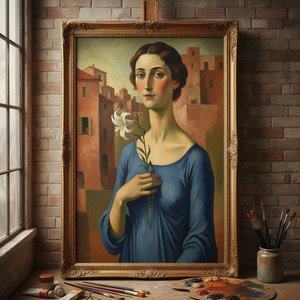
油画原件
 关于 De cavalier 的一切







































 对于任何边长超过 105 厘米(约 41 英寸)的艺术品或复制品,画框将以拆解后的组件形式发货。此方法可确保安全送达并防止运输过程中的损坏。


A Study in Shadow and Light
In this 1885 oil on canvas, we find ourselves in a quiet, intimate space with a young man. The composition is a medium close-up, focusing on the subject from the chest up, positioned slightly off-center to create a sense of natural, unposed presence. There is a profound stillness here. The lighting is directional, emerging from the upper left to carve the subject out of a deep, dark background. This technique of chiaroscuro leaves much of the face and body in shadow, while catching the contours of the nose, cheek, and hands. It is a deliberate use of light to create volume and a sense of three-dimensional depth.
The color palette is muted and somber, dominated by blacks and deep browns. This darkness is interrupted only by the warm, illuminated tones of the man's skin and a specific metallic, silvery sheen on his gorget. This piece of neck armor provides a sharp textural contrast to the matte darkness of his clothing. The surface of the work bears a fine craquelure, a delicate cracking that speaks to its age and history.
Technical Nuance and Composition
The artist employs a painterly approach where the lines are soft and blended. This is particularly evident in the transitions between light and shadow, which avoids harsh edges in favor of a smooth, gradual movement. The subject's expression is calm and contemplative, lending an emotional weight of quiet dignity to the portrait. To understand the physical presence of this work, one might consider:
- The medium of oil on canvas.
- The specific use of a silvery gorget to catch directional light.
- The muted, earthy tones that define the subject's attire.
- The subtle gradations of tone used to define the facial structure.
The Breton Influence
Flavien-Louis Peslin was deeply shaped by the atmosphere of Brittany. His training at the École des Beaux-Arts de Rennes under masters like Alexandre Cabanel provided him with a foundation in classical beauty and meticulous composition. However, his time in the Pont-Aven artistic colony allowed his style to move toward a more atmospheric realism. In De cavalier, we see this intersection of disciplined academic training and a more sensitive, observational approach to light. The work captures a moment of introspection, reflecting a style that seeks to find the soul of a subject through the careful management of shadow and texture.
常见问题与解答
De cavalier是手绘的还是印刷的?
手工绘制:由受过专业训练的画家在亚麻画布上,以油画形式临摹 De cavalier。
De cavalier 我该选择什么尺寸?
原作尺寸为 82.5 x 66.0cm。 尺寸范围从 35.5 x 28.2 cm (¥1338) 到 246.4 x 196.1 cm (¥11856);本页表格列出了主要步骤及其价格。
物流需要多长时间?
送货时间为 4 至 5 周,并提供全球免费快递服务;本页面还提供加急制作选项。您可以在 100 天内无条件退货并获得全额退款。
《De cavalier》的原作在哪里?
原作收藏于阿姆斯特丹的国家博物馆。
Louis Mettling 在创作《De cavalier》时使用了什么媒介?
Oil On Canvas
 实景预览

 分享
 分享
 详情
 详情页


 下载作品
 相似作品
 X射线
 幻灯片播放
 问答

 统计数据