

 实景预览
实景预览
 发送
发送 分享
分享
 详情
详情 指南
指南

 下载图片
下载图片
 相似作品
相似作品 X射线
X射线 幻灯片播放
幻灯片播放 统计数据
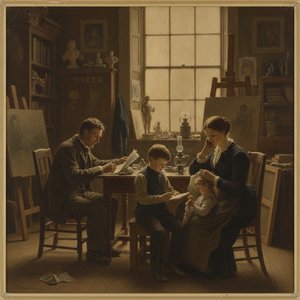
统计数据Inspiration
 Academic Realism
 88.0 x 69.0 cm
 阅读全文
阅读全文
艺术微喷/版画
博物馆级艺术微喷或帆布版画,制作高效,并提供多种饰面选择。 ( 订购此收藏品的纯手工复刻画作 切换至数字图像销售渠道)




































您可以从与原作比例一致的预设尺寸中进行选择。

请输入您所需的宽度和高度,以适配您的画框或墙面。由于印刷品只能进行裁剪,无法超出原图尺寸,因此若比例不一致,画面的一部分将会被裁切。在正式印刷之前,我们会为您发送一份数字效果图供您确认。本页面显示的图片并非最终裁剪后的效果——只有效果图才能展示真实的裁剪情况。


 玻璃选项仅适用于110厘米以下的尺寸。

Inspiration
艺术微喷/版画
复刻品尺寸说明
-


总计金额
¥ 538
艺术家简介
A Life Etched in Realism: The Story of David Shanks Ewart
David Shanks Ewart, a name perhaps less celebrated than some of his contemporaries, nevertheless occupies a fascinating and important niche within the landscape of 20th-century Scottish art. Born in 1901, Ewart’s life was one dedicated to meticulous observation and the pursuit of representational accuracy – a commitment that led him from the bustling streets of Glasgow to the artistic heart of Florence, Italy. While initially known under his birth name, he later adopted the pseudonym Ernest Wedderburn, adding an intriguing layer to his already complex artistic persona. His story is not one of flamboyant innovation but rather of quiet dedication and a profound respect for the traditions of Renaissance masters.From Glasgow Beginnings to Florentine Studies
Ewart’s early life in Glasgow undoubtedly shaped his aesthetic sensibilities. The city, with its industrial grit and vibrant social tapestry, provided ample subject matter for an aspiring artist. He received formal training at the Glasgow School of Art, a renowned institution that fostered a strong sense of craftsmanship and encouraged students to engage with both historical and contemporary artistic practices. However, it was Ewart’s decision to relocate to Florence in the 1920s that proved pivotal. Immersing himself in the Italian Renaissance, he studied directly from the Old Masters, absorbing their techniques and principles of composition. This period marked a turning point in his work, shifting his focus towards portraiture and scenes imbued with a remarkable sense of realism. He wasn’t merely copying; he was striving to understand the underlying structure and emotional depth that characterized the art of Michelangelo, Raphael, and Leonardo da Vinci.The Pursuit of Anatomical Precision
Ewart's artistic philosophy centered on an unwavering commitment to anatomical accuracy. This dedication wasn’t simply about technical skill; it was driven by a belief that true representation could unlock deeper emotional resonance in his subjects. He meticulously studied human form, often creating detailed preparatory drawings before embarking on larger compositions. His portraits are not idealized representations but rather honest and unflinching depictions of the individuals he painted – capturing their character, vulnerabilities, and inner lives. This pursuit led him to become a highly sought-after portraitist among both Italian and international clientele. He wasn’t interested in fleeting impressions or abstract interpretations; his goal was to create enduring images that reflected the essence of his sitters.Exhibition Success & Lasting Legacy
Ewart's work gained recognition through numerous exhibitions, most notably at Florence’s prestigious Galleria dell’Accademia – a testament to his mastery of Renaissance techniques and his ability to connect with audiences on an emotional level. His paintings often featured scenes reminiscent of the Italian masters, but infused with a distinctly modern sensibility. He skillfully blended classical principles with contemporary subject matter, creating works that were both timeless and relevant. While he didn’t actively seek widespread fame, his talent was undeniable, attracting the attention of collectors and critics alike. His ability to capture the human spirit through precise rendering and subtle emotional nuance set him apart from many of his contemporaries. Although not a prolific artist in terms of sheer volume, the quality and depth of his work have ensured his place within the annals of Scottish art history.Historical Significance & Enduring Appeal
David Shanks Ewart’s significance lies in his unwavering dedication to realism at a time when abstract expressionism was gaining prominence. He represented a counter-current – a steadfast belief in the power of representational art and the importance of traditional techniques. His work serves as a reminder that artistic innovation doesn't always necessitate radical departures from established norms. Ewart’s paintings offer a glimpse into a bygone era, capturing the essence of his subjects with remarkable clarity and emotional depth. His legacy continues to inspire artists who value craftsmanship, anatomical accuracy, and the enduring power of representational art. He died in 1965, leaving behind a body of work that stands as a testament to his skill, dedication, and profound respect for the traditions of the Renaissance masters.
David Shanks Ewart
1901 - 1965
快速概览
- Full Name: David Shanks Ewart
- Nationality: Scottish
- Date Of Birth: 1901
- Date Of Death: 1965
- Place Of Birth: Glasgow, Scotland
- Notable Artworks:
- The Emigrants
- Inspiration
- Artistic Movement Or Style: Realist Painting
- Artists Who Influenced This Artist: ['Michelangelo David']
- Artists Or Movements Influenced By This Artist: ['Renaissance Art']
相关文章

Oil on Canvas: A Historical & Technical Exploration of a Timeless Artistic Medium
Explore the rich history & enduring techniques of oil painting on canvas. Discover the science behind its longevity, conservation practices, and contemporary relevance. Expert insights for art enthusiasts.

维多利亚现实主义:日常生活的镜鉴与时代精神的剖析
深入剖析维多利亚现实主义,探索19世纪英国艺术的魅力。OriginalUniqueArt提供博物馆级手工油画复制、定制肖像及专业艺术咨询,助您收藏经典,提升品味。
Victorian Realism: Capturing the Soul and Intricate Detail of a Golden Era
Explore the exquisite world of Victorian Realism. Discover how 19th-century masters captured unparalleled detail and emotion through oil painting, and learn to curate these timeless masterpieces for your luxury interior collection.

Victorian Realism: The Raw, High-Definition Drama and Unflinching Truth of 19th-Century Masterpieces
Experience the raw, high-definition drama of Victorian Realism. Explore 19th-century masterpieces through our premium, hand-painted oil reproductions. Discover how the unflinching truth of historical art meets modern luxury to transform your space with timeless, museum-quality detail.

Romantic Realism's Finest: 10 Masterpieces for Your Home | OriginalUniqueArt
Explore 10 defining masterpieces of Romantic Realism! Discover Courbet, Millet & Daumier's powerful paintings—capturing emotion and social realities. Find museum-quality reproductions for your home at OriginalUniqueArt.com.