

 效果预览
效果预览
 购买印刷品
购买印刷品 分享
分享 分享
分享
 详情
详情

 下载
下载
 相似作品
相似作品 X射线
X射线 幻灯片播放
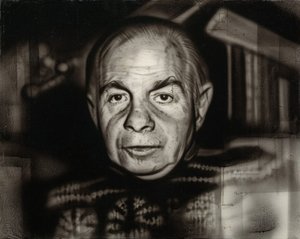
幻灯片播放Herb Vogel (study portrait)

 展开详情
展开详情




































从与原作比例一致的预设尺寸中进行选择。

您可以输入自定义尺寸,以适配特定的画框或空间。如果所选尺寸与原图比例不符,我们将通过裁剪作品或添加手绘元素来扩展画面。数字样稿将在制作开始前发送给您确认。
请注意,屏幕预览无法准确反映实际的裁剪或扩展效果,只有样稿才能真实呈现最终的构图。
虽然我们提供定制尺寸服务,但为了保留原作比例,建议您从预设列表中选择尺寸。
下单后,OriginalUniqueArt.com 团队将通过电子邮件联系客户获取具体要求,并提供效果预览图。


 玻璃选项仅适用于110厘米以下的尺寸。

Herb Vogel (study portrait)
复制材质
复制品尺寸
-


最终总价
$ 300
艺术家简介
Early Life and Artistic Foundations
Daryl Trivieri, born in Utica, New York, in 1957, emerged as a significant voice within the vibrant post-war and contemporary art landscape. His formative years were steeped in artistic training at both Munson-Williams-Proctor Arts Institute and Mohawk Valley Community College, institutions that provided him with a solid technical base before his pivotal move to New York City in the late 1970s. This relocation marked not merely a geographical shift but a complete immersion into the burgeoning art scene of the East Village—a crucible of creativity where experimentation flourished and new artistic identities were forged.
The East Village Years and Conceptual Development
Upon arriving in New York, Trivieri quickly became integrated within a network of fellow artists, most notably forming a close friendship with Mark Kostabi. This connection is documented in the 1985 Vogel Collection drawing, *My First Visit With Mark Kostabi*, now held by the Portland Museum of Art—a testament to the collaborative spirit and intellectual exchange that characterized the era. However, while both artists were part of the same milieu, Trivieri charted a distinctly individual path. Where Kostabi leaned towards cartoonish outlines, Trivieri gravitated toward a minimalist and conceptual aesthetic, rooted in photorealism yet driven by an ambition to transcend its limitations.
His early work—airbrush paintings and meticulously rendered pen or pencil drawings—demonstrated a fascination with scientific illustrations and 19th-century photography. This interest wasn’t simply about replicating visual detail; it was a means of exploring the boundaries between representation and abstraction, reality and perception. Heather Campbell Coyle of the Delaware Art Museum aptly notes that Trivieri's “highly personal style reflects his desire to push past the photorealism of the 1970s.”
Exhibitions, Recognition, and Critical Reception
The early 1980s saw Trivieri’s work gain visibility through exhibitions at galleries like Semaphore East, Cote' Gallery, and Nolo Contendere. A significant turning point came with his inclusion in the 1985 traveling exhibition *Psycho Pueblo*, curated by Robert Hagenberg. This show was instrumental in introducing a wider audience to the diverse artistic energies of the East Village, bringing Trivieri’s work—alongside that of Kostabi and others—to Spain.
Critical responses during this period were often nuanced. While his two-dimensional works garnered attention, some commentators also noted his sculptural endeavors, describing them as “goofy paper mache monsters” – a playful observation highlighting the unexpected dimensions of his artistic practice. Alan G. Artner, writing for the *Chicago Tribune* in 1987, observed a connection between Trivieri’s aesthetic and the campy photographs of William Mortensen, suggesting a complex interplay of influences and stylistic choices.
Influences and Artistic Legacy
Trivieri's work is characterized by an intriguing blend of seemingly disparate elements. The influence of scientific illustration lends a precision and clarity to his imagery, while the echoes of 19th-century photography evoke a sense of nostalgia and historical awareness. His exploration of “escapist fantasy” and the “psyche of Romanticism,” as noted by Carlo MacCormick, reveals a deeper engagement with psychological themes and the power of imagination.
The artist’s impact extends beyond his individual creations. His work has been recognized by prominent collectors such as Herbert and Dorothy Vogel, whose extensive holdings have played a crucial role in shaping our understanding of post-war American art. Furthermore, inclusion in the collection of the National Gallery of Art solidifies Trivieri's position within the canon of contemporary artistic achievement.
- Key Influences: Scientific Illustration, 19th Century Photography, Romanticism
- Notable Collections: Herbert and Dorothy Vogel Collection, National Gallery of Art
- Artistic Style: Minimalist, Conceptual, Photorealistic with Abstract Tendencies
Daryl Trivieri continues to live and work, leaving behind a legacy that challenges conventional boundaries and invites viewers to contemplate the intricate relationship between perception, representation, and the human psyche.
daryl trivieri
1957 - , United States of America
艺术家简介
- Artistic Movement Or Style: Minimalist & Conceptual Art
- Date Of Birth: 1957
- Full Name: Daryl Trivieri
- Nationality: American
- Place Of Birth: Utica, USA

