 切换至版画销售渠道
 展开全文
展开全文







































 对于任何边长超过 105 厘米(约 41 英寸)的艺术品或复制品,画框将以拆解后的组件形式发货。此方法可确保安全送达并防止运输过程中的损坏。


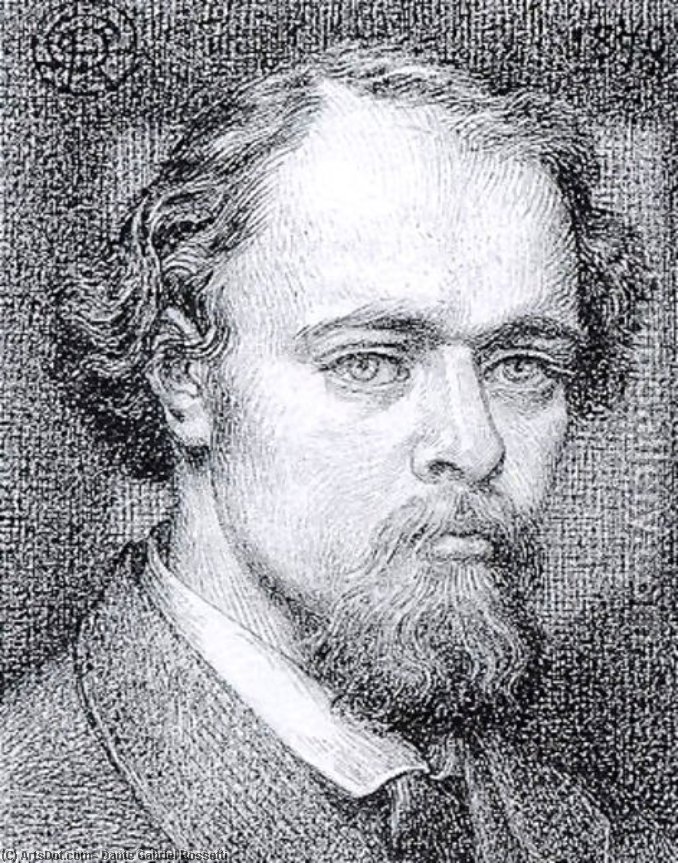
A Portrait of the Soul: Unveiling Dante Gabriel Rossetti's 1870 Self-Portrait
Dante Gabriel Rossetti’s self-portrait, created in 1870, isn’t merely a likeness; it’s a carefully constructed meditation on identity, artistic aspiration, and the quiet contemplation of a complex mind. Rendered with an almost obsessive attention to detail, this monochrome study transcends the limitations of its medium – graphite or charcoal upon paper – to evoke a profound sense of introspection and a subtle undercurrent of melancholy. The image immediately draws the viewer in, not with vibrant color but with the palpable texture of hatching and cross-hatching, techniques Rossetti masterfully employed to build up tonal variations and mimic the very surfaces he depicted: skin, hair, fabric – all rendered with an almost tactile quality.
The composition itself is deceptively simple. A close-up bust shot focuses intently on Rossetti’s face, his gaze directed just off-center, lending a sense of private thought and perhaps even a touch of vulnerability. The slight angle of the head introduces a dynamic element to what could have been a static portrait, suggesting movement and an engagement with the viewer beyond mere representation. The stark white background serves not as a distraction but as a deliberate contrast, amplifying the richness of the tonal range achieved through Rossetti’s meticulous layering of lines.
The Language of Line: Technique and Style
Rossetti's technique is undeniably Pre-Raphaelite – a movement he himself spearheaded. The reliance on hatching and cross-hatching isn’t simply a method for creating shading; it’s the very language of the portrait, defining form with an almost sculptural precision. The circular forms dominating his face—the curve of his brow, the suggestion of his lips—are balanced by more angular shapes in his clothing, creating a harmonious tension within the composition. The density of the lines creates a remarkable sense of texture, mimicking the unruly strands of his beard and the delicate folds of his garments. It’s as if Rossetti is inviting us to reach out and feel the surface of the portrait itself.
The monochromatic palette – shades of gray and black on white – contributes significantly to the mood. It's a deliberate choice, stripping away any potential distraction from the intricacies of his rendering. The diffused lighting, with its subtle gradations rather than harsh contrasts, further enhances this sense of quiet contemplation. This isn’t a portrait designed to dazzle; it’s one intended for quiet study and reflection.
Symbolism and Emotional Resonance
The closed eyes are perhaps the most arresting feature of the self-portrait. They suggest not just relaxation, but also introspection – a willingness to delve into the depths of his own thoughts and emotions. Rossetti was a poet deeply attuned to the complexities of human experience, and this portrait seems to capture that sensitivity. The meticulous detail with which he renders his features conveys a profound respect for his craft and an attempt to distill his very essence onto paper. It’s as if he is offering us a glimpse into the soul of a brilliant artist grappling with the challenges and rewards of creative expression.
A Legacy in Reproduction: Bringing Rossetti's Vision Home
OriginalUniqueArt offers exquisite, hand-painted reproductions of Dante Gabriel Rossetti’s “Self-Portrait,” allowing you to experience the depth and nuance of this iconic work in your own space. Each reproduction is created by skilled artists who meticulously recreate Rossetti’s technique, capturing not just his likeness but also the emotional resonance of the original. Whether displayed as a statement piece or incorporated into a carefully curated interior design scheme, this reproduction serves as a beautiful reminder of Rossetti's enduring legacy and the power of art to evoke profound contemplation.
常见问题与解答
"Self portrait" 是否体现了 丹提·罗斯蒂 一贯的创作风格?
丹提·罗斯蒂 的创作主题常涉及 romanticism, victorian era, dante alighieri, pre-raphaelite, introspection;而《Self portrait》则聚焦于 portrait, self-portrait, hatching, cross-hatching, rossetti, black and white, introspection。
丹提·罗斯蒂 的《Self portrait》 的创作媒介和创作日期是什么?
"Self portrait"创作于1870年,采用Acrylic On Canvas技法。
哪些色调与主导色彩定义了“Self portrait”?
丹提·罗斯蒂 的《Self portrait》 的色彩特征:Neutrals 色调,以 White (#e5e5eb) 为主导。
 实景预览
实景预览
 分享
分享 分享
分享
 详情
详情 指南
指南

 下载作品
下载作品
 相似作品
相似作品 X射线
X射线 幻灯片播放
幻灯片播放 Q&A
Q&A 统计数据
统计数据