

 实景预览
实景预览
 发送
发送 分享
分享
 详情
详情 指南
指南

 下载图片
下载图片
 相似作品
相似作品 X射线
X射线 幻灯片播放
幻灯片播放 统计数据
统计数据Untitled (Monument for V. Tatlin)


 阅读全文
阅读全文
艺术微喷/版画
博物馆级艺术微喷或帆布版画,制作高效,并提供多种饰面选择。 ( 订购此收藏品的纯手工复刻画作 切换至数字图像销售渠道)




P118B $10

P118H $10

P118W $10

P438Z $10

P508JH $12

P508YH $12

P805H $10

P805Z $10

P919BZ $10

P919G $10

P919XJ $10

P959ZH $10

P968JZ $12

W106C $8

W218G $10

W218JH $8

W218Y $10

W307PJ $10

W316G $10

W316PJ $8

W316Y $10

W398PJ $8

W4111J $10

W500HY $15

W500JH $15

W692G $12

W849H $8

W940BG $15

W953PJ $8




您可以从与原作比例一致的预设尺寸中进行选择。

您可以输入自定义尺寸,以适配特定的画框或空间。如果您选择的尺寸与原图比例不符,我们将对作品进行裁剪,或通过镜像填充/纯色填充边缘的方式来扩展图像。在开始制作之前,我们会向您发送一份数字效果图供您确认。
请注意,屏幕上的预览并不能反映实际的裁剪或扩展效果。只有效果图才能准确展示最终的构图。
虽然我们提供定制尺寸,但为了保持原图比例,我们建议您从预设列表中选择尺寸。


 玻璃选项仅适用于110厘米以下的尺寸。

Untitled (Monument for V. Tatlin)
艺术微喷/版画
复刻品尺寸说明
-


总计金额
$ 80
艺术家简介
Early Life and Spiritual Beginnings
Daniel Nicholas Flavin Jr., born in Queens, New York, on April 1, 1933, embarked on a path initially steeped in religious contemplation rather than artistic expression. Raised in an Irish Catholic household, young Flavin was directed towards the priesthood, spending six formative years at the Immaculate Conception Preparatory Seminary in Brooklyn. This period of intense spiritual study, however, proved to be a catalyst for a different kind of devotion—a burgeoning fascination with visual language and the power of light itself. He later recalled feeling stifled by the rigid dogma, a sense that his “expressive childish optimism” was being systematically extinguished. This early experience, though ultimately rejected, would subtly inform his future work, imbuing it with a quiet reverence and a search for transcendent meaning. In 1952, Flavin traded the seminary for service in the United States Air Force, enlisting alongside his twin brother, David John Flavin. While stationed near New York City, he briefly pursued formal art training at the Hans Hofmann School of Fine Arts and later at Columbia University, studying painting and drawing, but it was during this time that a nascent artistic vision began to take shape.The Emergence of Light as Medium
Flavin’s early explorations in art were diverse, ranging from abstract expressionist canvases to assemblages constructed from found objects—particularly crushed tin cans. However, his trajectory shifted dramatically while working as a security guard and elevator operator at the American Museum of Natural History in the early 1960s. It was here, amidst the museum’s vast collections, that he began sketching ideas for “an electric light art.” These initial concepts involved painted wood boxes adorned with incandescent bulbs, but it wasn't until 1963 that Flavin discovered the medium that would define his career: commercially available fluorescent lamps. This pivotal moment marked a decisive break from traditional sculptural materials and techniques. He began to focus exclusively on these readily accessible fixtures, selecting standard lengths—two, four, six, or eight feet—and a limited palette of colors: red, yellow, blue, green, pink, ultraviolet, and varying intensities of white. Flavin wasn’t interested in the light *as* illumination, but as a material itself, capable of altering perception and redefining space.Situations and the Rejection of Traditional Form
By the mid-1960s, Flavin had moved beyond individual sculptures to create what he termed “situations”—immersive installations that transformed architectural spaces through carefully orchestrated arrangements of fluorescent light. He deliberately avoided terms like "sculpture" or "work," preferring instead to emphasize the experiential nature of his creations and their inherent relationship to the surrounding environment. These weren’t objects *in* space, but rather configurations *of* space, altering viewers' perceptions of volume, color, and even time. Flavin’s work challenged conventional notions of artistic authorship and originality. By utilizing mass-produced industrial components, he removed the emphasis on unique craftsmanship and instead focused on the conceptual act of arrangement and the interplay between light, color, and architecture. He often dedicated his installations to friends, fellow artists—like Robert Skolnik, for whom he created a grid pattern installation at the Whitney Museum—or historical figures such as Constantin Brancusi or Vladimir Tatlin, imbuing them with layers of personal meaning and artistic homage.Minimalism, Conceptual Art, and Lasting Influence
While often associated with Minimalism due to his reductive forms and use of industrial materials, Flavin resisted easy categorization. He shared the movement’s rejection of subjective expression and its emphasis on objectivity, but his work differed in its inherent luminosity and its focus on perceptual experience. His installations weren't simply about form; they were about *how* we perceive form through light and color. His practice also aligned with the burgeoning Conceptual Art movement, prioritizing the idea behind the artwork over its physical manifestation. Flavin’s insistence on calling his creations “proposals” rather than finished objects underscored this conceptual emphasis. Throughout his four-decade career, he continued to explore the possibilities of fluorescent light, creating increasingly complex and ambitious installations that redefined gallery spaces and challenged viewers' expectations. He died in Riverhead, New York, on November 29, 1996, leaving behind a profound legacy that continues to inspire artists today. The Dan Flavin Art Institute, established in Bridgehampton, New York, serves as a permanent testament to his vision, housing significant examples of his work and providing a space for ongoing exploration of light and perception.A Radiant Legacy: Historical Significance
- Redefining Sculpture: Flavin’s use of commercially available fluorescent lights fundamentally altered the definition of sculpture, moving it away from traditional materials like bronze or marble towards industrial fabrication and ephemeral experience.
- The Power of Light as Medium: He established light not merely as an illumination source but as a sculptural material with its own inherent qualities—color, intensity, and spatial effects.
- Situations over Objects: His “situations” challenged the traditional object-based nature of art, emphasizing instead the relationship between artwork, space, and viewer.
- Conceptual Art Pioneer: Flavin’s emphasis on the idea behind the work—the arrangement of light rather than the physical creation of an object—aligned with the principles of Conceptual Art.
- Lasting Impact: His influence can be seen in a wide range of contemporary artists who explore themes of perception, space, and materiality. He remains a pivotal figure in 20th-century art history, celebrated for his singular vision and enduring contribution to the evolution of artistic practice.

daniel nicholas flavin jr.
1933 - 1996 , United States of America
快速概览
- Artistic Movement Or Style: Minimalism, Light Art
- Date Of Birth: April 1, 1933
- Date Of Death: November 29, 1996
- Full Name: Daniel Nicholas Flavin Jr.
- Nationality: American
- Notable Artworks:
- Untitled series
- Dan Flavin: Ic Light
- Monuments to V. Tatlin
- Place Of Birth: Queens, New York, USA
相关文章

The Enduring Form: Sculpture Across History, Technique & Emotional Resonance
Explore the rich history of sculpture with OriginalUniqueArt. Discover key techniques, influential artists & investment potential for discerning collectors. Expert insights into valuing and collecting timeless masterpieces.

The Enduring Form: Exploring Themes & Techniques in Sculpture Across Historical Periods
Explore the rich history of sculpture from ancient masterpieces to contemporary innovations. Discover key techniques, influential artists & investment potential for discerning art collectors.
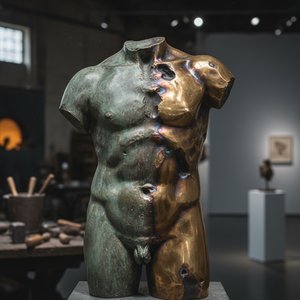
青铜雕塑艺术史:跨越千年的力量与美感,探究古代铸造工艺与现代创作的永恒魅力
探索青铜雕塑的千年魅力,本文由资深艺术史学者撰写,深入解析古代铸造技术与现代收藏价值。为高端藏家提供专业鉴定、保养指南和投资建议,让您在信任与品质中发现珍贵艺术品。

Bronze Sculptures That Defined Art History | OriginalUniqueArt
Journey through art history with our Top 10 bronze sculptures! Explore masterpieces by Rodin, Michelangelo & more. Discover stories behind iconic statues and find museum-quality reproductions for your home decor at OriginalUniqueArt.com.

Bronze Age to Modern Masters: 10 Sculptures That Redefined Art | OriginalUniqueArt
Journey through art history with 10 legendary bronze sculptures – from Michelangelo's David to Rodin’s Thinker. Explore the stories, techniques & timeless beauty of these masterpieces. Find museum-quality reproductions & elevate your home decor on OriginalUniqueArt.com.