

 效果预览
效果预览
 分享
分享 分享
分享
 详情
详情

 下载
下载
 相似作品
相似作品 X射线
X射线 幻灯片播放
幻灯片播放 统计数据
统计数据Starting Prices at the Alexandra Palace


 展开详情
展开详情
手工油画复制品
由我们的艺术家按需定制,为您提供您所选尺寸及画框的布面手工油画。 ( 切换至版画销售渠道 切换至数字图像销售渠道)




P118B $10

P118H $10

P118W $10

P438Z $10

P508JH $12

P508YH $12

P805H $10

P805Z $10

P919BZ $10

P919G $10

P919XJ $10

P959ZH $10

P968JZ $12

W106C $8

W218G $10

W218JH $8

W218Y $10

W307PJ $10

W316G $10

W316PJ $8

W316Y $10

W398PJ $8

W4111J $10

W500HY $15

W500JH $15

W692G $12

W849H $8

W940BG $15

W953PJ $8




从与原作比例一致的预设尺寸中进行选择。

您可以输入自定义尺寸,以适配特定的画框或空间。如果所选尺寸与原图比例不符,我们将通过裁剪作品或添加手绘元素来扩展画面。数字样稿将在制作开始前发送给您确认。
请注意,屏幕预览无法准确反映实际的裁剪或扩展效果,只有样稿才能真实呈现最终的构图。
虽然我们提供定制尺寸服务,但为了保留原作比例,建议您从预设列表中选择尺寸。
下单后,OriginalUniqueArt.com 团队将通过电子邮件联系客户获取具体要求,并提供效果预览图。


 玻璃选项仅适用于110厘米以下的尺寸。

Starting Prices at the Alexandra Palace
复制材质
复制品尺寸
-


最终总价
$ 450
艺术家简介
Jean-Michel Basquiat: A Voice of the Streets and a Revolutionary Artist
Born in Brooklyn, New York City, on December 22, 1960, Jean-Michel Basquiat emerged from the vibrant, chaotic crucible of the late 1970s and early 1980s art scene. His life was tragically cut short at the age of 27 in August 1988 due to a heroin overdose, but during his brief career, he left an indelible mark on the world of art, becoming one of the most iconic figures of neo-expressionism and a powerful voice for social commentary.
Basquiat’s early life was deeply intertwined with the cultural landscape of New York City. Raised in a diverse neighborhood, he absorbed influences from hip-hop culture, graffiti art, and the burgeoning black arts movement. This environment profoundly shaped his artistic vision, informing his use of language, imagery, and social critique. Initially, Basquiat collaborated with Al Diaz under the pseudonym SAMO, creating enigmatic epigrams that appeared on subway cars throughout Manhattan. These early works established a unique visual vocabulary characterized by bold lettering, fragmented images, and cryptic messages – a precursor to his later, more fully realized paintings.
The Rise of Neo-Expressionism and Basquiat’s Unique Style
By the early 1980s, Basquiat transitioned from graffiti to painting, quickly gaining recognition for his distinctive style. He embraced neo-expressionism, a movement that rejected the cool detachment of minimalism and returned to subjective expression, often employing raw emotion and gestural brushstrokes. However, Basquiat’s work transcended simple categorization; he blended elements of street art, pop culture references, historical imagery, and personal reflections into a complex and layered visual language.
His paintings frequently featured skulls, crowns (a symbol of royalty and power), musical instruments, and portraits – often depicting black figures. He incorporated text extensively, using words, phrases, and names to create narratives that addressed issues of race, poverty, inequality, and the American Dream. Basquiat’s method was remarkably unconventional; he would often sketch directly onto the canvas with charcoal, creating a foundation for his subsequent layers of paint. His works were characterized by a frenetic energy, a sense of urgency, and a deliberate juxtaposition of seemingly disparate elements.
Themes of Power, Identity, and Social Critique
At the heart of Basquiat’s art lay a deep engagement with social and political issues. He confronted themes of racism, police brutality, economic disparity, and the commodification of art – often exposing the hypocrisy and contradictions inherent in American society. His work served as both a personal reflection on his own experiences as a black artist navigating a predominantly white art world and a broader critique of power structures and systemic inequalities.
Works like *Irony of Negro Policeman* (1981) and *Defacement* (1983), depicting a skull with a police badge, powerfully addressed issues of racial injustice. Similarly, paintings such as *Hollywood Africans* (1983) satirized the appropriation of black culture by Hollywood, highlighting the exploitation and misrepresentation that often occurred within the entertainment industry. His art wasn’t simply decorative; it was an active engagement with the world around him.
Legacy and Historical Significance
Despite his tragically short life, Jean-Michel Basquiat achieved remarkable success during his lifetime. He exhibited in prestigious galleries and museums worldwide, including the Whitney Museum of American Art in New York City, and his work quickly gained significant value. His influence on subsequent generations of artists is undeniable, shaping the trajectory of neo-expressionism and inspiring countless creatives to explore themes of social justice and personal identity through their art.
Today, Basquiat’s paintings are among the most valuable in the world, commanding prices that reflect both his artistic genius and the enduring relevance of his message. He remains a potent symbol of creativity, rebellion, and the power of art to challenge the status quo – a true revolutionary artist who dared to speak truth to power through his unique visual language.

daniel james higgins
1980 - , United States of America
艺术家简介
- Artistic Movement Or Style: Neo-expressionism
- Artists Or Movements Influenced By This Artist:
- Graffiti art
- Hip-hop culture
- Artists Who Influenced This Artist:
- Andy Warhol
- Keith Haring
- Date Of Birth: December 22, 1960
- Date Of Death: August 12, 1988
- Full Name: Jean-Michel Basquiat
- Nationality: American
- Notable Artworks:
- Irony of Negro Policeman
- Skull of Doom
- Untitled
- Boy and Dog in a Johnnypump
- Defacement
- Place Of Birth: New York City, U.S.
相关文章

蝕刻艺术的历史巡礼:技法、美学特征与持久的艺术意义
深入探索蚀刻艺术的历史、技法与大师之作。专业分析光影线条美学,了解伦勃朗、丢勒等大师的创作秘诀。OriginalUniqueArt.com为您提供高品质油画复制和定制服务,重现经典艺术!
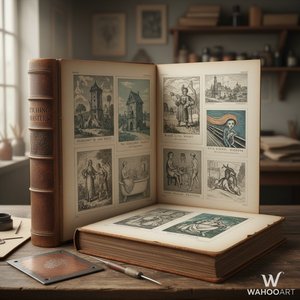
Etching Masters: 10 Legendary Prints That Revolutionized Art | OriginalUniqueArt
Journey through 10 legendary etching masterpieces by Rembrandt, Dürer & Goya. Explore the history of printmaking and discover timeless art for your home. Find museum-quality reproductions at OriginalUniqueArt.com.

Sir Alfred Munnings' Masterpieces: 25 Paintings That Define Equine Art | OriginalUniqueArt
Explore 25 iconic Sir Alfred Munnings paintings! Discover the beauty of British Impressionism, equine art & rural England. Find museum-quality reproductions and elevate your home decor with OriginalUniqueArt. Explore the full collection online.

惠斯勒大师25幅杰作:艺术、家居与永恒之美 | OriginalUniqueArt
探索詹姆斯·惠斯勒25幅杰作!深入了解夜曲、静谧和谐等经典油画背后的故事与艺术魅力。OriginalUniqueArt.com提供博物馆级复制品,为您的家居带来永恒之美。立即在线探索完整系列!

The Intricate World of Etching: A Historical Survey of Technique, Aesthetic Evolution, and Enduring Artistic Impact
Explore the rich history of etching, from its origins to modern practice. Discover techniques, key artists like Rembrandt, and insights for collectors. A comprehensive guide by OriginalUniqueArt.