
 实景预览
实景预览
 分享
分享 分享
分享
 详情
详情 指南
指南

 下载作品
下载作品
 相似作品
相似作品 X射线
X射线 幻灯片播放
幻灯片播放 Q&A
Q&A 统计数据
统计数据The World (89 degrees)

- 220.0 x 189.0 cm


 展开全文
展开全文
艺术微喷/版画
博物馆级艺术微喷或帆布版画,制作高效,并提供多种饰面选择。 ( 订购纯手工绘制画作 切换至数字图像销售渠道)




P118B ¥10

P118H ¥10

P118W ¥10

P438Z ¥10

P508JH ¥12

P508YH ¥12

P805H ¥10

P805Z ¥10

P919BZ ¥10

P919G ¥10

P919XJ ¥10

P959ZH ¥10

P968JZ ¥12

W106C ¥8

W218G ¥10

W218JH ¥8

W218Y ¥10

W307PJ ¥10

W316G ¥10

W316PJ ¥8

W316Y ¥10

W398PJ ¥8

W4111J ¥10

W500HY ¥15

W500JH ¥15

W692G ¥12

W849H ¥8

W940BG ¥15

W953PJ ¥8




您可以从与原作比例一致的预设尺寸中进行选择。

请输入您所需的宽度和高度,以适配您的画框或墙面。由于印刷品只能进行裁剪,无法超出原图尺寸,因此若比例不一致,画面的一部分将会被裁切。在正式印刷之前,我们会为您发送一份数字效果图供您确认。本页面显示的图片并非最终裁剪后的效果——只有效果图才能展示真实的裁剪情况。


 玻璃选项仅适用于110厘米以下的尺寸。

The World (89 degrees)
艺术微喷/版画
复刻品尺寸
-


最终结算价
¥ 538
A Fractured Vision: Unpacking Zaha Hadid’s ‘The World (89 Degrees)’
Zaha Hadid’s “The World (89 degrees),” painted in 1983, isn't merely a cityscape; it’s a meticulously constructed projection of an architectural future, a fever dream rendered in acrylic and imbued with the restless energy that defined her groundbreaking career. Born from a student thesis at the Architectural Association School of Architecture in London, this painting represents a pivotal moment – Hadid’s deliberate rejection of conventional representation and embrace of abstraction as a tool for exploring spatial possibilities. It's a visual manifesto, a declaration that architecture could be more than just static structures; it could be dynamic, fluid, and profoundly expressive.
The image presents a fragmented London, not as a familiar map but as a series of interlocking geometries – the iconic towers of the Shard, the curves of the Thames, and the angular forms of Hadid’s own nascent designs. Notice how she deliberately eschews right angles, replacing them with sweeping curves and distorted perspectives. This wasn't simply an aesthetic choice; it reflected her belief that architecture should challenge our perceptions of space and movement. The painting is a deliberate disruption of established norms, mirroring the radical ideas she would later bring to bear on some of the world’s most recognizable buildings.
Technique and Materiality: A Hybrid Approach
Hadid's technique was remarkably innovative for her time. She didn’t simply paint a cityscape; she layered multiple perspectives, creating an illusion of depth and movement through a complex interplay of lines and colors. The painting is built upon a foundation of acrylic paint, but Hadid incorporated elements of collage – fragments of maps, architectural drawings, and even sections of her own designs were integrated into the composition. This hybrid approach speaks to her desire to synthesize different disciplines—architecture, art, and engineering—into a single, unified vision.
The color palette is equally significant. Dominated by cool blues and greens, punctuated by flashes of vibrant red and yellow, it evokes both the dynamism of urban life and the underlying tension within Hadid’s architectural explorations. The use of layering creates an almost three-dimensional effect, inviting the viewer to step into the painting and become immersed in its fractured world.
Symbolism and a Prophetic Vision
“The World (89 degrees)” is rich with symbolic meaning. The title itself – “89 degrees” – refers to the angle of the horizon, suggesting an attempt to capture a fleeting moment of equilibrium within a constantly shifting environment. The fragmented nature of the cityscape can be interpreted as a reflection of the complexities and uncertainties of modern urban life. Furthermore, the inclusion of elements like airplanes hints at the increasing role of technology and transportation in shaping our world.
Crucially, the painting anticipates Hadid’s later work – her signature use of sweeping curves, dynamic forms, and a rejection of traditional architectural representation. It's a visual blueprint for the fluid, almost sculptural buildings she would go on to design, including the Heydar Aliyev Center in Baku and the Guangzhou Opera House. It represents a bold assertion that architecture could be both functional and profoundly expressive, capable of transforming our experience of space.
Legacy and Reproduction: Bringing Hadid’s Vision to Life
Zaha Hadid's influence on contemporary architecture is undeniable. “The World (89 degrees)” stands as a testament to her visionary thinking and her willingness to challenge established conventions. Today, high-quality reproductions of this iconic painting are available through platforms like OriginalUniqueArt.com, offering art lovers the opportunity to experience Hadid’s groundbreaking work in their own homes or offices.
More than just a beautiful image, “The World (89 degrees)” is a window into the mind of one of the 20th and 21st centuries' most influential architects. It invites us to reconsider our relationship with space, movement, and the built environment – a truly timeless piece that continues to inspire awe and wonder.
常见问题与解答
"The World (89 degrees)" 的主题与 扎哈·哈迪德 常有的创作主题有何关联?
扎哈·哈迪德 的创作主题常涉及 malevich, suprematism, abstraction, modernism, architectural vision, spatial design, experimentation, fluid forms;而《The World (89 degrees)》则聚焦于 cityscape, architecture, futuristic, urban, painting, hadid, 89 degrees。
在哪里可以观赏到 扎哈·哈迪德 的《The World (89 degrees)》 的原作?
扎哈·哈迪德 的《The World (89 degrees)》 目前正在 Serpentine Galleries, 伦敦, 英国 展出。此处列出的博物馆指代原作,而非复制品。
“The World (89 degrees)”的创作技法是什么,尺寸又是多少?
扎哈·哈迪德 的《The World (89 degrees)》 的材质为 Acrylic On Canvas,尺寸为 220 x 189 cm。
艺术家简介
革命性的愿景:扎哈·哈迪德的一生与遗产
1950年出生于伊拉克巴格达,扎哈·穆罕默德·哈迪德爵士成为了我们时代最举足轻重的建筑力量之一。她的旅程并非始于传统的艺术熏陶,而是成长于一个充满启发性的知识环境之中;她的父亲穆罕默德·阿尔-哈吉·侯赛因·哈迪德是一位成功的实业家和政治家,而她的母亲瓦吉哈·萨本吉则培养了她对艺术的热爱。这种务实与创意的高度融合,深刻地塑造了年轻扎哈的世界观。最初,她在贝鲁特美国大学攻读数学,但很快便发现自己真正的天职在于空间设计领域,这促使她在1972年前往伦敦,并加入了建筑协会学校(Architectural Association School of Architecture)。正是在这里,在雷姆·库哈斯、埃利亚·曾格利斯和伯纳德·屈米等影响力人物的悉心指导下,哈迪德激进的建筑思想开始初具雏形。这些导师鼓励她去质疑既定规范,营造了一个实验与创新蓬勃发展的环境——这正是她日后构建非凡职业生涯的基石。解构传统:风格与影响
扎哈·哈迪德不仅仅是在设计建筑,她是在雕刻体验。作为享誉世界的解构主义先驱,她的作品大胆地拒绝了长期定义建筑实践的僵化几何形状和传统形式。相反,她拥抱破碎感、动态曲线和流动的韵律,创造出仿佛能够挑战重力的结构。她的设计并非仅仅是功能性空间,更是艺术性的宣言——是形式与能量的强力表达。在她的早期探索中,20世纪初前卫运动的影响,特别是至上主义以及卡齐米尔·马列维奇的作品,清晰可见。事实上,她的毕业设计《马列维奇的构造》(Malevich’s Tektonik)有力地展示了她对抽象原则和非直线形式的执着。然而,哈迪德并非仅仅是模仿者;她将这些影响与自己独特的愿景相结合,解放了建筑几何学,并赋予其全新的表现力身份。至关重要的是,绘画和素描对哈迪德而言不仅是准备性的工具,更是设计过程本身不可或议的一部分,使她能够在混凝土和钢铁实现之前,去探索空间概念并具象化复杂的形态。地标杰作:全球影响力
哈迪德于1980年在伦敦建立了属于自己的事务所,但名声并非一蹴而展开。她的早期设计常被认为过于激进,对于当时的建筑气候而言过于具有挑战性。然而,她坚持不懈,其创新的方法逐渐获得了认可。香港顶峰俱乐部(1983年)是她新兴风格的早期展示,预示了随后那些令人屏息的结构。在接下来的几十年里,哈迪德的事务所完成了一系列重新定义全球城市景观的地标性项目。其中包括为2012年奥运会设计的充满流动感与动态美的伦敦水上运动中心,证明了她创造激发运动与竞技精神空间的能力;美国密歇根州的布罗德艺术博物馆,拥有引人注目的褶皱不锈钢立面;意大利罗马的MAXXI——二十一世纪艺术国家博物馆,展现了体量与虚空之间复杂的相互作用;中国广州的广州歌剧院,宛如珠江上两颗光滑的鹅卵石;以及阿塞拜疆巴库的海达尔·阿利耶夫文化中心,那座令人惊叹的波浪状结构完美体现了她标志性的曲线美学。这些项目不仅仅是建筑,它们更是文化符号,不断推向建筑可能性的边界。认可与持久的影响力
扎哈·哈迪德职业生涯中所获得的赞誉,见证了她非凡的天赋和深远的影响。她曾获得无数奖项,并在2004年登上了建筑界的最高峰——荣获普利兹克建筑奖,使她成为首位个人获得这一至高荣誉的女性。其他的荣誉还包括斯特林奖(分别于2010年和2011年两次获奖),以及在2016年其逝世后追授的英国皇家建筑师学会金奖,这再次创下了女性的历史先例。除了建筑成就,哈迪德还在这个历史上由男性主导的领域中打破了壁垒,成为无数怀揣梦想的设计师的灵感源泉。她的遗产超越了她所创造的物理结构;它存在于她对建筑思想和实践的变革性影响之中。即使在2016年不幸逝世后,扎哈·哈迪德建筑事务所仍继续运作,以不懈的奉献精神传承着她的愿景与原则。她在建筑之外对艺术媒介的探索——例如《塔特林塔与构造》等作品——展示了设计专业知识与艺术表达之间独特的协同作用。扎哈·哈迪德的建筑如同她创新精神的永恒丰碑,塑造着未来世代的建成环境。超越建筑:持久的艺术遗产
虽然扎哈·哈迪德主要因其建筑成就而闻名,但她的创意愿景远超建筑设计的范畴。她始终探索绘画和产品设计等艺术媒介,不将其视为独立的学科,而是视其为她独特审美感性的相互关联的表达。她的绘画作品通常以动态构图和抽象形式为特征,作为概念性的探索,直接启发了她的建筑项目。这些作品并非简单的草图或表现,它们是其思想发展的核心,使她能够在将想法转化为三维结构之前,实验空间关系和视觉纹理。- 早期绘画:她的早期作品,如《白色上的橙色爆炸》,展示了她对破碎形式和鲜艳色彩的痴迷,预示了后来定义其建筑风格的解构主义原则。
- 设计物件:哈迪德还涉足产品设计,创作家具、灯具和其他物件,这些作品呼应了她建筑中的流动线条和雕塑质感。东京的香奈儿移动艺术馆就是这种跨学科方法的典范,展示了她将建筑概念转化为可移动、沉浸式环境的能力。
- 概念探索:诸如《塔特林诠释》之类的作品,揭示了她与历史前卫运动的对话,以及她在当代语境下重新诠释现代主义原则的渴望。
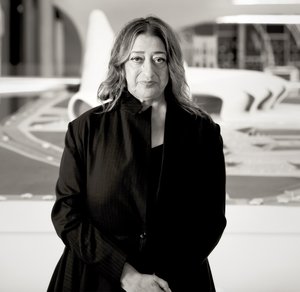
扎哈·哈迪德
1950 - 2016 , 伊拉克
艺术家简介
- Artistic Movement Or Style: 解构主义
- Artists Or Movements Influenced By This Artist: 现代建筑
- Artists Who Influenced This Artist:
- 卡齐米尔·马列维奇
- 雷姆·库哈斯
- Date Of Birth: 1950年10月31日
- Date Of Death: 2016年
- Full Name: 扎哈·穆罕默德·哈迪德
- Nationality: 伊拉克裔英国人
- Notable Artworks:
- 伦敦水上运动中心
- MAXXI博物馆
- 广州大剧院
- 塔特林的诠释
- Place Of Birth: 伊拉克,巴格达
相关文章

抽象表现主义:十幅定义艺术史的杰作
探索抽象表现主义的十幅经典杰作!波洛克、罗斯科等大师作品,揭秘艺术史上的重要瞬间。OriginalUniqueArt.com为您呈现高品质艺术品复制和精选家居装饰方案,感受现代艺术的力量与魅力。立即浏览全系列!

Mastering Abstraction: The 25 Most Iconic Works by Wassily Kandinsky
Explore 25 iconic Kandinsky masterpieces and the birth of abstraction. Discover the full collection online at OriginalUniqueArt.com.
The Soul of Color: A Journey into the Emotional Resonance of Lyrical Abstraction
Embark on a cultural journey through Lyrical Abstraction. Explore how masters like Kandinsky used color and motion to translate emotion into visual poetry. Discover the profound beauty of abstract expressionism and learn to curate emotional resonance in your own art collection.
Beyond the Lines: Mastering the High-Impact World of Contemporary Abstraction
Master the high-impact world of contemporary abstraction. Discover how bold colors, textures, and modern movements like Abstract Expressionism can transform your space with premium, high-energy art curated for the design-conscious professional.

几何抽象艺术十大杰作:定义现代家居装饰的经典之作
探索几何抽象艺术的十大杰作!康定斯基、蒙德里安等大师作品,色彩构成与非具象之美。OriginalUniqueArt.com提供博物馆级艺术复制品,为您的家居带来现代艺术灵感。立即在线探索完整系列!