效果预览
效果预览
 购买手绘画作
 分享
分享 分享
分享
 详情
详情

 下载
下载
 相似作品
相似作品 X射线
X射线 幻灯片播放
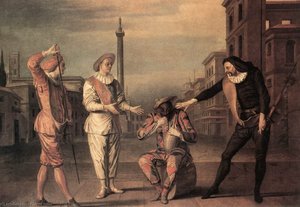
幻灯片播放Italian Comedians


 展开详情
展开详情




P118B $10

P118H $10

P118W $10

P438Z $10

P508JH $12

P508YH $12

P805H $10

P805Z $10

P919BZ $10

P919G $10

P919XJ $10

P959ZH $10

P968JZ $12

W106C $8

W218G $10

W218JH $8

W218Y $10

W307PJ $10

W316G $10

W316PJ $8

W316Y $10

W398PJ $8

W4111J $10

W500HY $15

W500JH $15

W692G $12

W849H $8

W940BG $15

W953PJ $8




从与原作比例一致的预设尺寸中进行选择。

您可以输入自定义尺寸,以适配特定的画框或空间。如果您选择的尺寸与原图比例不符,我们将对作品进行裁剪,或通过镜像填充/纯色填充边缘的方式来扩展图像。在开始制作之前,我们会向您发送一份数字效果图供您确认。
请注意,屏幕上的预览并不能反映实际的裁剪或扩展效果。只有效果图才能准确展示最终的构图。
虽然我们提供定制尺寸,但为了保持原图比例,我们建议您从预设列表中选择尺寸。


 玻璃选项仅适用于110厘米以下的尺寸。

Italian Comedians
艺术微喷/版画
复制品尺寸
-


最终总价
$ 80
藏品详情
Claude Gillot’s “Italian Comedians”: A Baroque Dance of Humor and Shadow
Claude Gillot (1673 – 1722) stands as a cornerstone of late Baroque French art, primarily celebrated for his masterful assimilation of Watteau and Lancret—artists who irrevocably shaped the aesthetic sensibilities of their era. Born in Langres, Burgundy, Gillot’s artistic life unfolded with remarkable breadth, encompassing painting, engraving, theatrical design, and metalworking – an uncommon combination for artists of his time that underscored his intellectual curiosity and versatility. He began his artistic journey as an apprentice under Jean Watteau around 1703, absorbing the influence of Watteau's delicate pastel landscapes and aristocratic scenes—a style known as “fête champêtre,” or pastoral fête—characterized by its airy brushstrokes and idealized depictions of rural life. This formative experience instilled in Gillot a profound understanding of visual storytelling and established him as a champion of theatrical illusionism.- Subject Matter: Gillot’s focus was firmly rooted in the burgeoning theatrical world of Paris, where he collaborated extensively with playwrights and composers. He captured scenes from commedia dell'arte performances—a popular form of Italian farce—and meticulously recreated them on canvas, injecting vibrant energy into his compositions.
- Style & Technique: Gillot’s artistic style aligns seamlessly with the Baroque tradition, prioritizing dramatic effect and emotional intensity. His technique is distinguished by extensive hatching and cross-hatching – meticulous lines that build up form and texture—creating a palpable sense of depth and realism. The artist skillfully employs tonal variation to convey mood and atmosphere, mirroring the theatrical lighting prevalent in Parisian opera houses.
- Composition: Gillot’s canvases often feature asymmetrical arrangements, directing the viewer's gaze towards key figures or elements within the scene. This technique enhances visual dynamism and contributes to the overall impression of movement—a hallmark of Baroque art.
A Symphony of Gray: Color Palette and Material Considerations
Despite its subject matter, Gillot’s “Italian Comedians” eschews vibrant color palettes in favor of a monochrome scheme dominated by shades of gray. This deliberate choice serves to heighten the dramatic impact of the artwork, emphasizing form and texture rather than distracting from the narrative. The artist utilized ink on paper—a favored medium for theatrical productions and portraiture—to achieve remarkable precision and detail. The subtle tonal range created through hatching underscores the importance of light and shadow in conveying emotion and establishing spatial depth.Symbolism & Emotional Resonance
The artwork transcends mere depiction; it embodies a profound exploration of human psychology and social satire. Gillot’s portrayal of Italian comedians—often caricatured figures embodying exaggerated traits—reflects the Baroque fascination with theatrical illusionism and challenges viewers to contemplate themes of humor, folly, and societal critique. The expressions on the performers' faces are deliberately ambiguous, inviting contemplation about their inner thoughts and motivations. This masterful blend of visual artistry and psychological insight elevates “Italian Comedians” beyond a simple representation of entertainment—it becomes an enduring testament to Gillot’s artistic genius.Historical Context & Artistic Legacy
“Italian Comedians” exemplifies the spirit of its time, aligning with the broader Baroque movement's commitment to grandeur and theatrical spectacle. Gillot’s work stands alongside Watteau and Lancret as a defining achievement of French Baroque art—artists who revolutionized painting by prioritizing atmosphere and illusionism over strict realism. His influence can be seen in subsequent generations of artists who embraced similar stylistic approaches, cementing his place as one of the era's most celebrated masters.Further Exploration
To delve deeper into Claude Gillot’s artistic vision, consider visiting The Two Coaches (1707), a dramatic Baroque oil painting depicting public execution—a testament to Gillot’s ability to capture intense emotion and masterful technique in the Louvre. Also explore Claude Gillot on WikiGallery.org for more information about his life and work: https://www.wikigallery.org/wiki/painting_117381/Claude-Gillot/Italian-ComediansAdditional Resources:
* Scene from the Italian Comedy (recto); Figure Study (verso): https://www.getty.edu/art/collection/object/103QXG * Claude Gillot: https://www.getty.edu/art/artists/claude-gillot/ * Italian Comedians - GILLOT, Claude: https://www.wga.hu/html/g/gillot/comedian.html * Italian Comedians - Claude Gillot - WikiGallery.org, the largest gallery in the world: https://www.wikigallery.org/wiki/painting_117381/Claude-Gillot/Italian-Comedians艺术家简介
The Architect of Baroque Splendor
Claude Gillot (1673–1722) remains a luminous figure in the tapestry of late Baroque France, an artist whose versatile hand touched nearly every facet of the visual culture of his era. Born in the historic town of Langres, north of Dijon, Gillot’s early creative impulses were nurtured by his father before he ventured to Paris to refine his craft. His artistic journey was far from linear; he was a true polymath of the arts, moving with ease between the delicate precision of printmaking, the structural demands of metalworking, and the grand-scale imagination required for theatrical design. This multidisciplinary foundation allowed him to approach the canvas not merely as a surface for pigment, and but as a stage where light, movement, and drama could converge.
The trajectory of Gillot’s career was profoundly shaped by his apprenticeship under the legendary Jean Watteau around 1703. From Watteau, he absorbed the ethereal qualities of the emerging fête champêtre style—a genre characterized by pastoral elegance and aristocratic leisure. Yet, while he inherited this delicate sensibility, Gillot infused it with a unique vigor derived from his work in the Parisian theater. His extensive collaborations with playwrights and composers to design elaborate sets and costumes for operas and comedies instilled in him a mastery of visual storytelling. He understood how to direct the viewer's eye through composition, using the theatricality of costume and scenery to breathe life into mythological and contemporary narratives alike.
A Mastery of Myth and Motion
Gillot’s ascent within the prestigious Académie Royale de peinture et de sculpture in 1715 marked a definitive moment in his professional life, signaling his recognition as a master of monumental composition. His breakthrough was anchored by works that celebrated the grandeur of classical antiquity through a contemporary lens. In masterpieces such as “Feast of Pan” and “Feast of Bacchus,” Gillot demonstrated an extraordinary ability to blend the divine with the terrestrial. These canvases were not merely depictions of myth; they were sensory experiences, where the lushness of the landscape met the exuberant energy of mythological revelry.
His technique was characterized by a sophisticated use of color and form that could shift from the soft, dreamlike textures reminiscent of his mentor to a more robust, dramatic Baroque intensity. This versatility allowed him to capture the very essence of the commedia dell’arte, bringing the wit and character of masked performers to life with a sense of spontaneous motion. Through his engravings and paintings, he documented the social graces and theatrical whimsies of the French court, creating a visual record that was as much about the spirit of the age as it was about the subjects themselves.
Legacy of the Rococo Prelude
As the art world began to transition from the heavy grandeur of the Baroque toward the lighter, more intimate aesthetics of the Rococo, Gillot’s influence remained foundational. He served as a vital bridge between generations, influencing later masters such as Lancret by refining the vocabulary of pastoral scenes and theatrical character studies. His ability to marry the structural discipline of classical painting with the whimsical charm of the stage helped define the aesthetic sensibilities of the early 18th century.
Today, the significance of Claude Gillot lies in his role as a creator of atmosphere. Whether through the intricate lines of a print or the sweeping vistas of a mythological feast, his work continues to evoke the vibrant, theatrical pulse of pre-revolutionary France. He remains an artist whose legacy is found not just in individual masterpieces, but in the very way we perceive the intersection of art, theater, and the beautiful artifice of life.

Claude Gillot
1673 - 1722 , France
艺术家简介
- Artistic Movement Or Style: Baroque
- Artists Who Influenced This Artist:
- Jean Watteau
- Nicolas Lancret
- Date Of Birth: 1673
- Date Of Death: 1722
- Full Name: Claude Gillot
- Nationality: French
- Notable Artworks:
- The Two Coaches
- Garment time of night
- Italian Comedians
- Place Of Birth: Langres, France
相关文章
Simon Vouet: A Baroque Master's Journey from Italian Influence to French Classicism
Explore the life & art of Simon Vouet, a pivotal French Baroque painter who introduced Italian styles to France. Discover his masterpieces and lasting influence on 17th-century art.
莫奈大师25幅杰作:光影艺术与家居臻选 | Claude Monet's 25 Masterpieces
探索克劳德·莫奈25幅杰作,沉浸于印象派大师的光影世界。从《睡莲》到《日出·印象》,感受色彩与情感的完美交融。OriginalUniqueArt.com提供博物馆级艺术复制品,为您的家居带来臻选装饰灵感!立即探索完整系列。

Drama and Light: A Definitive Guide to the Italian Baroque Masterpieces and the Revolution of Chiaroscuro
Explore the dramatic world of Italian Baroque art. Discover how masters like Caravaggio used chiaroscuro and tenebrism to revolutionize painting through light, shadow, and profound realism. A definitive guide for history lovers and art collectors.

巴洛克戏剧性:将辉煌与情感融入当代室内设计
探索巴洛克艺术的辉煌与奢华!OriginalUniqueArt提供精湛的手工油画复制、定制服务和专业艺术咨询,助您将经典作品融入当代室内设计,提升家居品味。投资艺术,传承价值。

Italian Baroque Unlocked: High-Drama Art That Hits Hard
Dive into the high-drama world of Italian Baroque art. Discover how chiaroscuro, intense emotion, and theatrical lighting redefined aesthetics. Explore the visceral power of the Counter-Reformation through a modern lens with expert insights from OriginalUniqueArt.com.