
 分享
分享 分享
分享
 详情
详情 指南
指南

 下载作品
下载作品
 相似作品
相似作品 幻灯片播放
幻灯片播放 问答
问答 统计数据
统计数据Industrial Architecture

- 26.0 x 36.0 cm


 展开全文
展开全文
艺术微喷/版画
博物馆级艺术微喷或帆布版画,制作高效,并提供多种饰面选择。 ( 订购纯手工绘制画作 切换至数字图像销售渠道)




































您可以从与原作比例一致的预设尺寸中进行选择。

请输入您所需的宽度和高度,以适配您的画框或墙面。由于印刷品只能进行裁剪,无法超出原图尺寸,因此若比例不一致,画面的一部分将会被裁切。在正式印刷之前,我们会为您发送一份数字效果图供您确认。本页面显示的图片并非最终裁剪后的效果——只有效果图才能展示真实的裁剪情况。


 玻璃选项仅适用于110厘米以下的尺寸。

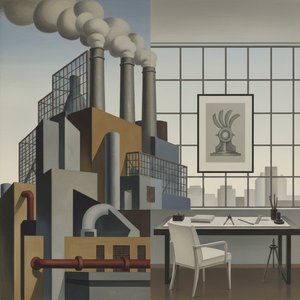
Industrial Architecture
艺术微喷/版画
复刻品尺寸
-


最终结算价
¥ 544
Charles Sheeler's "Industrial Architecture": A Precisionist Masterpiece
This meticulously crafted hand-painted reproduction captures Charles Sheeler’s seminal work, “Industrial Architecture,” a pivotal piece in the development of American Precisionism. Executed in 1931, this image transcends a simple depiction of an industrial site; it's a carefully constructed meditation on modernity, industry, and the burgeoning relationship between humanity and machine. The photograph, originally taken by Sheeler himself, serves as the foundation for this stunning artistic interpretation, showcasing his keen eye for geometric forms and stark contrasts that would become hallmarks of his style.
The Precisionist Vision
Born in Philadelphia in 1883, Charles Sheeler’s artistic journey was shaped by a rigorous education – initially at the Pennsylvania Museum School of Industrial Art and subsequently at the Pennsylvania Academy of Fine Arts. This training instilled within him a disciplined approach to observation and representation, culminating in his development of Precisionism. Unlike Impressionism's focus on fleeting moments, or Post-Impressionism’s emotional expression, Sheeler sought to depict subjects with an almost photographic clarity, emphasizing precise lines, sharp angles, and the inherent order found within industrial landscapes. The influence of European masters like Giotto, Masaccio, and Piero della Francesca is subtly present in his work, particularly in the careful rendering of form and space – a testament to his deep understanding of classical composition.
- Geometric Forms: The dominant motif is the precise arrangement of rectilinear shapes—the building’s walls, windows, and the imposing crane—creating a dynamic visual rhythm.
- Monochromatic Palette: The use of black and white amplifies the starkness and emphasizes the industrial subject matter, mirroring the austerity often associated with early 20th-century factories and urban environments.
- Sharp Detail: Sheeler’s meticulous attention to detail is evident in every element, from the texture of the metal crane to the reflections on the building's surface.
Symbolism and Context – A Reflection of Modernity
“Industrial Architecture” was created during a period of rapid industrialization and urbanization in America. The image powerfully reflects this era, capturing the rise of factories, railroads, and other technological advancements that were transforming American society. The crane itself is a potent symbol—representing progress, power, and the relentless drive for efficiency. The presence of the human figure, a solitary observer within the vast industrial landscape, adds another layer of interpretation, suggesting humanity’s role as both participant and witness to this transformative period. Sheeler's interest in architecture stemmed from his work documenting buildings for architects, demonstrating a fascination with structure and form.
Artistic Technique & Reproduction Details
This hand-painted reproduction is created using traditional techniques, meticulously replicating Sheeler’s original vision. Skilled artisans have painstakingly recreated the image, capturing not only the visual elements but also the subtle nuances of light and shadow that define his style. The resulting artwork boasts exceptional detail and color fidelity, ensuring a faithful representation of the original photograph. The size of 26 x 36 cm makes it ideal for a variety of interior design settings – from modern apartments to corporate offices. This reproduction is more than just an image; it’s a tangible connection to a significant moment in American art history.
Size: 26 x 36 cm
Date: 1931
Artist: Charles Sheeler Junior
常见问题与解答
“Industrial Architecture”的创作技法是什么,尺寸又是多少?
原作查尔斯·希勒 的《Industrial Architecture》为Giclée Print作品,尺寸为26 x 36 cm。技法与尺寸描述的是原件本身。
这幅 查尔斯·希勒 的《Industrial Architecture》 的复制品会为房间增添怎样的氛围?
凭借其Industrial的意境,建议将“Industrial Architecture”装饰于Office。
"Industrial Architecture" 创作于哪个时代?
查尔斯·希勒 的《Industrial Architecture》 创作于 19th Century 时期,这一时期为作品提供了深厚的历史背景。
艺术家简介
早年生活与教育
查尔斯·雷特·希勒(Charles Rettew Sheeler Junior)是一位享誉盛名的美国画家与摄影师,于1883年诞生于费城。他的艺术之路始于严谨的学术磨炼:从1900年至1903年,他在宾夕法尼亚博物馆工业艺术学校汲取养分,随后在宾夕法尼亚美术学院接受了正统的素描与绘画训练(1903-1906)。这段深厚的艺术积淀,为他日后成为“精确主义”(Precisionism)的先驱奠定了坚实的基石。艺术生涯与灵感源泉
希勒早期的创作深受其欧洲游历的影响。在漫步于欧洲大陆的过程中,他对中世纪晚期的意大利画家产生了浓厚的兴趣,尤其是乔托、马萨乔以及皮耶罗·德拉·弗朗西斯卡。1909年,他造访了巴黎迈克尔与莎拉·斯坦夫妇的寓所,这对毕加索和布拉克早期的赞助人,这次邂逅让他领略到了立体主义的魅力,并激发了他尝试这种风格的创作冲动。正是通过对这些多元艺术运动的深刻感悟,他最终塑造出了那套独一无二、极具辨识度的精确主义美学。摄影与精确主义的交织
希勒是一位自学成才的摄影大师,起初他主要为建筑师记录当地的建筑景观。随着艺术探索的深入,他开始用镜头捕捉自己居所的内部空间,利用光影的变幻来雕琢那些粗犷而原始的空间感。这种摄影实践与绘画创作产生了奇妙的化学反应,促成了精确主义风格的诞生——这是一种追求极致精准、严谨且不失力量感的艺术表达。传世杰作与艺术遗产
希勒的作品中蕴含着对光影与构图的精湛掌控,其代表作包括:- 《多伊尔斯顿农场的楼梯》,生动地展现了他对光影与构图的驾驭能力。
- 一系列关于当地民俗建筑的摄影作品,深刻揭示了功能性设计中所蕴含的纯粹美感。
- 他的杰作曾多次亮相于世界顶级的艺术殿堂,包括纽约现代艺术博物馆 (MoMA) 以及大都会艺术博物馆。
在 OriginalUniqueArt.com 探索更多
- 浏览希勒的艺术作品:https://OriginalUniqueArt.com/@/charles-rettew-sheeler-junior
- /zh/art/show/art-93pvdx-zh/
- 1883年7月16日:出生于宾夕法尼亚州费城
- 1965年5月7日:逝世于纽约州多布斯费里
- 大都会艺术博物馆:查尔斯·希勒 (1883–1965)
- 维基百科:查尔斯·希勒 ### 来自 OriginalUniqueArt.com 的链接: - /zh/art/list/ - https://OriginalUniqueArt.com/@/charles-rettew-sheeler-junior
参考文献

查尔斯·希勒
1883 - 1965
艺术家简介
- Artistic Movement Or Style: 精准主义
- Artists Or Movements Influenced By This Artist: ['立体主义']
- Artists Who Influenced This Artist:
- 乔托
- 马萨乔
- 皮耶罗·德拉·弗朗チェ斯卡
- Date Of Birth: 1883年7月16日
- Date Of Death: 1965年5月7日
- Full Name: 查尔斯·雷特维·希勒二世
- Nationality: 美国
- Notable Artworks:
- 多伊尔斯敦农场的楼梯
- 庆典中的烟囱
- 以农舍建筑为主题 -2
- Place Of Birth: 宾夕法尼亚州费城
相关文章

高檔藝術品複製技術:Giclée微噴的檔案品質與鑑賞細節
深入了解Giclée微噴技術:檔案品質、色彩還原的專業解析。探索高檔藝術品複製的細節與保存技巧,為您的收藏提供博物館級別的選擇。專家指導,確保完美呈現原作神韻。

Beyond Color: The Timeless Power and Artistry of Black and White Photography
Explore the profound artistry of black and white photography. From the chemistry of gelatin silver to the chiaroscuro of the Old Masters, discover how monochrome captures the eternal essence of light, form, and emotion for the discerning art collector.

White on Canvas: 10 Masterpieces & Timeless Elegance for Your Home Decor
Explore 10 iconic white paintings by Monet, Whistler & Rothko! Discover the stories behind these serene masterpieces and their impact on art history. Find museum-quality reproductions for your home decor at .

Dark Masterpieces: 10 Iconic Paintings Dominated by Black Tones |
Explore 10 iconic paintings dominated by black tones, from Rembrandt’s chiaroscuro to Goya's dark expressions. Discover the stories behind these masterpieces & find museum-quality art reproductions for your home at .
Charles Sheeler Jr.: Precisionism, Industrial Aesthetics & the American Modernist Vision
Explore the groundbreaking work of Charles Sheeler Jr., a pivotal figure in American Precisionism. Discover his iconic industrial landscapes, photographic studies & lasting influence on modernist art. Expert insights for collectors.