
 购买印刷品
购买印刷品 分享
分享 分享
分享
 详情
详情

 下载
下载
 相似作品
相似作品 幻灯片播放
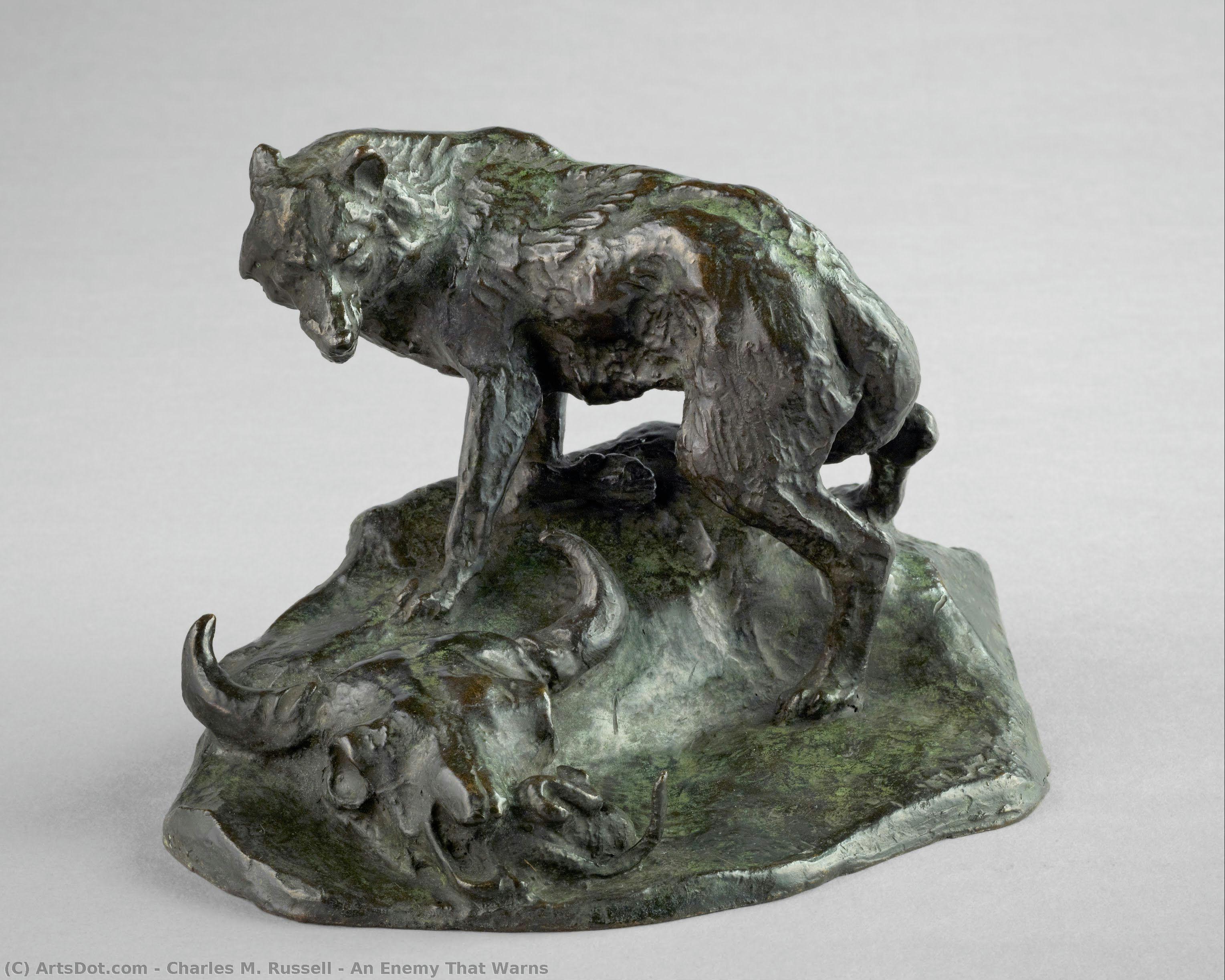
幻灯片播放An Enemy That Warns
 Bronze
- Sculpture
- American Realism
 1921
1921- 19th Century
 20.0 x 13.0 cm
 阿蒙·卡特美国艺术博物馆
 展开详情
展开详情
购买高分辨率增强版数字图像,其品质远超在线预览。
每一份文件都由我们的内部专家使用先进工具与专业的后期润色技术精心打造。我们确保每一张图像都具备卓越的清晰度、精准的色彩还原度以及细腻的细节表现。
最终文件将在 72 小时内通过电子邮件交付,并针对专业、编辑及印刷用途进行了优化。其品质与顶级设计工作室、出版社和画廊所信赖的标准完全一致。
每份数字图像订单均包含
专业数字图像交付,品质保障
选择 OriginalUniqueArt.com,您获得的不仅仅是一张图像——您收到的是经过专业级增强、精雕细琢的数字艺术作品,并享有满意保证。以下是您的订单中自动包含的所有内容:

邮件快速送达
您的高分辨率数字图像文件将在下单后 72 小时内通过电子邮件发送给您 —— 即可立即使用。

AI 增强型数字文件
您的艺术品经过专业优化,结合先进的 AI 技术与人工修饰,确保呈现极致的细节、清晰度与色彩准确度。

终身免费重发服务
不小心删除了文件或找不到了?没关系——我们将随时为您免费重发。

无需进口费用,始终如一
即刻拥有您的艺术作品,无需支付任何关税、税费或运费——数字下载始终免税。

色彩精准保证
我们通过专业工具与色彩管理技术,确保您的数字图像尽可能真实地还原原作色彩。

60天满意保证
如果您对所购买的数字图像不满意,我们将在60天内为您进行修改或退还100%的款项——无需任何解释。

100% 退款保证
如果不满意?在收到数字文件后的60天内,我们为您提供全额退款——无需任何理由。

批量订单优惠
购买 3 张图片可享 10% 折扣 - 购买 5 张可享 15% 折扣 - 购买 10+ 张可享 20% 折扣。非常适合创意项目、画廊和机构使用。
藏品详情
An Enemy That Warns: A Bronze Chronicle of the American West
Charles Marion Russell’s “An Enemy That Warns,” sculpted in 1921 and cast around the same year, isn't merely a depiction of a predator and its prey; it’s a visceral embodiment of the rugged spirit and primal drama of the American West. The bronze sculpture, measuring a modest 20 x 13 cm, immediately commands attention with its dynamic composition – a cougar poised in an explosive attack upon a magnificent bison. Russell, born in St. Louis but forged by his life as a Montana cowboy, masterfully captures this moment of intense confrontation, imbuing the scene with both raw power and a palpable sense of tension.
The sculpture’s strength lies not just in its subject matter – the iconic pairing of cougar and bison representing the relentless struggle for survival that defined the West – but also in Russell's meticulous technique. He employed the lost-wax casting method, a process demanding immense skill and patience, to achieve an astonishing level of detail. The rough texture of the bronze itself mirrors the very essence of the animals: the sleek musculature of the cougar, the thick hide and powerful form of the bison. Subtle variations in tone create depth, highlighting the contours of each animal’s body and conveying a remarkable sense of weight and movement. The base, subtly weathered with moss-like texture, anchors the sculpture while simultaneously contributing to its overall realism – it feels as though you could reach out and touch the rough bark of a mountain tree.
A Story Told in Bronze: Russell’s Western Vision
Charles Marion Russell wasn't simply an artist; he was a storyteller, deeply rooted in the traditions and lore of the American West. His life as a cowboy, spent traversing Montana’s vast landscapes and interacting with Native American communities, profoundly shaped his artistic vision. “An Enemy That Warns” is a testament to this immersive experience – it's a scene Russell witnessed firsthand, a moment he felt compelled to immortalize in bronze. The sculpture reflects the themes of power, danger, and ultimately, survival that permeated Russell’s work. The cougar, traditionally associated with cunning and stealth, dominates the composition, its predatory stance radiating an undeniable force. The bison, representing strength and resilience, defends itself with a desperate posture, highlighting the inherent vulnerability within even the most formidable creatures.
Interestingly, the sculpture was created during a period of significant change in the West – the rapid expansion of railroads, the influx of settlers, and the displacement of Native American tribes. Russell’s work served as both a celebration of this wild landscape and a poignant commentary on its transformation. The piece's creation date, 1921, places it within a time when the romanticized image of the frontier was still powerfully held, yet the realities of westward expansion were becoming increasingly evident.
Symbolism and Emotional Resonance
Beyond its technical brilliance, “An Enemy That Warns” resonates deeply on an emotional level. The sculpture evokes a primal sense of drama – a silent battle played out against the backdrop of the vast American West. The tension between predator and prey is palpable, prompting viewers to contemplate themes of life, death, and the constant struggle for existence. Russell’s masterful use of light and shadow further enhances this emotional impact, creating a dramatic interplay of form and space that draws the eye into the heart of the scene.
The sculpture's enduring appeal lies in its ability to capture not just a specific moment in time but also the spirit of an entire era. It’s a powerful reminder of the untamed beauty and inherent dangers of the American West, rendered with unparalleled skill and emotional depth by one of its most iconic artists.
Technical Details & Historical Context
Crafted using the lost-wax casting technique, a method favored by Russell for its ability to capture intricate detail, “An Enemy That Warns” is a remarkable example of his artistic prowess. The bronze itself was likely treated with a patina – a chemical process that alters the surface color and texture – to enhance its realism and create an aged appearance. The sculpture’s dimensions (20 x 13 cm) are relatively compact, making it suitable for display in a variety of settings. It's important to note that this piece was created in 1921, during Russell’s peak period of artistic activity, and reflects his deep understanding of animal anatomy and behavior, honed through years spent observing wildlife in the Montana wilderness.
艺术家简介
查尔斯·马里恩·拉塞尔:西部精神的画笔
查尔斯·马里恩·拉塞尔,人们亲切地称他为“C.M.”或“小查理”,并非生于他日后所描绘的壮丽西域。1864年,他在密苏里州圣路易斯出生,童年时光并未沉浸在正规的艺术训练中,而是深深着迷于美国西部——最初通过故事和素描体验到的景象,一种近乎浪漫的对广阔空间和未驯服自由的渴望。这份萌芽的热情最终将他推向西方,十六岁时毅然放弃了传统的学业,成为蒙大拿州朱迪斯河盆地的牧场牛仔。这是一次大胆的举动,一次有意识地沉浸于他所想象的生活中,它证明对塑造他的艺术愿景至关重要。拉塞尔并非仅仅*描绘*西部,而是生活在其中、呼吸着它的尘埃、感受着它的节奏。这种亲身体验将成为他持久遗产的基础。长达十一年的时间里,他拥抱了牛仔的艰苦生活——牧场工人、猎人和骑手的生活经历,为他提供了对这片土地、动物以及居住于其中的人们(牛仔、印第安人和皮毛商)的深入了解——这些人将是他日后如此有力地描绘的对象。从牧童到记录者
拉塞尔的艺术之旅并非循规蹈矩的学术进步,而是一种源于必要性和观察的自然发展。在担任牛仔期间,他开始素描日常生活的场景——烙印牛、赶马、与野生动物相遇,捕捉出西部原始之美和内在戏剧性的瞬间。这些作品并非旨在为画廊准备的精致佳作,而是个人记录、视觉日记,记录着一种正在迅速消失的生活方式。他的早期作品以惊人的自然主义为特征,敏锐的细节运用源于多年来观察周围环境细微之处。他并不热衷于美化或理想化西部;他力求如实地描绘它,包括它的艰辛和荣耀。一个转折点是他在一幅描绘牛群在严酷冬季挣扎的明信片上插图——这一场景如此生动,以至于引发了对他的作品的需求,使他能够在1893年从牧场工人转型为全职艺术家。这标志着一个持续不断的职业生涯的开始,涵盖绘画、雕塑和写作,所有这些都与他对真实描绘美国西部的坚定承诺息息相关。他不仅仅是一位艺术家;他还是视觉历史学家,一丝不苟地记录着一个正在消逝的世界,在它消失在记忆中之前。捕捉一个vanishing世界:主题与技巧
拉塞尔的艺术深深地融入了叙事——每一幅画布都讲述一个故事,通常充满了边境生活的神话和现实。他的题材多样,但始终关注牛仔、印第安人和广袤景观之间的互动。他并没有回避冲突的描绘,但他的描绘很少带有煽情色彩;相反,它们传达了一种对所有相关人员的尊重,承认了一个变化世界的复杂性。《坏马》(A Bad Hoss),创作于1904年,完美地体现了这一点——一个动态的场景捕捉到了牛仔和野马之间的斗争,体现了牛仔生活固有的技能和危险。同样,《腹部河战役》(Battle of Belly River)(1905 年)展示了他以精确和情感深度描绘戏剧性历史事件的能力。随着时间的推移,他的技巧不断发展,从一种更具说明性的风格转向更自由的笔触和更大胆的调色板。他是一位叙事大师,运用构图、光线和阴影来创造引人入胜的故事,这些故事深深地引起了渴望与西方的浪漫和粗犷联系起来的观众的共鸣。他的后期作品通常具有更高的戏剧性和情感强度,反映了他作为艺术家的日益成熟以及他对人类状况的不断加深理解。《他明白西部的真正美丽不在于它的风景,而在于居住在那里的人们的韧性和精神——这是一个持续超过一个世纪后仍能吸引人们的遗产。》遗产与持久的影响
查尔斯·马里恩·拉塞尔对美国艺术的影响是不可否认的。他不仅仅是一位西部场景画家;他*定义*了它们,影响了整整一代人。他的作品帮助塑造了牛仔、印第安人和西部的广阔景观在公众心中的形象,影响了无数在他之后创作的艺术家。他之所以被称为“牛仔艺术家”,不仅是因为他的题材,还因为他对西部生活的真实描绘——这种描绘源于个人经历,而不是浪漫化的幻想。如今,他的画作和雕塑受到世界各地收藏家和博物馆的追捧。位于蒙大拿州的大 falls 的 C.M. 罗塞尔博物馆群是其持久遗产的见证,收藏了大量他的作品,并保存着他所热衷描绘的精神。像《罗斯洞穴的刘易斯和克拉克与印第安人会面》这样的壁画继续激发人们的敬畏和钦佩,提醒人们美国历史上的一个关键时刻。拉塞尔的艺术超越了单纯的再现;它是一种对勇气、韧性和人类精神持久力量的颂扬——一种持续超过一个世纪后仍能吸引观众的遗产。画布之外:变革的声音
拉塞尔不仅仅是一位艺术家;他还是倡导者。在蒙大拿州和加拿大生活期间,他对印第安文化产生了深深的尊重,并利用他的艺术来挑战普遍存在的刻板印象,促进理解。他积极支持奇佩瓦部落争取在蒙大拿州获得保留地的努力,甚至代表他们游说国会。这种对社会正义的承诺通常被忽视,但代表了他性格和艺术愿景的一个重要维度。他相信记录和保存印第安传统至关重要,以免它们永远消失——这种信念体现在他的许多绘画和雕塑中。他的艺术不仅仅是描绘西部;而是见证一个变化的世界并为那些声音经常被边缘化的人们发声。这种对真实性的奉献,加上他的艺术天赋,巩固了他在美国最重要、最受喜爱的艺术家之一的地位——一位记录着一种正在消失的生活方式的编年史家,也是文化理解的捍卫者。
查尔斯·马里恩·罗素
1864 - 1926 , 美国
基本信息
- Artistic Movement Or Style: 西域艺术
- Artists Or Movements Influenced By This Artist: ['西域艺术家']
- Date Of Birth: 1864年3月19日
- Date Of Death: 1926年10月24日
- Full Name: 查尔斯·马里昂·拉塞尔
- Nationality: 美国人
- Notable Artworks:
- Big Nose George
- When the Plains...
- Peace Talk
- A Bad Hoss
- Battle of Belly...
- Place Of Birth: 圣路易斯, 美国

