
 实景预览
实景预览
 发送
发送 分享
分享
 详情
详情 指南
指南

 下载图片
下载图片
 相似作品
相似作品 X射线
X射线 幻灯片播放
幻灯片播放 统计数据
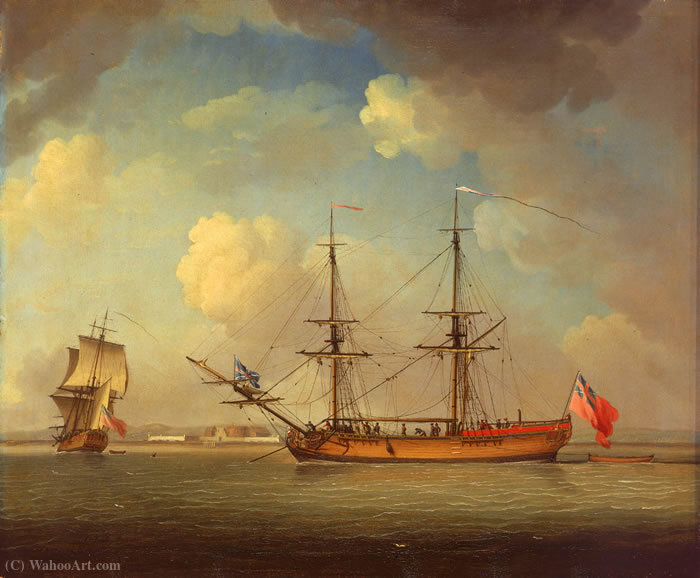
统计数据A naval snow
 阅读全文
阅读全文
手工油画复制品
由我们的艺术家按需定制,为您提供您所选尺寸及画框的布面手工油画。 ( 切换至版画销售渠道 切换至数字图像销售渠道)




































您可以从与原作比例一致的预设尺寸中进行选择。

您可以输入自定义尺寸,以适配特定的画框或空间。如果所选尺寸与原图比例不符,我们将通过裁剪作品或添加手绘元素来扩展画面。数字样稿将在制作开始前发送给您确认。
请注意,屏幕预览无法准确反映实际的裁剪或扩展效果,只有样稿才能真实呈现最终的构图。
虽然我们提供定制尺寸服务,但为了保留原作比例,建议您从预设列表中选择尺寸。
下单后,OriginalUniqueArt.com 团队将通过电子邮件联系客户获取具体要求,并提供效果预览图


 玻璃选项仅适用于110厘米以下的尺寸。

A naval snow
复制品材质
复刻品尺寸说明
-


总计金额
$ 300
艺术家简介
The Master of the Mid-Century Seas
In the mid-18th century, as Britain’s maritime influence began to surge across the globe, a new kind of visual language was emerging on canvas—one that moved away from static academicism toward a more visceral, breathing realism. At the heart of this transition stood Charles Brooking (c. 1723–1759), an artist whose brief but luminous career helped define the dawn of naval Romanticism. To look upon a Brooking seascape is to feel the salt spray and the tension of the wind; his work does not merely document ships, but captures the very soul of the ocean’s unpredictable temperament.
Brooking’s artistic DNA was deeply rooted in the traditions of craftsmanship and meticulous observation. Born in London, he was the son of Charles Brooking Sr., a skilled painter and decorator associated with the prestigious Greenwich Hospital. This early exposure to the maritime atmosphere of Greenwich provided more than just a livelihood; it offered a masterclass in topographical accuracy. Through his apprenticeship under his father, Brooking developed an exacting eye for the structural complexities of naval vessels, a skill that would later allow him to imbulate his paintings with a profound sense of authenticity that resonated with both sailors and connoisseurs alike.
A Breakthrough of Light and Scale
The trajectory of Brooking’s career was irrevocably altered in 1754 by a landmark commission from the Foundling Hospital in London. Tasked with creating “A Flagship Before the Wind Under Easy Sail,” Brooking moved beyond the realm of mere maritime illustration into the territory of monumental fine art. This undertaking, supported by Treasurer Taylor White, required him to engage deeply with the contemporary masters of his era. He drew inspiration from the works of Peter Monamy, whose depictions of fleets provided a blueprint for capturing movement, yet Brooking infused these scenes with a burgeoning emotional intensity that hinted at the Romantic movement to come.
His development was further enriched by his relationship with artists like Dominic Serres, who acknowledged Brooking’s significant influence on his own evolving style. This period of his life was marked by an increasing ability to balance the technical rigors of ship portraiture with the atmospheric drama of the elements. Whether depicting a cutter caught in a strong breeze or the terrifying majesty of a shipwreck against a rocky coast, Brooking possessed a unique talent for using light and shadow to suggest the immense, often overwhelming power of the sea.
Legacy of the Naval Romantic
Though his life was tragically short, ending in 1759, the impact of Charles Brooking’s work echoed through the subsequent generations of British marine painters. He bridged the gap between the documentary precision of the early 18th century and the sweeping, emotive landscapes of the later Romantic era. His ability to render the textures of canvas, wood, and churning water with such fidelity ensured that his paintings served as both historical records and emotional experiences.
Today, Brooking’s significance is preserved in the collections of great institutions like the Tate, where his works continue to captivate viewers with their dramatic tension. His legacy remains defined by several key artistic contributions:
- Technical Realism: The seamless integration of accurate naval architecture with fluid, naturalistic environments.
- Atmospheric Innovation: A pioneering use of light to convey the shifting moods of the maritime climate, from tranquil doldrums to tempestuous storms.
- Historical Resonance: Capturing the visual essence of Britain’s burgeoning naval identity during a period of immense imperial expansion.
In the annals of art history, Charles Brooking remains a pivotal figure—a painter who looked upon the sea not just as a subject for study, but as a living, breathing protagonist in the grand drama of human endeavor.

charles brooking
1723 - 1759
快速概览
- Artistic Movement Or Style: Marine Painting
- Artists Or Movements Influenced By This Artist: ['Peter Monamy']
- Artists Who Influenced This Artist: ['Dominic Serres']
- Date Of Birth: 1723
- Date Of Death: 1759
- Full Name: Charles Brooking
- Nationality: English
- Notable Artworks:
- A Cutter in a Strong Breeze
- Cutter Close Hauled in a Fresh Breeze, with Other Shipping