

 效果预览
效果预览
 分享
分享 分享
分享
 详情
详情

 下载
下载
 相似作品
相似作品 X射线
X射线 幻灯片播放
幻灯片播放 统计数据
统计数据Democritus
 Oil
Oil- WallArt
- Baroque and Rococo
 1692
1692- Early Modern
 69.0 x 57.0 cm
 卢浮宫
卢浮宫
 展开详情
展开详情
艺术微喷/版画
博物馆级艺术微喷或帆布版画,制作高效,并提供多种饰面选择。 ( 购买手绘画作 切换至数字图像销售渠道)




P118B $10

P118H $10

P118W $10

P438Z $10

P508JH $12

P508YH $12

P805H $10

P805Z $10

P919BZ $10

P919G $10

P919XJ $10

P959ZH $10

P968JZ $12

W106C $8

W218G $10

W218JH $8

W218Y $10

W307PJ $10

W316G $10

W316PJ $8

W316Y $10

W398PJ $8

W4111J $10

W500HY $15

W500JH $15

W692G $12

W849H $8

W940BG $15

W953PJ $8




从与原作比例一致的预设尺寸中进行选择。

您可以输入自定义尺寸,以适配特定的画框或空间。如果您选择的尺寸与原图比例不符,我们将对作品进行裁剪,或通过镜像填充/纯色填充边缘的方式来扩展图像。在开始制作之前,我们会向您发送一份数字效果图供您确认。
请注意,屏幕上的预览并不能反映实际的裁剪或扩展效果。只有效果图才能准确展示最终的构图。
虽然我们提供定制尺寸,但为了保持原图比例,我们建议您从预设列表中选择尺寸。


 玻璃选项仅适用于110厘米以下的尺寸。

Democritus
艺术微喷/版画
复制品尺寸
-


最终总价
$ 80
Charles Antoine Coypel: A Synthesis of Baroque Grandeur and Rococo Delight
Charles Antoine Coypel (1694-1752) stands as a pivotal figure in French art history, embodying the stylistic transition between the opulent Baroque era and the burgeoning Rococo movement. Born in Paris to Antoine Coypel, himself a celebrated artist, Coypel inherited a lineage steeped in artistic tradition – his grandfather Noël Coypel was also a respected painter. This familial connection undoubtedly fostered an early appreciation for visual artistry and propelled him toward a distinguished career as premier peintre du roi (first painter to the king) at Louis XIV’s court, a position he held until his untimely death. He represents a crucial bridge between two dominant artistic sensibilities, skillfully blending their characteristics into a uniquely expressive oeuvre. His ascent began with a formal apprenticeship under Nicolas Frémiet, mastering the techniques of oil painting and etching – skills that would prove invaluable throughout his prolific output. Coypel quickly gained recognition for his ability to capture dramatic narratives and idealized figures, aligning perfectly with the tastes of the French aristocracy during Louis XIV’s reign. However, unlike many Baroque artists who prioritized monumental scale and formal rigidity, Coypel embraced a softer aesthetic, incorporating delicate pastel hues and flowing drapery—elements characteristic of Rococo style. This stylistic duality is evident throughout his extensive body of work, demonstrating an artist acutely aware of the evolving artistic landscape.The Painting: Democritus – A Portrait Steeped in Symbolism
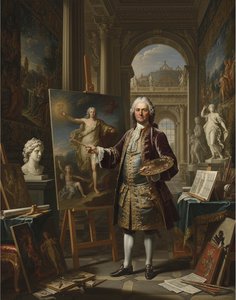
“Democritus” depicts a man with a dignified gaze and subtle smile, rendered in meticulous detail against a muted crimson backdrop. The subject’s attire—a scarlet robe—immediately evokes associations with royalty and piety, suggesting he may have been a religious figure or an intellectual deeply engaged in philosophical contemplation. Coypel's masterful use of chiaroscuro – the dramatic interplay between light and shadow – enhances the portrait’s expressive power, emphasizing the contours of the face and conveying a sense of inner serenity. Two additional figures flank the central subject, appearing smaller and serving as compositional anchors—likely intended to convey depth and perspective within the frame.Technique and Style: Baroque Precision Meets Rococo Elegance
Coypel’s technique exemplifies the harmonious blend of Baroque precision and Rococo elegance. He employed oil paint on canvas with painstaking accuracy, achieving remarkable tonal gradations and capturing subtle nuances of skin texture. Yet, he skillfully incorporated Rococo stylistic elements—such as soft pastel colors and flowing drapery—creating a visual experience that transcends mere representation. The artist’s meticulous attention to detail is particularly noticeable in the rendering of the man's facial features and hair, demonstrating his mastery of anatomical observation. This combination resulted in an artwork that possesses both grandeur and grace, reflecting the artistic sensibilities of its time.Historical Context: Louis XIV’s Court and Artistic Patronage
“Democritus” was created during the zenith of Louis XIV’s reign—a period marked by unparalleled royal patronage of the arts. Coypel benefited enormously from this support, securing commissions for portraits and decorative panels that adorned Versailles and other palaces throughout France. The Baroque tradition, established under Louis XIII, continued to exert influence on artistic production, emphasizing grandeur, monumentality, and idealized beauty. However, Coypel’s work signaled a decisive shift toward the Rococo style—characterized by frivolity, ornamentation, and an emphasis on sensual pleasure—reflecting the changing tastes of the French court and society.Emotional Impact: Serenity Amidst Formal Ornamentation
Despite its formal elegance, “Democritus” communicates a profound sense of inner peace and contemplation. The man’s serene expression invites viewers to engage in introspection, mirroring the philosophical ideals prevalent during Coypel's era. The subdued crimson hue of the robe contributes to the painting’s atmosphere of solemn dignity—a deliberate contrast to the exuberant colors and decorative flourishes typical of Rococo art. Ultimately, Coypel’s masterpiece transcends mere visual spectacle, offering a glimpse into the human spirit and capturing the essence of aristocratic refinement.艺术家简介
查尔斯·安托万·科伊佩尔的传奇:跨越时代的桥梁
在法国艺术史的宏伟画卷中,很少有人能像查尔斯·安托万·科伊佩尔那样,如此优雅地体现从巴洛克式的沉重壮丽向洛可可式轻盈典雅过渡的微妙转折。1694年出生于巴黎,科伊佩尔出身于一个艺术名门望族,注定不凡。作为著名画家安托万·科伊佩尔之子、诺埃尔·科伊佩尔之孙,他的生命从一开始就浸润在皇家学院的传统之中。这份家族传承赋予他的不仅仅是一个显赫的名字,更是一场与时代大师近距离接触的深度学徒生涯,使他能够继承对古典构图的深刻理解,以及驾驭法国宫廷所必需的戏剧化表现力。
在尼古拉·弗雷米埃指导下的早期训练,为科伊佩尔提供了极其全面的技术储备,从精细的蚀刻版画到流畅的油画技法,无所不精。这种多才多艺成为了他艺术生涯的基石,使他能够在18世纪初不断变幻的美学浪潮中游刃有余。尽管他的艺术根基深植于晚期巴洛克那种宏大且富有戏剧性的风格,但他对新兴的洛可可精神拥有一种独特的敏锐感。他开始在作品中注入一种全新的轻盈感,运用细腻的粉彩色调、不对称的布局以及一种装饰性的魅力,这种美学特征在随后的数十年里定义了法国艺术的审美标准。
叙事大师与皇家委任的巅峰
科伊佩尔职业生涯的巅峰,标志于他被授予国王首席画家这一显赫头衔。在为路易十四及其继任者服务的岁月里,他成为了法国王室主要的视觉叙事者。他的才华远不止于画布本身;他更是一位富有远见的规划师,深谙艺术如何赋予建筑空间以生命。他在凡尔赛宫礼拜堂的贡献堪称惊世之作,其壁画作品——例如对荣耀中的天父的描绘——巧妙地运用了大师级的错视画(trompe-l'oeil)技法,创造出一种仿佛能让天花板消融于苍穹之中的神圣透视感。
除了皇家礼拜堂的墙壁,科伊佩尔的影响力还通过与戈伯兰挂毯厂(Gobelins Manufactory)的广泛合作渗透到了装饰艺术领域。他拥有一种罕见的能力,能将史诗般的叙事转化为宏伟的挂毯设计。他受荷马史诗《伊利亚特》与《奥德赛》启发创作的系列作品,展现了对色彩与动态的卓越掌控力,将交织的丝线化作光影交错的史诗长诗。或许他最大胆且具革命性的尝试,是为塞万提斯的《唐吉诃德》创作的插图系列。在这一项目中,科伊佩尔摆脱了僵化的形式感,转而采用一种更具动态、以人物驱动的叙事方式,有效地架起了古典插画与现代叙事艺术之间的桥梁。
艺术意义与持久的影响力
查尔斯·安托万·科伊佩尔的历史意义在于他扮演了艺术中介者的角色。他不仅仅是时代的见证者,更是时代的塑造者。通过将巴洛克的结构完整性与戏剧重量感,与洛可可式的诙谐、轻盈与优雅完美融合,他提供了一种风格上的连续性,使法国艺术在演进的过程中并未丧失其原有的庄严感。他的肖像画,如充满感染力的《德谟克利特》,至今仍以其在王室尊严与细腻心理深度之间取得的平衡,令观众为之倾倒。
尽管他的生命在1752年戛然而止,但其作品的影响力已深深铭刻在欧洲绘画史上。他的艺术遗产体现在:
- 法国肖像画的演变:推动了人物表现从僵化的形式主义向更具表现力和情感张力的转变。
- 挂毯与装饰设计:通过戈伯兰系列的委任创作,将大规模纺织艺术提升到了高级叙事艺术的高度。
- 风格的融合:成功地将17世纪的宏大尺度与18世纪细腻的装饰审美进行了有机统一。
时至今日,科伊佩尔的作品依然是一扇通往人类创造力变革时期的窗口,提醒着我们:在那个时代,艺术曾被用来连接国王们的尘世辉煌与人类灵魂对神性的向往。

查尔斯·安托万·科伊佩尔
1694 - 1752 , 法国
艺术家简介
- Artistic Movement Or Style: 巴洛克洛可可风格
- Artists Who Influenced This Artist:
- Antoine Coypel
- Noël Coypel
- Date Of Birth: 1694年 法国巴黎
- Date Of Death: 1752年
- Full Name: Charles Antoine Coypel
- Nationality: 法国
- Notable Artworks:
- 堂吉诃德系列
- 菲利普·科伊佩尔肖像
- 菲利普·科伊佩尔与其妻子的画像
- Place Of Birth: 法国巴黎
相关文章
10 Iconic Rococo Masterpieces That Defined an Era of Elegance
Step into the elegance of the 18th century. Explore 10 iconic Rococo masterpieces, from Fragonard to Boucher, featuring lush pastels and ornate beauty. Find museum-quality art reproductions and decor inspiration at OriginalUniqueArt.com. Discover all masterpieces on OriginalUniqueArt.com
Baroque vs. Rococo: A Definitive Guide to High-Drama Shadows and Golden Elegance
Explore the dramatic evolution from Baroque's intense chiaroscuro to Rococo's golden elegance. Our expert guide decodes the shift from high-drama shadows to playful, ornate grace for art enthusiasts and collectors seeking deep historical insight.
10 Iconic Rococo Masterpieces That Defined an Era of Elegance
Step into the elegance of the 18th century. Explore 10 iconic Rococo masterpieces by Fragonard and Boucher, featuring pastel hues and ornate beauty. Find museum-quality art reproductions and decor inspiration at OriginalUniqueArt.com. Discover all masterpieces on OriginalUniqueArt.com.
从宏伟到优雅:巴洛克与洛可可艺术的演变之旅
深入探索巴洛克与洛可可艺术的辉煌历程!从卡拉瓦乔的光影到华托的优雅,解读欧洲绘画大师的经典作品。OriginalUniqueArt提供专业艺术分析、高清画作欣赏及定制服务。
Charles Le Brun: Master of French Baroque Classicism & His Enduring Legacy
Explore the life & art of Charles Le Brun, master of French Baroque Classicism. Discover his royal commissions, influence on Versailles, and enduring legacy through detailed analysis & stunning artworks.