 效果预览
效果预览
 购买手绘画作
 分享
分享 分享
分享
 详情
详情

 下载
下载
 相似作品
相似作品 X射线
X射线 幻灯片播放
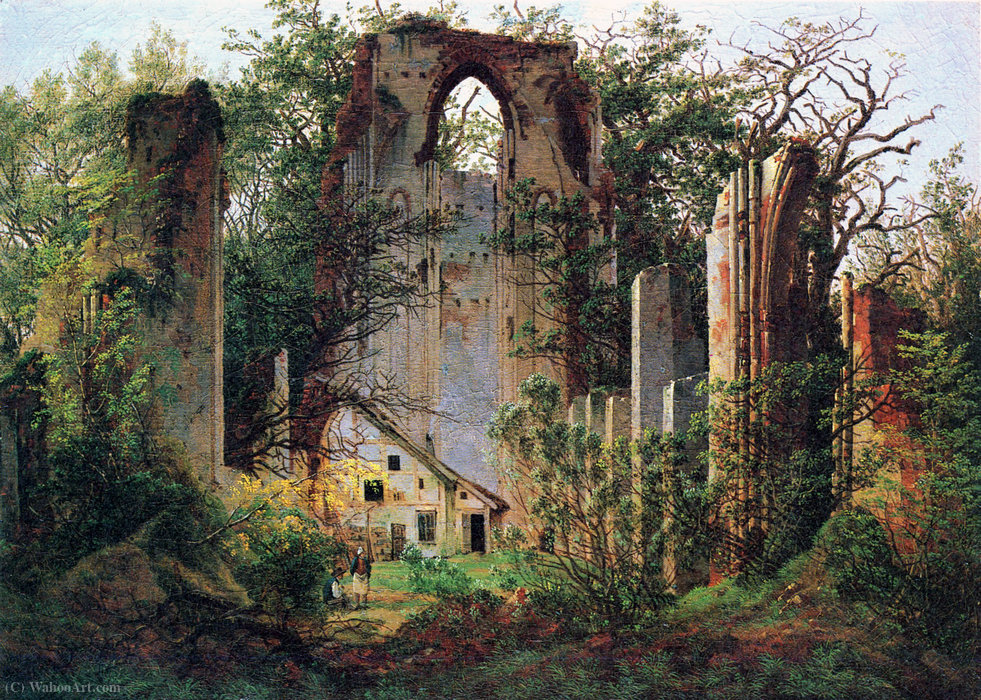
幻灯片播放Monastery ruin Eldena


 展开详情
展开详情




P118B $10

P118H $10

P118W $10

P438Z $10

P508JH $12

P508YH $12

P805H $10

P805Z $10

P919BZ $10

P919G $10

P919XJ $10

P959ZH $10

P968JZ $12

W106C $8

W218G $10

W218JH $8

W218Y $10

W307PJ $10

W316G $10

W316PJ $8

W316Y $10

W398PJ $8

W4111J $10

W500HY $15

W500JH $15

W692G $12

W849H $8

W940BG $15

W953PJ $8




从与原作比例一致的预设尺寸中进行选择。

您可以输入自定义尺寸,以适配特定的画框或空间。如果您选择的尺寸与原图比例不符,我们将对作品进行裁剪,或通过镜像填充/纯色填充边缘的方式来扩展图像。在开始制作之前,我们会向您发送一份数字效果图供您确认。
请注意,屏幕上的预览并不能反映实际的裁剪或扩展效果。只有效果图才能准确展示最终的构图。
虽然我们提供定制尺寸,但为了保持原图比例,我们建议您从预设列表中选择尺寸。


 玻璃选项仅适用于110厘米以下的尺寸。

Monastery ruin Eldena
艺术微喷/版画
复制品尺寸
-


最终总价
$ 80
藏品详情
Monastery Ruin Eldena: A Meditation on Decay and Transcendence
Caspar David Friedrich’s Monastery Ruin Eldena, painted in 1825, stands as a cornerstone of Romantic landscape painting—a testament to the movement's preoccupation with sublime beauty intertwined with melancholy contemplation. More than just a depiction of crumbling stone, it’s an invitation to wrestle with profound questions about time, faith, and humanity’s relationship with the natural world. The artwork resides in the Alte Nationalgalerie, Staatliche Museen zu Berlin, where it continues to inspire awe and provoke reflection.Composition and Symbolism: Framing Eternity
Measuring 35 x 49 cm, Eldena isn't a grand spectacle of architectural grandeur; rather, Friedrich meticulously crafted a scene designed to elicit introspection. Dominating the canvas is a weathered stone monastery building—a deliberate choice mirroring the ruins of Hilda Abbey near Greifswald, which Friedrich personally explored during his formative years. Surrounding it is a dense forest teeming with life, rendered in muted greens and browns that convey both vibrancy and encroaching decay. Scattered figures – primarily men – add scale to the composition, subtly emphasizing the human presence against the backdrop of geological time. The ruined monastery itself serves as an emblem of impermanence—a poignant reminder that even the most enduring structures eventually succumb to the forces of nature. Friedrich’s masterful use of perspective draws the viewer's gaze inwards, fostering a sense of solitude and prompting contemplation on themes of mortality and spiritual renewal.Artistic Style and Technique: The Sublime Rendered in Soft Light
Friedrich’s artistic style embodies the Romantic ethos—a rejection of Neoclassical formalism in favor of expressive emotion and subjective experience. He achieved this ethereal quality through painstaking attention to detail, employing a technique characterized by delicate brushstrokes and subtle tonal gradations. Friedrich skillfully utilized light – predominantly diffused sunlight filtering through the trees – to illuminate the monastery ruins and create an atmosphere of serene melancholy. The muted palette—dominated by earthy hues—mirrors the prevailing mood of the painting, reinforcing its symbolic resonance. Unlike earlier landscape painters who sought to capture idealized beauty, Friedrich aimed to evoke a feeling of “the sublime”—a paradoxical blend of terror and wonder—challenging viewers to confront the immensity of creation alongside their own vulnerability.Historical Context: Romanticism's Embrace of Ruins
Friedrich’s Eldena emerged during the height of the German Romantic movement (roughly 1800-1830), a period marked by intellectual ferment and artistic experimentation. Philosophers like Friedrich Hegel championed the idea that history unfolded according to divine providence, while artists wrestled with questions of faith and morality in response to Enlightenment rationalism. Ruins—particularly those associated with religious sites—became recurring motifs in Romantic art, symbolizing not only decay but also spiritual transcendence. The Abbey of Eldena itself had been abandoned centuries earlier, representing a tangible link to the past and prompting reflection on the cyclical nature of history. Friedrich’s depiction aligns perfectly with this broader cultural preoccupation, elevating the ruin to an iconographic symbol of timeless beauty and profound contemplation.Emotional Impact: A Legacy of Quiet Reverence
Monastery Ruin Eldena continues to resonate powerfully with audiences today—a testament to Friedrich's ability to capture a complex emotional landscape. The painting evokes feelings of nostalgia for lost grandeur, coupled with awe at the enduring majesty of nature. It invites viewers to pause and consider their place within the grand scheme of existence—to appreciate both the beauty of the present moment and the inevitability of change. Its quiet solemnity speaks to a universal yearning for spiritual solace and reminds us that true artistic achievement lies in conveying not merely what we see but also what we feel.艺术家简介
卡斯帕·大卫·弗里德里希:灵魂的风景
卡斯帕·大卫·弗里德里希(1774-1840)并非仅仅一位画家,他是一位诗人、哲学家,用画布记录了浪漫主义时代德国人内心深处的精神世界。生于波罗的海沿岸城市格赖茨瓦尔德,弗里德里希的一生笼罩在一种忧郁的氛围之中。童年的丧亲之痛——母亲和兄弟姐妹相继离世——在他心中留下了深刻的印记,也塑造了他对死亡、短暂和精神救赎的敏锐感知。早年在大学学习神学与艺术,这两种看似截然不同的领域,却在弗里德里希的创作中交织融合,赋予了他的作品独特的深度和象征意义。他并非单纯地描绘风景,而是将自然转化为一种情感的载体,一种通往灵魂深处的通道。从哥本哈根到德累斯顿:艺术之路的探索
弗里德里希的艺术生涯并非一帆风顺。在接受正规训练的过程中,他先是在哥本哈根皇家艺术学院学习,掌握了绘画的基本技巧,并接触到了北欧风景画的传统。然而,他并不满足于模仿,而是渴望找到一种能够表达内心情感的独特语言。回到德国后,他在德累斯顿定居,这座城市成为了他的创作中心和灵感源泉。在这里,他结识了一批志同道合的学者、诗人,并逐渐形成了自己独特的艺术风格。早期的作品中,我们能看到他对光线和氛围的敏锐捕捉,以及对人物与自然之间关系的深刻思考。他开始尝试将人物融入到广阔的风景之中,通过人物的姿态和表情,来传达一种孤独、沉思和敬畏的情感。标志性作品:象征主义与浪漫主义的巅峰
弗里德里希最著名的作品之一是《松林中的修道院》(1809-1810),这幅画作以其阴郁的氛围和象征意义而闻名于世。画面中,一间废弃的教堂被光秃秃的树木所包围,暗示着时间的流逝、信仰的衰落以及人生的无常。另一幅代表作《海上的游人》(约1818)则成为了浪漫主义艺术的象征。画面中的一个背影站在悬崖边,眺望着迷雾笼罩的海面,象征着人类在面对浩瀚宇宙时的渺小和敬畏。他善于运用“ Rückenfigur”(后身像)这一手法,邀请观者进入画中,与画面中的人物一同感受自然的力量和神秘。此外,《吕根岛的粉色崖》(1818)展现了他对德国本土风景的热爱,以及他对民族认同感的表达。《冰海》(1824)则以其令人震撼的景象,描绘了北极地区的荒凉与严酷,象征着自然的力量和人类的脆弱。影响与遗产:超越时代的艺术精神
弗里德里希的创作受到多种因素的影响。他从荷兰黄金时代大师那里汲取了对光线和氛围的精湛运用技巧,同时又深受康德哲学思想的影响,关注主观经验和感性认知。他的作品也反映了他个人的信仰和经历,将宗教、自然和个人情感融为一体。尽管在晚年受到了一些批评,但弗里德里希的作品在20世纪初重新获得了认可,并对后来的表现主义、超现实主义和存在主义艺术家产生了深远的影响。他开创了一种全新的风景画风格,不再仅仅是客观地描绘自然景色,而是将自然转化为一种情感的表达,一种精神的象征。他的艺术作品超越了时代的局限,至今仍能触动人们内心深处的情感,引发对生命、死亡和宇宙奥秘的思考。弗里德里希的作品不仅仅是绘画,更是一种心灵的对话,一种对人类灵魂的探索。
卡斯帕·大卫·弗里德里希
1774 - 1840 , 德国
艺术家简介
- 全名: 卡斯帕·大卫·弗里德里希
- 出生地: 格赖夫斯瓦尔德,德国
- 出生日期: 1774年9月5日
- 去世日期: 1840年5月7日
- 受影响的艺术家或运动:
- 象征主义者
- 超现实主义者
- 国籍: 德国
- 影响艺术家: ['雅各布·凡·瑞斯达尔']
- 艺术流派或风格: 浪漫主义
- 著名作品:
- 橡树林中的修道院
- 雾海上的旅行者
- 吕根岛的粉色垩崖
- 冰海
相关文章

Caspar David Friedrich: Romanticism's Master of Landscape & the Sublimity of Inner Experience
Explore the profound landscapes of Caspar David Friedrich, a master of German Romanticism. Discover the symbolism, themes & enduring influence of this iconic artist. A deep dive into his life and work.

浪漫主义画派的十部巨作:定义风景画的艺术传奇
探索浪漫主义风景画的巅峰!本文精选十部经典名作,带您领略莫奈、库尔贝等大师的艺术魅力。感受色彩与光影的诗意,重温自然风光的震撼。OriginalUniqueArt.com为您提供博物馆级别的艺术复制品和个性化家居装饰方案。尽在OriginalUniqueArt.com!
浪漫主义艺术史上的十大巨作:情感、想象与美的永恒化
探索浪漫主义艺术的巅峰!本文精选十大名画,带您领略德拉克勒罗、柯罗等大师的情感与想象力。从色彩到技法,深入解读这些经典作品背后的故事。OriginalUniqueArt.com为您提供博物馆品质的艺术复制品和个性化家居装饰方案。立即探索全系列!

浪漫主义风景画:情感、自然与宇宙的探索
探索浪漫主义风景画的深刻内涵,深入了解卡斯帕·大卫·弗里德里希等大师的作品。OriginalUniqueArt提供精美复制品、定制服务及专业艺术咨询,助您收藏经典,打造专属艺术空间。

Hubert Robert: Picturing Ruins, Preserving Memory – A Study of Romantic Antiquarianism & Artistic Innovation
Explore the captivating world of Hubert Robert, master of Romantic landscape painting & 'capriccio' ruins. Discover his historical context, artistic innovations, and collecting insights with OriginalUniqueArt.