

 实景预览
实景预览
 发送
发送 分享
分享
 详情
详情 指南
指南

 下载图片
下载图片
 相似作品
相似作品 X射线
X射线 幻灯片播放
幻灯片播放 统计数据
统计数据Figura


 阅读全文
阅读全文
手工油画复制品
由我们的艺术家按需定制,为您提供您所选尺寸及画框的布面手工油画。 ( 切换至版画销售渠道 切换至数字图像销售渠道)




P118B ¥10

P118H ¥10

P118W ¥10

P438Z ¥10

P508JH ¥12

P508YH ¥12

P805H ¥10

P805Z ¥10

P919BZ ¥10

P919G ¥10

P919XJ ¥10

P959ZH ¥10

P968JZ ¥12

W106C ¥8

W218G ¥10

W218JH ¥8

W218Y ¥10

W307PJ ¥10

W316G ¥10

W316PJ ¥8

W316Y ¥10

W398PJ ¥8

W4111J ¥10

W500HY ¥15

W500JH ¥15

W692G ¥12

W849H ¥8

W940BG ¥15

W953PJ ¥8




您可以从与原作比例一致的预设尺寸中进行选择。

请输入您需要的宽度和高度,以适配您的画框或墙面。由于作品为手工绘制,若您选择不同的尺寸比例,艺术家可能会在画面边缘多画一些或稍作裁剪 —— 由您决定。在开始绘画之前,我们会为您发送一份数字效果图供您确认。本页面上展示的图片并非最终实物 —— 只有效果图才能反映真实结果。
下单后,OriginalUniqueArt.com 团队将通过电子邮件联系客户获取具体要求,并提供效果预览图


 玻璃选项仅适用于110厘米以下的尺寸。

Figura
复制品材质
复刻品尺寸说明
-


总计金额
¥ 2017
Carlos Mérida: A Fusion of Worlds
Carlos Mérida (December 2, 1891 – December 21, 1985) stands as a monumental figure in Latin American modern art—a testament to artistic innovation born from profound cultural roots. His journey wasn’t merely chronological; it was a dynamic synthesis of European avant-garde experimentation with the enduring spirit of Guatemalan indigenous traditions and, later, the vibrant pulse of Mexico City.
Initially drawn to music after experiencing hearing loss—a serendipitous circumstance that redirected his creative path—Mérida embarked on an artistic exploration marked by unwavering dedication. His formative studies at the Instituto de Artes y Oficios and the Instituto de Ciencias y Letras in Guatemala City established a bedrock of knowledge upon which he would build his distinctive style.
Early Influences & Parisian Awakening
His relocation to Paris in 1919 proved pivotal, immersing him in the burgeoning artistic currents of Europe. During this period, Mérida cultivated connections with luminaries like Diego Rivera and Pablo Picasso—artists who profoundly shaped his worldview and fueled his stylistic evolution. Exposure to movements such as Cubism and Surrealism instilled a desire for abstraction that would become central to his oeuvre.
The Parisian experience wasn’t simply about absorbing artistic ideas; it was about confronting personal challenges—namely, the debilitating effects of hearing loss. Recognizing this impediment, Mérida turned to painting with renewed vigor, finding solace in color and form as mediums for expressing emotion and conveying complex narratives.
Maya Symbolism & Geometric Abstraction
Returning to Guatemala City in 1929, Mérida’s artistic vision crystallized around a fascination with Mayan culture—a heritage he championed throughout his life. This influence permeated his artwork, informing his use of geometric abstraction and incorporating motifs derived from Maya cosmology and ritual.
Mérida's distinctive style—characterized by simplified shapes, bold colors, and repetitive patterns—represents a radical departure from representational art. Rather than depicting the external world faithfully, he sought to capture its essence through symbolic imagery and geometric abstraction—techniques that reflect his belief in the universality of artistic expression.
Legacy & Enduring Impact
Carlos Mérida’s contribution to Latin American art transcends mere stylistic innovation; it embodies a commitment to exploring cultural identity while embracing the transformative potential of modern aesthetics. His work continues to inspire artists and collectors alike, serving as a reminder that true artistry lies in forging connections between tradition and experimentation—a legacy cemented by monumental murals like “4000m2” on Benito Juarez housing complex.
Today, Mérida’s paintings reside in museums across the globe—testaments to his enduring artistic vision and his profound understanding of the human condition. His exploration of abstraction remains a cornerstone of Latin American art history, prompting ongoing dialogue about the role of symbolism and geometric form in conveying emotion and communicating cultural heritage.
问答详情
Carlos Mérida 的《Figura》 的亮度是多少?
"Figura" 的色彩呈现出 Bright Balance 的亮度。
“Figura”是否一直留在其艺术家的故乡?
不——该作品目前存放于海外。“Figura”收藏于美利坚合众国,而Carlos Mérida出生于Guatemala。
哪里可以买到 Carlos Mérida 的《Figura》 的版画?
“Figura”可通过 采用棉质帆布或档案级画布纸制作的艺术版画 进行购买。您可以在其 艺术版画 页面上根据您的需求选择尺寸并下单。
相关文章

几何抽象艺术十大杰作:定义现代家居装饰的经典之作
探索几何抽象艺术的十大杰作!康定斯基、蒙德里安等大师作品,色彩构成与非具象之美。OriginalUniqueArt.com提供博物馆级艺术复制品,为您的家居带来现代艺术灵感。立即在线探索完整系列!
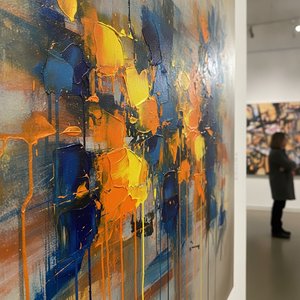
Beyond the Lines: Mastering the High-Impact World of Contemporary Abstraction
Master the high-impact world of contemporary abstraction. Discover how bold colors, textures, and modern movements like Abstract Expressionism can transform your space with premium, high-energy art curated for the design-conscious professional.

The Soul of Color: A Journey into the Emotional Resonance of Lyrical Abstraction
Embark on a cultural journey through Lyrical Abstraction. Explore how masters like Kandinsky used color and motion to translate emotion into visual poetry. Discover the profound beauty of abstract expressionism and learn to curate emotional resonance in your own art collection.

Kandinsky's Masterpieces: 25 Paintings That Define Abstract Art | OriginalUniqueArt
Journey through Wassily Kandinsky's 25 most iconic abstract paintings. Explore his revolutionary use of color, form & spiritual expressionism. Find museum-quality Kandinsky reproductions and elevate your home decor with OriginalUniqueArt.com. Discover all masterpieces on OriginalUniqueArt.com!

抽象表现主义:十幅定义艺术史的杰作
探索抽象表现主义的十幅经典杰作!波洛克、罗斯科等大师作品,揭秘艺术史上的重要瞬间。OriginalUniqueArt.com为您呈现高品质艺术品复制和精选家居装饰方案,感受现代艺术的力量与魅力。立即浏览全系列!
