

 实景预览
实景预览
 发送
发送 分享
分享
 详情
详情 指南
指南

 下载图片
下载图片
 相似作品
相似作品 X射线
X射线 幻灯片播放
幻灯片播放 统计数据
统计数据Venus with Cherubs
 Oil On Canvas
- WallArt
- Baroque
 185.0 x 130.0 cm
 Fondazione Cariplo
 阅读全文
阅读全文
手工油画复制品
由我们的艺术家按需定制,为您提供您所选尺寸及画框的布面手工油画。 ( 切换至版画销售渠道 切换至数字图像销售渠道)




P118B ¥10

P118H ¥10

P118W ¥10

P438Z ¥10

P508JH ¥12

P508YH ¥12

P805H ¥10

P805Z ¥10

P919BZ ¥10

P919G ¥10

P919XJ ¥10

P959ZH ¥10

P968JZ ¥12

W106C ¥8

W218G ¥10

W218JH ¥8

W218Y ¥10

W307PJ ¥10

W316G ¥10

W316PJ ¥8

W316Y ¥10

W398PJ ¥8

W4111J ¥10

W500HY ¥15

W500JH ¥15

W692G ¥12

W849H ¥8

W940BG ¥15

W953PJ ¥8




您可以从与原作比例一致的预设尺寸中进行选择。

请输入您需要的宽度和高度,以适配您的画框或墙面。由于作品为手工绘制,若您选择不同的尺寸比例,艺术家可能会在画面边缘多画一些或稍作裁剪 —— 由您决定。在开始绘画之前,我们会为您发送一份数字效果图供您确认。本页面上展示的图片并非最终实物 —— 只有效果图才能反映真实结果。
下单后,OriginalUniqueArt.com 团队将通过电子邮件联系客户获取具体要求,并提供效果预览图


 玻璃选项仅适用于110厘米以下的尺寸。

Venus with Cherubs
复制品材质
复刻品尺寸说明
-


总计金额
¥ 2014
Carlo Cignani’s Venus with Cherubs: A Symphony of Baroque Sensuality
Carlo Cignani (1628–1719) stands as a pivotal figure in the waning years of the Baroque era, embodying its refined elegance and intellectual depth. Unlike some contemporaries who embraced radical innovation, Cignani championed ‘new manner,’ marking a subtle shift away from the dramatic fervor of earlier masters—a stylistic evolution that profoundly influenced artists like Guido Reni and Guercino. His legacy resides not in groundbreaking experimentation but in masterful consolidation, securing his place as one of the last great exponents of Bolognese classicism – a tradition he skillfully revived after decades of stylistic decline. Details surrounding his formative years remain somewhat elusive; biographical records indicate he hailed from a noble family possessing modest resources, and his subsequent artistic journey would propel him to international acclaim.- Subject Matter: The painting depicts Venus reclining with two cherubic figures—a scene steeped in mythological allusion and embodying the ideals of beauty and love central to classical culture.
- Style & Movement: Cignani’s work firmly anchors itself within Baroque aesthetics, characterized by dramatic chiaroscuro lighting, emotional intensity, and dynamic compositional arrangements. This stylistic approach reflects a broader trend toward portraying human experience with heightened expressive power.
- Technique: Executed in oil paints on canvas, the artwork demonstrates meticulous attention to detail—evident in the subtle blending of colors and gradations of tone achieved through masterful brushwork. The artist’s technique prioritizes capturing the essence of form and texture, resulting in a luminous surface finish.
Historical Context & Artistic Influences
Cignani's artistic development coincided with a period of significant cultural transformation in Bologna—a city renowned for its vibrant artistic milieu during the Baroque zenith. He absorbed influences from masters such as Correggio and Melozzo da Forlì, whose explorations of light and perspective profoundly impacted Bolognese painters. Furthermore, Cignani’s oeuvre bears testament to the enduring legacy of Caravaggio's revolutionary realism—a stylistic impulse that championed naturalism alongside expressive emotion. The artist’s engagement with these precedents underscores his commitment to upholding artistic traditions while simultaneously pushing boundaries within established conventions.Symbolism & Emotional Resonance
The painting’s symbolism transcends mere depiction; it speaks to deeper philosophical concepts concerning femininity, divine grace, and the pursuit of spiritual contemplation. Venus herself embodies idealized beauty—a reflection of humanist ideals prevalent during the Baroque period—while the cherubs serve as emblems of innocence and celestial benevolence. The artist skillfully orchestrates visual elements to evoke a palpable sense of serenity and sensual allure—capturing not only the physical form but also the psychological state of the depicted figures. This masterful manipulation of artistic conventions contributes significantly to the artwork’s enduring emotional impact.Provenance & Reproduction Quality
A print of approximately 1730 by Giovanni Antonio Lorenzini, commissioned for Palazzo Pitti and subsequently housed in the Grand Prince Ferdinand's collection, provides valuable insight into Cignani’s artistic reputation during his lifetime. Recent scholarship suggests that Venus with Cherubs—alongside a second version—was destined for Cosimo III of Tuscany’s Gallery of Uffizi, demonstrating its recognition as among the finest achievements of Cignani’s oeuvre. Reproductions crafted by OriginalUniqueArt.com adhere to stringent quality standards, ensuring faithful representation of the original artwork's luminosity and textural nuances—a testament to the artist’s enduring legacy and a captivating addition to any discerning collector’s portfolio.问答详情
"Venus with Cherubs" 的色彩饱和度如何?
卡洛·奇尼亚尼 的《Venus with Cherubs》 的色彩呈现出 Muted 的饱和度与 Monochromatic 的强度。
这幅 卡洛·奇尼亚尼 的《Venus with Cherubs》 的复制品会为房间增添怎样的氛围?
凭借其Romantic的意境,建议将“Venus with Cherubs”装饰于Living Room。
建议为 卡洛·奇尼亚尼 的《Venus with Cherubs》 选择哪种复刻尺寸?
建议为 卡洛·奇尼亚尼 的《Venus with Cherubs》 制作 Large 的复制品。尺寸可以在保持比例不变的情况下进行调整。
艺术家简介
柔和巴洛克的传承:卡洛·奇尼亚尼的生平与艺术
约于1630年出生于博洛尼亚的卡洛·奇尼亚尼(Carlo Cignani),是一位连接盛期巴洛克与新兴洛可可风格的迷人人物。他并不像同时代的某些艺术家那样追求激进的革命,而更像是一位大师级的集大成者,是延续了数代之久的博洛尼亚古典主义最后的伟大代表。他的艺术体现了一种当时被称为“新风格”的特质——他减弱了早期巴洛克大师所偏爱的戏剧性强度,转而注入一种亲密且具有沉思感的特质,这种细腻的笔触微妙地影响了圭多·雷尼(Guido Reni)和圭切尔奇诺(Guercino)等艺术家。奇尼亚尼的艺术之路并非由激进的创新驱动,而是充满了精致的优雅与思想的深度,这使他在17世纪意大利绘画中占据了重要地位,尽管有时会被人忽视。关于他早年生活的细节仍较为匮乏;我们仅知他出身于一个虽有贵族血统但家境并不富裕的家庭,并且他后来不仅育有一子费利切·奇尼亚尼(Felice Cignani)——一位同样从事绘画的艺术家,还有一位侄子保罗·奇尼亚尼(Paolo Cignani)也继承了家族的艺术传统。磨砺岁月与艺术蜕变
奇尼亚尼的艺术旅程始于巴蒂斯塔·卡伊罗(Battista Cairo)的教导,但真正塑造其奠基风格的却是跟随弗朗切斯科·阿尔巴尼(Francesco Albani)的学徒生涯。他吸收了阿尔巴尼严谨的技法、鲜艳的色彩运用以及对画面细腻完成度的追求。然而,奇尼亚着并未仅仅止步于模仿师长;他拥有一种求知欲,引导他去探索其他的艺术影响。帕尔马大教堂中科雷乔(Correggio)的湿壁画深刻影响了他对构图与色彩和谐的理解,而梅洛佐·达·福利(Melozzo da Forlì)对透视法的精湛掌握,则激发了他创造错觉空间的热情。这种多元影响的融合使奇尼亚尼发展出了独特的艺术语言——一种以优美的形态、平衡的构图和微妙的情感共鸣为特征的风格。他在博洛尼亚建立了“人体解剖学院”(accademia del nudo),展现了对解剖学研究的执着,并为许多极具潜力的年轻艺术家提供了指导,其中包括后来名震一方的画家朱塞佩·玛丽亚·克雷斯皮(Giuseppe Maria Crespi)。艺术巅峰与杰作华章
奇尼亚尼的职业生涯跨越了数十年,创作了涵盖宗教场景、神话题材及肖像画的丰富作品。为福利(Forlì)教堂创作的《圣罗斯的升天》(Assumption of Saint Rose of Lima)堪称其最负盛名的成就。这幅宏伟的湿壁画展示了他在高大建筑空间内构建戏剧性构图的能力,既呼应了科雷乔的影响,又确立了自身的独特风格。其他重要作品还包括充满历史厚重感的《保禄三世进入博洛尼亚》(Entry of Paul III into Bologna),以及展现其在描绘王室人物时兼具尊严与细腻情感能力的《法兰西斯一世触摸王室恶疾》(Francis I Touching for Kings Evil)。他在天顶画方面同样造诣极深,例如与阿戈斯蒂诺·卡拉奇(Agostino Carracci)合作创作的《爱的力量》(The Power of Love)。他的《亚当与夏娃》(Adam and Eve)通过在德累斯顿和哥本哈根的展览赢得了国际认可,凸显了其作品在意大利之外日益增长的需求。此外,《约瑟夫与波提法之妻》(Joseph and Potiphar's Wife)存在多个版本,这足以证明这一圣经主题在其作品集中持久的生命力。对博洛尼亚艺术的深远影响
卡洛·奇尼亚尼的历史意义不仅在于他的艺术产出,更在于他作为博洛尼亚绘画传统守护者与传播者的角色。他代表了一所以古典主义、严谨思维和精湛技艺著称的画派的巅峰。他对解剖学研究的投入(通过其建立的“人体解剖学院”可见一斑)帮助维持了后进艺术家们高标准的工艺水平。除了克雷斯皮,他还指导了保罗·安东尼奥·帕德内(Paolo Antonio Paderna)和桑特·范迪(Sante Vandi),进一步推动了博洛尼亚艺术的发展。他的作品散见于欧洲各地的著名收藏馆中,包括德累斯顿和哥本哈根,巩固了他的国际声誉。如今,他的多幅画作被保存在福利的市民美术馆(Pinacoteca Civica),确保后世能够领略其艺术魅力。尽管他可能不像同时代的某些巴洛克大师那样广为人知,但卡洛·奇尼亚尼在艺术史上始终是一位举足轻重的人物——一位“柔和巴洛克”的大师,其遗产至今仍在激励并吸引着人们。他的晚年依然勤勉工作,包括为福利的Circolo della Scranna绘制《黎明》(Aurora),并在1719年后的某个时刻去世前,完成了为市民美术馆创作的《圣罗斯加冕》(Incoronazione di Santa Rosa)。
卡洛·奇尼亚尼
1628 - 1719 , 意大利
快速概览
- Artistic Movement Or Style: 巴洛克
- Artists Or Movements Influenced By This Artist:
- Crespi
- Paderna
- Vandi
- Artists Who Influenced This Artist:
- Correggio
- Melozzo da Forlì
- Albani
- Carracci
- Date Of Birth: 1628年
- Date Of Death: 1719年
- Full Name: 卡洛·奇尼亚尼
- Nationality: 意大利
- Notable Artworks:
- 圣罗斯升天
- 保罗三世进入博洛尼亚
- 法兰西斯一世触摸王室恶疾
- 爱的力量
- 亚当与夏娃
- 约瑟夫与波提乏之妻
- Place Of Birth: 意大利,博洛尼亚
相关文章

巴洛克艺术巅峰:十部巨作定义时代,点亮您的臻品格调
探索巴洛克艺术的辉煌!本文精选十部巨作,带您领略卡拉瓦乔、伦勃朗等大师的光影魔法与戏剧张力。从黄金时代到宗教绘画,感受奢华与精致。OriginalUniqueArt.com为您提供博物馆品质的艺术复制品和家居装饰灵感。尽在OriginalUniqueArt.com!

Baroque Classicism: The Grandeur of Order and Drama in 17th-Century Art History
Explore the profound elegance of Baroque Classicism. Discover how 17th-century masters synthesized dramatic emotion with classical order through the lens of the Counter-Reformation and the works of legends like Carlo Maratta and Andrea Sacchi.

巴洛克戏剧性:将辉煌与情感融入当代室内设计
探索巴洛克艺术的辉煌与奢华!OriginalUniqueArt提供精湛的手工油画复制、定制服务和专业艺术咨询,助您将经典作品融入当代室内设计,提升家居品味。投资艺术,传承价值。
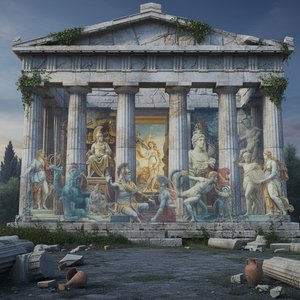
Echoes of Olympus: Mythological Narratives in Western Art Through the Ages
Explore the captivating history of mythological narratives in Western art! From ancient Greece to modern masterpieces, discover iconic artworks & symbolism. Expert analysis and high-quality reproductions at OriginalUniqueArt.

巴洛克艺术的戏剧性辉煌:历史背景、风格特征与持久影响
深入探索巴洛克艺术的辉煌历史、独特风格与持久影响。了解卡拉瓦乔、贝尼尼等大师的作品,洞悉反宗教改革运动下的艺术变革。OriginalUniqueArt.com为您提供专业的艺术解读与高清画作欣赏。