- 首页

- 油画复制品
- carl buchheister
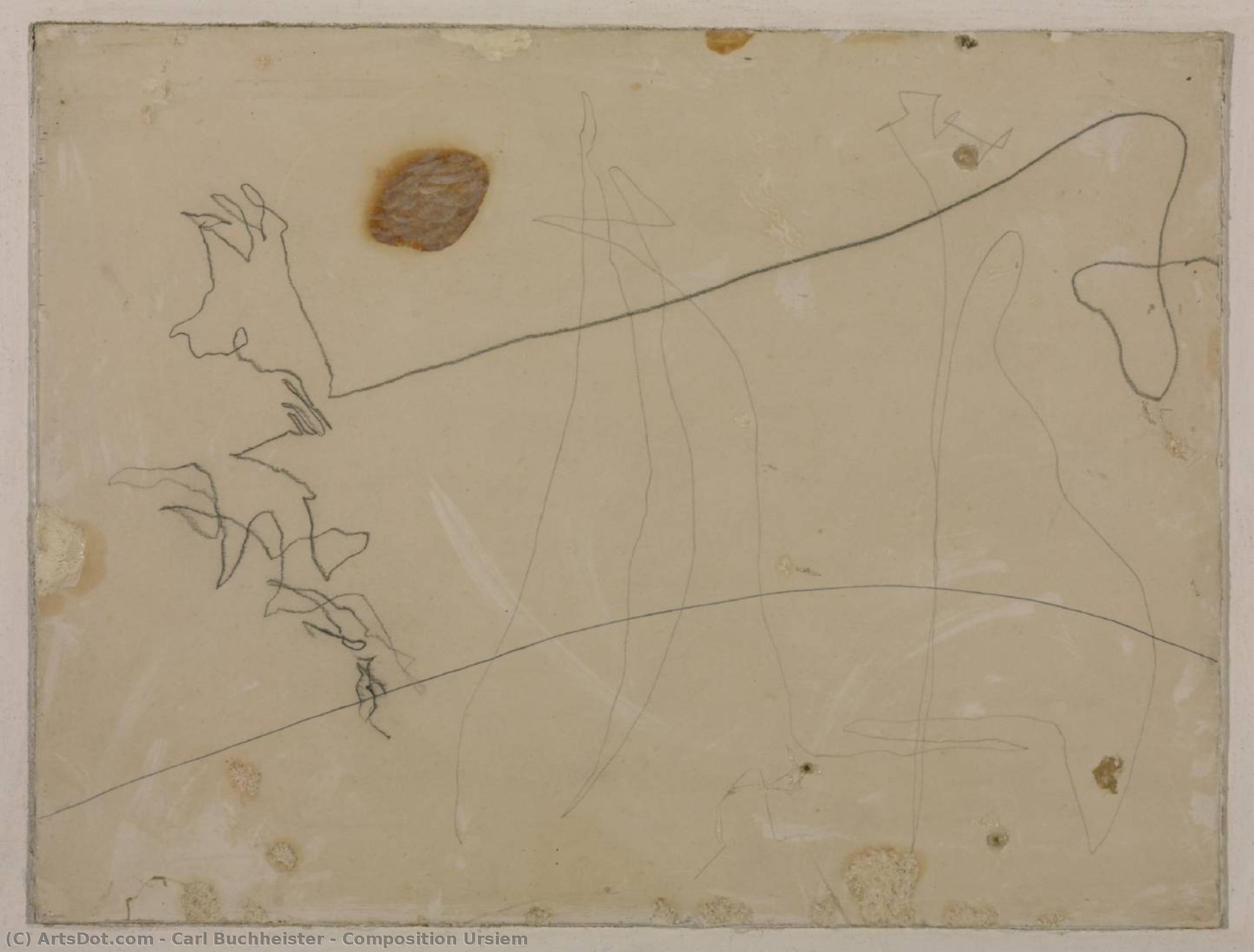
- Composition Ursiem
 效果预览
效果预览
 切换至印刷版
 分享
分享 分享
分享
 详情
详情

 下载
下载
 相似作品
相似作品 X射线
X射线 幻灯片播放
幻灯片播放Composition Ursiem


 展开详情
展开详情




P118B $10

P118H $10

P118W $10

P438Z $10

P508JH $12

P508YH $12

P805H $10

P805Z $10

P919BZ $10

P919G $10

P919XJ $10

P959ZH $10

P968JZ $12

W106C $8

W218G $10

W218JH $8

W218Y $10

W307PJ $10

W316G $10

W316PJ $8

W316Y $10

W398PJ $8

W4111J $10

W500HY $15

W500JH $15

W692G $12

W849H $8

W940BG $15

W953PJ $8




从与原作比例一致的预设尺寸中进行选择。

您可以输入自定义尺寸,以适配特定的画框或空间。如果所选尺寸与原图比例不符,我们将通过裁剪作品或添加手绘元素来扩展画面。数字样稿将在制作开始前发送给您确认。
请注意,屏幕预览无法准确反映实际的裁剪或扩展效果,只有样稿才能真实呈现最终的构图。
虽然我们提供定制尺寸服务,但为了保留原作比例,建议您从预设列表中选择尺寸。
下单后,OriginalUniqueArt.com 团队将通过电子邮件联系客户获取具体要求,并提供效果预览图。


 玻璃选项仅适用于110厘米以下的尺寸。

Composition Ursiem
复制材质
复制品尺寸
-


最终总价
$ 325
作品详情
The Echoes of Form: Exploring Buchheister's Composition Ursiem
To stand before Carl Buchheister’s Composition Ursiem is to step into a landscape of the mind itself—a place where structure dissolves into gesture and emotion takes tangible form. This charcoal drawing, executed in 1959, does not offer a scene to be merely observed; rather, it demands an emotional resonance from the viewer. It possesses the raw, untamed energy characteristic of preparatory studies, suggesting that what we see here is less a finished statement and more a vital moment caught mid-thought—a visual exhalation from the artist’s subconscious.
A Dialogue with Abstraction and Line
Technically, the piece is a masterclass in the expressive potential of charcoal. The medium allows Buchheister to build texture not through careful blending, but through the sheer accumulation and layering of marks. Dark, sinuous lines writhe across the paper, creating an almost frenetic dance that speaks volumes without uttering a single word. These elongated, amorphous shapes intertwine in a chaotic yet compelling arrangement. There is no clear focal point dictated by traditional perspective; instead, the eye is drawn into the density of the central, darker tones, suggesting an implied object or perhaps the core of a deeply felt anxiety. The overall effect is one of dynamic tension, where line weight becomes synonymous with emotional intensity.
Historical Resonance: From Constructivism to Inner Space
While Buchheister is historically recognized as a pioneer of Constructivist landscape painting—a movement dedicated to liberating art from mere representation and embracing geometric purity—Composition Ursiem seems to navigate the space between that rigorous structure and pure, unbridled expressionism. Influenced by the profound anxieties of the postwar era, his work often grappled with the fragmentation of modern existence. This drawing feels like a later meditation on those early struggles; if his earlier career sought elemental forms in the landscape, here he finds them within the tangled architecture of human feeling.
Symbolism and Emotional Depth for Your Space
For collectors and designers alike, this piece offers more than mere decoration; it offers conversation. The symbolism inherent in its undefined forms—the suggestion of limbs, figures, or merely currents of energy—invites contemplation on themes of disorientation, the subconscious, and the struggle for coherence. Reproducing Composition Ursiem allows one to introduce a sophisticated layer of intellectual depth into any room. It is perfect for an environment that values artistic dialogue over placid repose, lending an air of thoughtful, bohemian gravitas.
To own this reproduction is to possess a piece of art history distilled into pure feeling—a charcoal whisper from 1959 that continues to challenge and captivate the modern eye.
艺术家简介
Carl Buchheister: A Pioneer of Constructivist Landscape Painting
Carl Buchheister (October 17, 1890 – February 2, 1964) emerged as a significant figure in German art during the turbulent years following World War I, establishing himself as one of the foremost practitioners of Constructivism—a revolutionary artistic movement that sought to liberate painting from representational illusionism and embrace geometric abstraction. Born in Hanover, Germany, Buchheister’s formative years coincided with the burgeoning intellectual ferment of Expressionism and Dada, shaping his artistic sensibilities and propelling him toward a distinctive visual language rooted in elemental forms and bold color palettes.- Early Influences: Like many artists of his time, Buchheister absorbed considerable inspiration from the landscapes of Edvard Munch and Friedrich Nietzsche, whose philosophical explorations mirrored the anxieties and uncertainties surrounding the postwar era. These influences instilled a preoccupation with psychological depth and emotional intensity—characteristics that would permeate his oeuvre throughout his career.
- Constructivist Principles: Embracing the tenets of Constructivism championed by artists like Wassily Kandinsky and Aleksandr Rodchenko, Buchheister rejected traditional perspective and tonal shading in favor of simplified geometric shapes arranged according to principles of balance and rhythm. He aimed to distill visual experience into its purest essence, prioritizing formal structure over detailed depiction.
- Notable Works: Buchheister’s artistic output comprises a series of striking landscape paintings—most notably “Composition Gowa,” “Composition Ursiem,” and “Composition Har”—that exemplify his Constructivist aesthetic. These canvases showcase monumental expanses of color punctuated by angular forms, conveying a sense of grandeur and immediacy that transcends mere visual observation.
Formal Innovation & Color Theory
Buchheister’s compositional strategies were meticulously crafted to evoke profound emotional responses in the viewer. He utilized techniques borrowed from photography—specifically the concept of “photographic illusion”—to create images that appeared to capture fleeting moments of atmospheric grandeur. His masterful manipulation of color—particularly hues derived from mineral pigments—further amplified the expressive power of his paintings. Analyzing geological formations and utilizing a palette informed by scientific observation, Buchheister sought to translate natural phenomena into visual metaphors for psychological states.- Geometric Abstraction: The artist’s canvases are dominated by large-scale geometric shapes—rectangles, triangles, and circles—arranged in harmonious configurations that prioritize spatial relationships over realistic representation.
- Mineral Pigments & Color Harmony: Buchheister meticulously selected mineral pigments—such as ultramarine blue and ochre—to achieve precise color matches and create visual compositions characterized by striking chromatic contrasts.
Legacy & Historical Significance
Carl Buchheister’s contribution to German art extends beyond his individual paintings; he served as a pivotal voice in advocating for Constructivism's role in shaping the artistic landscape of the Weimar Republic. His unwavering commitment to abstraction—coupled with his profound engagement with geological observation and psychological exploration—established him as a pioneer of a movement that anticipated many developments in postwar abstract expressionism. Buchheister’s work continues to resonate today, reminding us of the transformative potential of art to grapple with existential questions and convey visceral experiences.Further Exploration
For deeper insights into Carl Buchheister's artistic vision and his influence on subsequent generations of artists, consult resources such as Wikipedia (
carl buchheister
1890 - 1964 , Germany
艺术家简介
- Artistic Movement Or Style: Constructivism
- Date Of Birth: October 17, 1890
- Date Of Death: February 2, 1964
- Full Name: Carl Buchheister
- Nationality: German
- Notable Artworks:
- Composition Gowa
- Composition Ursiem
- Composition Har
- Place Of Birth: Hanover, Germany
相关文章
费尔南·莱热:25幅大师杰作,重塑现代艺术与家居美学 | OriginalUniqueArt
探索费尔南·莱热25幅经典杰作!深入了解这位立体主义大师的管形主义风格、机械美学与色彩构成。OriginalUniqueArt提供高清艺术复制品,为您的家居带来现代艺术气息。立即发现更多名画,打造专属艺术空间!

Kandinsky's Masterpieces: 25 Paintings That Define Abstract Art | OriginalUniqueArt
Journey through Wassily Kandinsky's 25 most iconic abstract paintings. Explore his revolutionary use of color, form & spiritual expressionism. Find museum-quality Kandinsky reproductions and elevate your home decor with OriginalUniqueArt.com. Discover all masterpieces on OriginalUniqueArt.com!
纽约大都会艺术博物馆25幅必赏杰作:艺术、历史与家居灵感
探索纽约大都会艺术博物馆25幅传世杰作!从梵高、莫奈到达芬奇,深入了解艺术大师的故事与创作灵感。精美油画复制品,为您的家居带来艺术气息。立即在OriginalUniqueArt.com发现更多经典作品。

纽约MoMA博物馆必赏25幅杰作:艺术史上的璀璨星河 | OriginalUniqueArt
探索纽约MoMA博物馆25幅经典杰作!从梵高的《星夜》到毕加索的立体主义,感受艺术史上的震撼与灵感。OriginalUniqueArt.com提供高清艺术复制品和定制装饰画,将大师作品带入您的家。立即发现更多名画!

几何抽象艺术十大杰作:定义现代家居装饰的经典之作
探索几何抽象艺术的十大杰作!康定斯基、蒙德里安等大师作品,色彩构成与非具象之美。OriginalUniqueArt.com提供博物馆级艺术复制品,为您的家居带来现代艺术灵感。立即在线探索完整系列!

