
 实景预览
实景预览
 分享
分享 分享
分享
 详情
详情 指南
指南

 下载作品
下载作品
 相似作品
相似作品 X射线
X射线 幻灯片播放
幻灯片播放 问答
问答 统计数据
统计数据Marathon

- 157.0 x 200.0 cm


 展开全文
展开全文
艺术微喷/版画
博物馆级艺术微喷或帆布版画,制作高效,并提供多种饰面选择。 ( 订购纯手工绘制画作 切换至数字图像销售渠道)




P118B ¥10

P118H ¥10

P118W ¥10

P438Z ¥10

P508JH ¥12

P508YH ¥12

P805H ¥10

P805Z ¥10

P919BZ ¥10

P919G ¥10

P919XJ ¥10

P959ZH ¥10

P968JZ ¥12

W106C ¥8

W218G ¥10

W218JH ¥8

W218Y ¥10

W307PJ ¥10

W316G ¥10

W316PJ ¥8

W316Y ¥10

W398PJ ¥8

W4111J ¥10

W500HY ¥15

W500JH ¥15

W692G ¥12

W849H ¥8

W940BG ¥15

W953PJ ¥8




您可以从与原作比例一致的预设尺寸中进行选择。

请输入您所需的宽度和高度,以适配您的画框或墙面。由于印刷品只能进行裁剪,无法超出原图尺寸,因此若比例不一致,画面的一部分将会被裁切。在正式印刷之前,我们会为您发送一份数字效果图供您确认。本页面显示的图片并非最终裁剪后的效果——只有效果图才能展示真实的裁剪情况。


 玻璃选项仅适用于110厘米以下的尺寸。

Marathon
艺术微喷/版画
复刻品尺寸
-


最终结算价
¥ 544
The Drama of the Elements: Capturing Nature's Majesty in Rottmann's Marathon
To stand before Carl Anton Joseph Rottmann’s Marathon is to be enveloped by the raw, untamed breath of nature itself. This monumental oil on canvas, painted in 1848, transcends mere landscape depiction; it is a profound meditation on power, transition, and the sublime indifference of the natural world. The scene unfolds with an almost overwhelming sense of depth, drawing the viewer's eye across rugged terrain where massive boulders litter the foreground like forgotten monuments to geological time. It is a place caught between moments—a pause before or after a monumental atmospheric event.
Mastery in Light and Shadow: Technical Brilliance
Rottmann’s technical prowess is immediately apparent, particularly in his handling of the sky. The canvas is dominated by a tumultuous, massive storm cloud that occupies the upper reaches, a brooding expanse of dark grays and deep blues. This celestial drama contrasts sharply with the muted earth tones that anchor the foreground and middle ground. Observe how the light struggles to penetrate this heavy canopy; it creates pockets of illumination on the distant rolling hills and casts dramatic shadows across the water below. The body of water acts as a perfect, somber mirror, reflecting the overcast grandeur above. This sophisticated interplay between light and shadow—a hallmark of Romantic landscape painting—gives the entire composition an electrifying, palpable atmosphere.
Historical Echoes and Emotional Resonance
Painted during the mid-19th century, Marathon speaks to the era's fascination with the sublime—that feeling of awe mixed with terror when confronted by nature’s overwhelming scale. While Rottmann draws stylistic comparisons to masters like Peter Paul Rubens in its dramatic energy, his focus here is on a more austere, almost monumental depiction of geological power. The scene evokes a sense of human insignificance against the backdrop of such vast, brooding forces. It whispers tales of endurance; the scattered life among the rocks suggests resilience, while the storm cloud hints at inevitable change.
Bringing the Sublime Home: Reproduction for the Modern Collector
For those who wish to invite this powerful emotional landscape into a contemporary setting, acquiring a high-quality reproduction allows one to experience Rottmann’s vision up close. Imagine this dramatic vista gracing your walls—a focal point that demands contemplation. The muted palette and deep sense of atmosphere make it exceptionally versatile, lending an air of cultivated drama and intellectual depth to any room. It is not merely decoration; it is a conversation piece, a window into the Romantic spirit, reminding us of nature's enduring, magnificent force.
常见问题与解答
针对 Carl Anton Joseph Rottmann 的《Marathon》 的版画,推荐的尺寸和方向是什么?
建议将 Carl Anton Joseph Rottmann 的《Marathon》 打印为 Large 大小,并采用 Landscape 构图。
馆藏于 新畫廊 的 Carl Anton Joseph Rottmann 的《Marathon》 是否可以进行合法复制?
Carl Anton Joseph Rottmann 的《Marathon》 的版权状态非常明确:该作品属于 属于公有领域 —— 其版权已过期。其在 新畫廊 的馆藏身份并不改变这一状态。
Carl Anton Joseph Rottmann 的作品《Marathon》知名度如何?
“Marathon”的受欢迎程度被归类为Iconic。
艺术家简介
The Visionary Landscapes of Carl Rottmann
Born in the tranquil setting of Handschuhsheim, Germany, in 1797, Carl Anton Joseph Rottmann emerged as a profound voice within the movement of German Romanticism. His life and artistry were deeply intertwined with the shifting landscapes of 19th-century Europe, reflecting a period where the sublime beauty of nature met the burgeoning spirit of national identity. Unlike many of his contemporaries who focused on the intimate or the domestic, Rottmann possessed an expansive vision, seeking to capture the monumental scale of the world through sweeping vistas and mythic atmospheres. His journey was one of constant movement, traveling through the rugged terrains of Greece, Italy, and the Bavarian Alps, each location leaving an indelible mark on his palette and his perception of the divine within the natural world.
The development of Rottmann’s style was a masterful evolution from classical precision to a more emotive, atmospheric approach. Influenced by the grand traditions of landscape painting, he moved beyond mere topographical accuracy to embrace the sublime—that specific Romantic quality of awe and terror inspired by the vastness of nature. His technique involved a sophisticated understanding of light and shadow, using them not just to define form, and shape, but to evoke a sense of historical weight and mythic presence. In his hands, a mountain range was never just stone and ice; it was a silent witness to antiquity, a stage for the legends of old. This ability to infuse physical geography with spiritual and historical narrative became the hallmark of his mature period.
A Legacy of Light and Myth
Rottmann’s achievements are most notably seen in his ability to bridge the gap between the tangible world and the realm of imagination. His works often serve as windows into a lost era, where the ruins of ancient civilizations seem to breathe under the soft glow of a Mediterranean sun or the misty shroud of a northern forest. Through his meticulous attention to the interplay of light upon textures—the roughness of weathered stone, the translucency of water, and the softness of clouds—he achieved a level of luminosity that captivated the art world of his time.
The historical significance of his oeuvre lies in its role as a cornerstone of Romantic landscape art. His contributions can be summarized through several key artistic pillars:
- The Synthesis of History and Nature: He pioneered a method of painting where the landscape itself acts as a vessel for historical memory, blending archaeological interest with poetic expression.
- Mastery of Atmospheric Perspective: His use of color temperature and clarity to create depth allowed viewers to feel immersed in the vastness of his depicted scenes.
- Cultural Documentation: Through his travels, he provided a visual record of the European landscapes that were central to the Romantic identity, particularly the Greek and Bavarian vistas.
Ultimately, the work of Carl Rottmann remains a testament to the power of the gaze to transform the ordinary into the extraordinary. He did not merely paint what he saw; he painted what he felt in the presence of greatness. His legacy continues to resonate with those who find beauty in the monumental and meaning in the silent, enduring features of our earth, ensuring his place as a vital figure in the tapestry of 19th-century European art.

Carl Anton Joseph Rottmann
1797 - 1850 , Germany
艺术家简介
- Full Name: Joseph Wright of Derby
- Nationality: English
- Date Of Birth: 1797
- Date Of Death: 1850
- Place Of Birth: Handschuhsheim, Germany
- Notable Artworks:
- An Experiment on a Bird in the Air Pump
- The Slaughtered Horse
- A Man Defending His Cart
- Artistic Movement Or Style: Romanticism, Neoclassicism
- Artists Who Influenced This Artist:
- Janys Zedres
- Rembrandt
- Artists Or Movements Influenced By This Artist:
- Joshua Reynolds
- Romanticism
相关文章
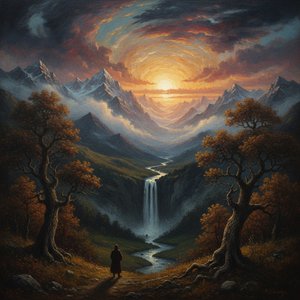
Capturing the Soul: The Emotional Magic and Sublime Grandeur of Romantic Landscape Painting
Explore the profound emotional depth of Romantic landscape painting. Discover how masters like Friedrich and Turner captured the sublime through light, shadow, and nature's power in this expert art history retrospective for discerning collectors.

康斯塔布尔大师之作:25幅传世风景画赏析 | OriginalUniqueArt
探索康斯塔布尔的25幅传世杰作!沉浸于英国田园风光,感受浪漫主义绘画大师的光影与色彩。高清油画复制、艺术品购买尽在OriginalUniqueArt.com,为您的家居增添经典之美。立即在线探索完整系列!

Capturing the Sublime: A Guide to Romantic Landscape Art & Its Emotional Power
Explore the profound emotional power of Romantic landscape art. Discover how masters like Friedrich captured the sublime through breathtaking nature, and learn to curate these evocative masterpieces for your luxury interior collection.

浪漫主义画派的十部巨作:定义风景画的艺术传奇
探索浪漫主义风景画的巅峰!本文精选十部经典名作,带您领略莫奈、库尔贝等大师的艺术魅力。感受色彩与光影的诗意,重温自然风光的震撼。OriginalUniqueArt.com为您提供博物馆级别的艺术复制品和个性化家居装饰方案。尽在OriginalUniqueArt.com!

浪漫主义风景画:情感、自然与宇宙的探索
探索浪漫主义风景画的深刻内涵,深入了解卡斯帕·大卫·弗里德里希等大师的作品。OriginalUniqueArt提供精美复制品、定制服务及专业艺术咨询,助您收藏经典,打造专属艺术空间。

