

 效果预览
效果预览
 分享
分享 分享
分享
 详情
详情

 下载
下载
 相似作品
相似作品 X射线
X射线 幻灯片播放
幻灯片播放 统计数据
统计数据The Muse Terpsichore
 Oil On Panel
- Baroque
 1652
1652 116.0 x 74.0 cm
 卢浮宫
卢浮宫
 展开详情
展开详情
艺术微喷/版画
博物馆级艺术微喷或帆布版画,制作高效,并提供多种饰面选择。 ( 购买手绘画作 切换至数字图像销售渠道)




P118B $10

P118H $10

P118W $10

P438Z $10

P508JH $12

P508YH $12

P805H $10

P805Z $10

P919BZ $10

P919G $10

P919XJ $10

P959ZH $10

P968JZ $12

W106C $8

W218G $10

W218JH $8

W218Y $10

W307PJ $10

W316G $10

W316PJ $8

W316Y $10

W398PJ $8

W4111J $10

W500HY $15

W500JH $15

W692G $12

W849H $8

W940BG $15

W953PJ $8




从与原作比例一致的预设尺寸中进行选择。

您可以输入自定义尺寸,以适配特定的画框或空间。如果您选择的尺寸与原图比例不符,我们将对作品进行裁剪,或通过镜像填充/纯色填充边缘的方式来扩展图像。在开始制作之前,我们会向您发送一份数字效果图供您确认。
请注意,屏幕上的预览并不能反映实际的裁剪或扩展效果。只有效果图才能准确展示最终的构图。
虽然我们提供定制尺寸,但为了保持原图比例,我们建议您从预设列表中选择尺寸。


 玻璃选项仅适用于110厘米以下的尺寸。

The Muse Terpsichore
艺术微喷/版画
复制品尺寸
-


最终总价
$ 80
The Muse Terpsichore: A Baroque Dance of Light and Grace
Eustache Le Sueur’s “The Muse Terpsichore” is not merely a painting; it's an invitation into the heart of 17th-century French artistry, a moment captured where divine inspiration intertwines with earthly beauty. Completed in 1655 and currently residing within the hallowed halls of the Louvre Museum in Paris, this oil on panel masterpiece offers a profound glimpse into the Baroque era’s fascination with classical mythology and its masterful manipulation of light and shadow. Le Sueur, a pivotal figure in establishing the French Academy of Painting, elevates the Greek muse of music and dance to an almost ethereal state, imbuing her with a serene power that continues to resonate centuries later.
The painting depicts Terpsichore seated upon a stylized rock formation—a deliberate choice that grounds her divine presence within a naturalistic setting. Draped in flowing garments of rich red and deep blue, colors evocative of both passion and contemplation, she embodies movement and vitality. Her pose is one of graceful repose, yet her hands are animated as she plays the lyre, its intricate details meticulously rendered to showcase the artist’s technical skill. The instrument itself—a symbol of musicality and storytelling in ancient Greek culture—becomes a focal point, radiating an aura of artistic creation.
A Masterclass in Baroque Technique
Le Sueur's command of Baroque technique is immediately apparent. He employs dramatic chiaroscuro – the stark contrast between light and dark – to sculpt the figure against the backdrop of a cloudy sky. This isn’t simply an aesthetic choice; it serves to emphasize Terpsichore’s importance, drawing the viewer’s eye directly to her luminous form. The use of sfumato—a subtle blurring of lines and edges—creates a sense of depth and atmosphere, lending the scene an almost dreamlike quality. The meticulous attention to detail in the rendering of fabrics, jewelry, and the lyre speaks volumes about Le Sueur’s dedication to realism, even within a stylized mythological context.
Furthermore, note the subtle gradations of color – the way light catches on the folds of her garments, the delicate shading around her face. These nuances demonstrate Le Sueur's profound understanding of how color interacts with light and shadow, creating a vibrant and dynamic image. The composition itself is carefully balanced, guiding the viewer’s eye through the scene with a natural flow.
Symbolism and Mythological Resonance
Terpsichore herself represents far more than just a goddess of dance; she embodies the very essence of artistic inspiration. As the muse of music and movement, she symbolizes creativity, joy, and the pursuit of beauty. Her serene expression suggests a state of focused concentration—a dedication to her craft that transcends mere performance. The lyre, as an instrument of divine communication, further reinforces this symbolic connection.
The cloudy sky behind her can be interpreted as representing the realm of imagination – a space where ideas take flight and artistic visions are born. The rock formation upon which she sits symbolizes stability and grounding—a foundation for creativity to flourish. The entire scene is a carefully constructed allegory, inviting viewers to contemplate the source of artistic inspiration and the transformative power of beauty.
A Timeless Legacy
“The Muse Terpsichore” stands as a testament to Eustache Le Sueur’s extraordinary talent and his pivotal role in shaping the course of French art. It is a painting that rewards repeated viewing, revealing new layers of detail and emotional depth with each encounter. Its masterful technique, evocative symbolism, and enduring beauty continue to captivate audiences today, solidifying its place as a cornerstone of Baroque art and a poignant reminder of the timeless allure of mythology and artistic expression.
艺术家简介
A Pioneer of the Natural World
In the vibrant and often dramatic landscape of the 17th-century French Baroque, few figures stand as uniquely as Brother Lesueur, known to history as Eustache Le Sueur. While his contemporaries were frequently swept up in the grand, sweeping narratives of mythology or the opulent displays of royal portraiture, Le Sueur turned his gaze toward a different kind of majesty: the intricate, often overlooked wonders of the animal kingdom. Born in Paris around 1617, he emerged not merely as a painter, but as a precursor to the scientific illustrators who would later define the Age of Enlightenment. His life’s work represents a profound intersection where the delicate touch of fine art meets the rigorous scrutiny of biological inquiry.
Le Sueur's artistic journey began with a foundation in classical discipline. He underwent an apprenticeship under Nicolas Boutet de Valois, a sculptor renowned for his allegorical works commissioned by the court of Louis XIII. This early exposure to the principles of proportion, anatomy, and classical beauty provided him with the technical vocabulary necessary to render form with absolute precision. However, where his mentor sought to idealize the human figure through stone, Le Suelar sought truth through the living—and sometimes the deceased—specimens of the natural world. This transition from the sculptural ideals of the academy to the empirical observations of a naturalist marked the beginning of a revolutionary artistic evolution.
The Art of Anatomical Precision
What truly distinguishes the work of Le Sueur is his uncompromising commitment to realism, a quality that transformed his studio into a space of scientific discovery. He did not merely paint what he imagined; he painted what he understood through direct observation. To achieve this level of unparalleled detail, Le Sueur engaged in a method that was radical for the 1600s: the study of anatomy via the dissection of carcasses obtained from royal hunts. This painstaking process allowed him to master the complex architecture of musculature, the delicate texture of feathers, and the rugged patterns of scales.
His technique was characterized by an extraordinary ability to capture the essence of life through physical accuracy. In his renderings, one can sense the weight of a limb, the sheen of wet fur, and the tension in a predator's stance. This dedication meant that his paintings functioned as both aesthetic triumphs and vital biological records. By integrating anatomical sketches with finished oil works, he bridged the gap between the artistic impulse and the scientific method, creating a legacy that predated the formal establishment of modern zoological illustration.
A Legacy of Sacred and Natural Splendor
While his contributions to animal painting are his most enduring scientific legacy, Le Sueur's repertoire was not limited to the wild. He possessed a remarkable versatility that allowed him to navigate the sacred themes prevalent in Baroque art. His religious compositions, such as the Presentation of the Virgin, demonstrate how he applied his mastery of detail and light to biblical narratives. In these works, the same meticulous attention to texture and form used for a bird's plumage was applied to the folds of holy drapery and the soft glow of divine light, creating a sense of profound, tangible presence.
The historical significance of Eustache Le Sueur lies in his role as a bridge between eras. He stood at the crossroads of the Baroque's emotional intensity and the burgeoning scientific curiosity of the next century. His ability to find the sublime within the anatomical has left an indelible mark on the history of French art. Through his eyes, the natural world was not just a backdrop for human drama, but a subject worthy of intense, reverent, and scientifically accurate study, cementing his reputation as a true pioneer of zoological art.

brother lesueur (eustache le sueur)
1616 - 1655 , France
艺术家简介
- Artistic Movement Or Style: Baroque Painting
- Artists Or Movements Influenced By This Artist: ['Rembrandt']
- Artists Who Influenced This Artist: ['Peter Paul Rubens']
- Date Of Birth: November 19, 1617
- Date Of Death: April 30, 1655
- Full Name: Eustache Le Sueur
- Nationality: French
- Notable Artworks:
- The Muses: Melpomene, Erato and Polyhymnia
- The Muses: Clio, Euterpe and Thalia
- Presentation of the Virgin
- Place Of Birth: Paris, France
相关文章

Baroque Classicism: The Grandeur of Order and Drama in 17th-Century Art History
Explore the profound elegance of Baroque Classicism. Discover how 17th-century masters synthesized dramatic emotion with classical order through the lens of the Counter-Reformation and the works of legends like Carlo Maratta and Andrea Sacchi.
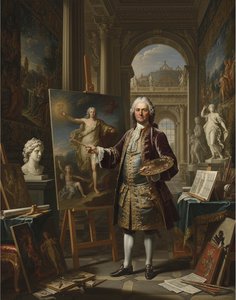
Charles Le Brun: Master of French Baroque Classicism & His Enduring Legacy
Explore the life & art of Charles Le Brun, master of French Baroque Classicism. Discover his royal commissions, influence on Versailles, and enduring legacy through detailed analysis & stunning artworks.

巴洛克戏剧性:将辉煌与情感融入当代室内设计
探索巴洛克艺术的辉煌与奢华!OriginalUniqueArt提供精湛的手工油画复制、定制服务和专业艺术咨询,助您将经典作品融入当代室内设计,提升家居品味。投资艺术,传承价值。

巴洛克艺术的戏剧性辉煌:历史背景、风格特征与持久影响
深入探索巴洛克艺术的辉煌历史、独特风格与持久影响。了解卡拉瓦乔、贝尼尼等大师的作品,洞悉反宗教改革运动下的艺术变革。OriginalUniqueArt.com为您提供专业的艺术解读与高清画作欣赏。

巴洛克艺术巅峰:十部巨作定义时代,点亮您的臻品格调
探索巴洛克艺术的辉煌!本文精选十部巨作,带您领略卡拉瓦乔、伦勃朗等大师的光影魔法与戏剧张力。从黄金时代到宗教绘画,感受奢华与精致。OriginalUniqueArt.com为您提供博物馆品质的艺术复制品和家居装饰灵感。尽在OriginalUniqueArt.com!