

 实景预览
实景预览
 发送
发送 分享
分享
 详情
详情 指南
指南

 下载图片
下载图片
 相似作品
相似作品 X射线
X射线 幻灯片播放
幻灯片播放 统计数据
统计数据Haymaking


 阅读全文
阅读全文
艺术微喷/版画
博物馆级艺术微喷或帆布版画,制作高效,并提供多种饰面选择。 ( 订购此收藏品的纯手工复刻画作 切换至数字图像销售渠道)




P118B ¥10

P118H ¥10

P118W ¥10

P438Z ¥10

P508JH ¥12

P508YH ¥12

P805H ¥10

P805Z ¥10

P919BZ ¥10

P919G ¥10

P919XJ ¥10

P959ZH ¥10

P968JZ ¥12

W106C ¥8

W218G ¥10

W218JH ¥8

W218Y ¥10

W307PJ ¥10

W316G ¥10

W316PJ ¥8

W316Y ¥10

W398PJ ¥8

W4111J ¥10

W500HY ¥15

W500JH ¥15

W692G ¥12

W849H ¥8

W940BG ¥15

W953PJ ¥8




您可以从与原作比例一致的预设尺寸中进行选择。

请输入您所需的宽度和高度,以适配您的画框或墙面。由于印刷品只能进行裁剪,无法超出原图尺寸,因此若比例不一致,画面的一部分将会被裁切。在正式印刷之前,我们会为您发送一份数字效果图供您确认。本页面显示的图片并非最终裁剪后的效果——只有效果图才能展示真实的裁剪情况。


 玻璃选项仅适用于110厘米以下的尺寸。

Haymaking
艺术微喷/版画
复刻品尺寸说明
-


总计金额
¥ 538
A Window into Rural Russia: Boris Kustodiev’s “Haymaking”
Boris Mikhailovich Kustodiev's "Haymaking," painted in 1917, isn’t merely a depiction of agricultural labor; it’s a vibrant portal into the soul of rural Russia at a pivotal moment in its history. Born in Astrakhan in 1878 and tragically cut short by illness in 1927, Kustodiev possessed an extraordinary ability to capture the essence of everyday life, imbuing even the most commonplace scenes with profound emotion and a distinctive visual language. This particular painting, rendered in a style that blends elements of Realism, Symbolism, and touches of Art Nouveau, offers a captivating glimpse into a world steeped in tradition, community, and the rhythms of the land. The scene unfolds within a sun-drenched field, dominated by six figures engaged in the arduous task of harvesting hay – a process central to the survival and prosperity of countless Russian villages.The Palette of Tradition: Style and Technique
Kustodiev’s masterful technique is immediately striking. He employs a rich, saturated palette—deep greens, earthy browns, and vibrant yellows—that evokes the warmth of the sun and the abundance of the harvest. The brushstrokes are bold and expressive, creating a sense of movement and vitality within the composition. Notice how he utilizes impasto – applying thick layers of paint directly to the canvas – particularly in the depiction of the haystacks, lending them a tangible weight and presence. This textural approach is further enhanced by his skillful use of color gradients, subtly shifting tones to create depth and volume. The figures themselves are rendered with a remarkable degree of detail, each individual possessing a unique character and posture that speaks volumes about their roles within the collective effort. The painting’s style leans heavily into the traditions of Russian folk art, evident in the stylized forms and the emphasis on communal labor – a cornerstone of rural Russian identity.A Chronicle of Change: Historical Context
“Haymaking” was painted during a period of immense social and political upheaval in Russia—the twilight years of the Tsarist regime and the nascent days of the Bolshevik Revolution. The painting’s subject matter, the simple act of harvesting hay, becomes imbued with symbolic significance. It represents not just sustenance but also community, resilience, and the enduring values of rural life. Kustodiev himself was deeply affected by these changes, documenting the lives of ordinary people in a time of dramatic transformation. His work often reflects a nostalgic longing for a disappearing world, while simultaneously capturing its beauty and dignity. The painting’s creation coincided with a period where traditional village life was facing increasing pressure from industrialization and urbanization – making this image all the more poignant.Symbolism in the Field: Figures and Meaning
The six figures within the scene are not merely laborers; they embody a complex tapestry of roles and relationships. A young boy, likely assisting his father, stands prominently near the foreground, representing the future generation. An older man, possibly the patriarch of the family, directs the work with authority. Others carry bundles of hay, their faces etched with concentration and determination. The arrangement suggests a harmonious collaboration—a testament to the importance of collective effort in Russian rural society. The vastness of the field itself symbolizes abundance and prosperity, while the golden hue of the haystacks evokes feelings of warmth, security, and the promise of a bountiful harvest. Kustodiev’s ability to imbue such a seemingly simple scene with layers of symbolic meaning is what elevates “Haymaking” beyond mere representation—it becomes a powerful meditation on life, labor, and community.An Echo of Russia: Emotional Impact
Ultimately, "Haymaking" resonates deeply because it taps into universal human experiences – the satisfaction of hard work, the bonds of family and community, and the connection to the land. The painting’s vibrant colors and dynamic composition evoke a sense of warmth, optimism, and nostalgia. It's a reminder of a time when life moved at a slower pace, when communities were tightly knit, and when the rhythms of nature dictated the seasons. Reproductions of this iconic work offer a beautiful way to bring a piece of authentic Russian culture into any space, serving as both an artistic statement and a poignant reflection on the enduring spirit of rural Russia.问答详情
Donetsk Regional Art Museum馆藏作品“Haymaking”的复制权归属如何?
鲍里斯·库斯托季耶夫 的《Haymaking》 的版权状态非常明确:该作品属于 属于公有领域 —— 其版权已过期。其在 Donetsk Regional Art Museum 的馆藏身份并不改变这一状态。
贯穿于鲍里斯·库斯托季耶夫 的《Haymaking》中的主导色调是什么?
Green to Violet Spectrum 色调贯穿了 鲍里斯·库斯托季耶夫 的《Haymaking》。
针对我的房间,"Haymaking" 应该打印成什么尺寸?
鲍里斯·库斯托季耶夫 的《Haymaking》 的推荐搭配:在 Living Room 中悬挂尺寸为 Medium 的版画。
艺术家简介
波利斯·库斯托季耶夫:俄罗斯民族精神的色彩诗人
波利斯·米哈伊洛维奇·库斯托季耶夫(Boris Mikhailovich Kustodiev,1878-1927)是一位俄罗斯画家和舞台设计师,他的作品以其鲜艳的色彩、生动的场景以及对俄罗斯生活的细腻描绘而闻名于世。他不仅仅是一位记录现实的艺术家,更是一位用画笔捕捉俄罗斯民族精神的诗人,将俄罗斯的传统、习俗和生活方式栩栩如生地呈现在画布上。库斯托季耶夫的艺术生涯与一个时代的变迁紧密相连,他的作品不仅反映了那个时代的社会风貌,也承载着对逝去岁月的怀念和对美好生活的向往。早年经历与艺术启蒙
1878年3月7日,库斯托季耶夫出生于阿斯特拉罕,一个位于伏尔加河畔的古老城市。他的父亲是一位哲学、历史和逻辑学教授,家庭环境为他提供了良好的教育条件。然而,父亲早逝给这个家庭带来了经济上的困境,也让年轻的波利斯从小就体会到生活的艰辛。在与富商家庭同住期间,库斯托季耶夫对俄罗斯商人阶层的生活方式留下了深刻的印象,这些印象后来成为了他艺术创作的重要灵感来源。早年的教育经历包括神学院的学习,但真正点燃他对艺术激情的,是私人教师帕维尔·弗拉索夫的指导,弗拉索夫本身就是瓦西里·佩罗夫的学生。这为他日后的艺术道路奠定了坚实的基础。1896年至1903年间,库斯托季耶夫进入圣彼得堡帝国美术学院,师从著名画家伊利亚·列宾,接受系统的专业训练。列宾对他的才华给予了高度评价,甚至邀请他协助完成大型纪念画作,这为他积累了宝贵的实践经验。艺术风格的形成与发展
库斯托季耶夫的艺术风格并非一蹴而就,而是经历了一个不断探索和发展的过程。早期的作品受到现实主义的影响,力求真实地再现生活场景。然而,随着时间的推移,他逐渐融入了新艺术运动的元素,形成了自己独特的艺术语言。他的画作色彩鲜艳、构图活泼,充满了浓郁的装饰性风格。库斯托季耶夫擅长描绘俄罗斯的民间习俗和节日庆典,例如著名的《松期节》(Maslenitsa),画面中热闹非凡的场景、欢快的氛围以及人物生动的表情,都展现了他对俄罗斯传统文化的深厚热爱。除了肖像画和风俗画外,库斯托季耶夫还积极投身于书籍插图创作,为许多经典俄国文学作品增添了艺术魅力。他笔下的尼古拉·莱斯科夫的故事人物形象生动传神,深受读者喜爱。命运的挑战与艺术的升华
1916年,库斯托季耶夫不幸患上了脊髓疾病,导致下半身瘫痪,终日卧床。这场突如其来的灾难给他的生活带来了巨大的改变,也让他面临着前所未有的挑战。然而,面对命运的捉弄,库斯托季耶夫并没有放弃对艺术的热爱。他依然坚持创作,用画笔记录下他对生活的感悟和对未来的期许。尽管身体受到限制,他的作品却呈现出更加鲜明的色彩和更加乐观的情绪。他将自己对俄罗斯生活的热爱融入到每一幅画作中,创造了一个充满欢乐、祥和与希望的艺术世界。库斯托季耶夫的经历证明了艺术的力量能够战胜一切困难,并为人们带来慰藉和鼓舞。历史意义与艺术遗产
波利斯·库斯托季耶夫的作品不仅具有重要的艺术价值,也承载着丰富的历史信息。他的画作真实地反映了20世纪初俄罗斯社会的风貌,记录了那个时代普通民众的生活状态、文化习俗和精神面貌。他以其独特的视角和充满魅力的笔触,将俄罗斯的传统文化传承了下来,为后人留下了宝贵的艺术遗产。库斯托季耶夫的作品在俄罗斯乃至世界范围内都享有盛誉,他的画作被众多博物馆收藏,并经常在国际性的艺术展览中展出。他不仅是一位杰出的画家,更是一位伟大的艺术家,他的作品将继续激励着一代又一代的艺术家和观众。主要作品
- 《富商的妻子》:展现了俄罗斯商人阶层的生活场景,体现了库斯托季耶夫对俄罗斯传统文化的深刻理解。
- 《松期节》:以鲜艳的色彩和生动的笔触描绘了俄罗斯传统的节日庆典,充满了欢乐和活力。
- 《伏特卡河畔》:展现了圣彼得堡的生活场景,体现了库斯托季耶夫对城市风貌的敏锐观察力。
- 《三位一体节》:描绘了俄罗斯宗教节日的热闹景象,充满了浓郁的民族特色。

鲍里斯·库斯托季耶夫
1878 - 1927 , 俄罗斯
快速概览
- 全名: 鲍里斯·米哈伊洛维奇·库斯托季耶夫
- 出生地点: 阿斯特拉罕,俄罗斯
- 出生日期: 1878年3月7日
- 去世日期: 1927年5月28日
- 受其影响的艺术家或流派: 后世俄罗斯画家
- 国籍: 俄罗斯
- 影响艺术家:
- 伊万·列宾
- 瓦西里·别罗佐夫
- 艺术风格: 现实主义, 新艺术运动
- 著名作品:
- 《富商的妻子》
- 《冯坦卡河畔》
- 《大斋节》
相关文章

浪漫主义画派的十部巨作:定义风景画的艺术传奇
探索浪漫主义风景画的巅峰!本文精选十部经典名作,带您领略莫奈、库尔贝等大师的艺术魅力。感受色彩与光影的诗意,重温自然风光的震撼。OriginalUniqueArt.com为您提供博物馆级别的艺术复制品和个性化家居装饰方案。尽在OriginalUniqueArt.com!
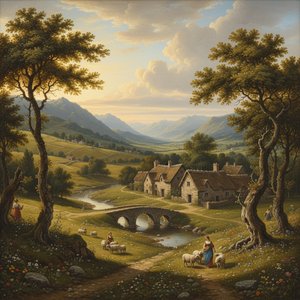
Evoking Arcadia: A Historical & Aesthetic Exploration of Rural Landscape Art
Explore the rich history of pastoral landscape art, from classical Arcadia to Impressionism & beyond. Discover key artists, movements, and how to collect serene rural scenes for your home. Expert insights at OriginalUniqueArt.

Echoes of Arcadia: Nostalgia & Transformation in Vintage Landscape Art
Explore the evocative world of vintage landscape art! Discover the history, artists & emotional power behind masterpieces from the Hudson River School & beyond. Expert insights for collectors & enthusiasts.

Cultivating Visions: A Historical Journey Through Rural Landscapes in Art
Explore the rich history of rural landscape painting with OriginalUniqueArt. Discover Impressionist masterpieces, key artists & movements. Find your perfect serene artwork and bring nature's beauty home.

康斯塔布尔大师之作:25幅传世风景画赏析 | OriginalUniqueArt
探索康斯塔布尔的25幅传世杰作!沉浸于英国田园风光,感受浪漫主义绘画大师的光影与色彩。高清油画复制、艺术品购买尽在OriginalUniqueArt.com,为您的家居增添经典之美。立即在线探索完整系列!


