 切换至版画销售渠道
 展开全文
展开全文







































 对于任何边长超过 105 厘米(约 41 英寸)的艺术品或复制品,画框将以拆解后的组件形式发货。此方法可确保安全送达并防止运输过程中的损坏。


The Fall of Simon Magus: A Triumph of Venetian Gothic Style
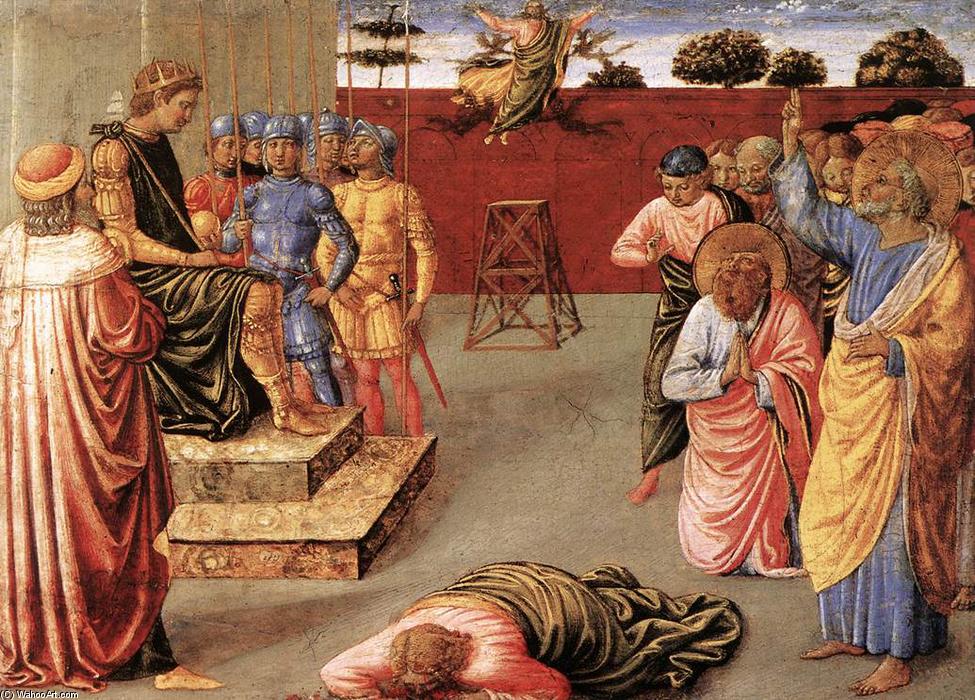
Benozzo Gozzoli’s “Fall of Simon Magus,” painted in 1461-62, stands as a remarkable testament to the burgeoning artistic fervor of Renaissance Florence and its embrace of international stylistic influences. Commissioned for the altarpiece of Santa Maria della Purificazione e di San Zanobi—a confraternity dedicated to Saint Peter and Saint Paul—the panel embodies Gozzoli’s masterful command of Venetian Gothic, marking him as a pivotal figure in bridging the gap between medieval grandeur and humanist innovation.
- Subject Matter: The artwork recounts an episode from Jacobus de Voragine's *Golden Legend*, depicting Simon Magus’ audacious attempt to ascend to heaven by launching himself from a tower, fueled by ambition and defiance of divine authority. Peter, guided by Nero’s counsel, intervenes, commanding the demonic forces supporting Simon to release his grip on the earth.
- Style & Technique: Gozzoli employed tempera paint on poplar panel—a technique favored for its vibrancy and durability—resulting in a luminous surface adorned with intricate detail. The Venetian Gothic style is evident in the elongated figures, expressive drapery, and dramatic composition, reflecting the stylistic trends prevalent in Venice at the time.
- Historical Context: Painted during a period of intense artistic experimentation, “Fall of Simon Magus” aligns itself with the broader Renaissance preoccupation with moral allegory and biblical narratives. It speaks to themes of faith versus heresy, humility versus pride—concepts central to humanist thought.
Composition & Symbolism: A Dynamic Narrative
The painting’s dynamism is immediately striking. Gozzoli skillfully orchestrates a complex visual narrative, utilizing diagonal lines and overlapping planes to convey movement and tension. The central figure of Simon Magus dominates the composition, positioned precariously atop the tower—a symbol of ambition and earthly aspiration—while angels descend from above, representing divine intervention and judgment. Nero’s presence on the left underscores the imperial patronage that fueled artistic endeavors during this era.
- Color Palette: Gozzoli utilizes a rich color palette characterized by deep reds, blues, and golds—colors traditionally associated with royalty and piety—to heighten the emotional impact of the scene. The luminous hues contribute to the overall sense of grandeur and drama.
- Symbolic Imagery: Beyond its narrative content, “Fall of Simon Magus” incorporates symbolic imagery that reinforces its moral message. The tower represents ambition and pride, while the angels embody divine grace and redemption. The depiction of Simon’s lifeless body serves as a poignant reminder of earthly mortality.
Legacy & Influence
"Fall of Simon Magus" exemplifies Gozzoli's artistic genius and solidified his reputation as one of Florence’s foremost painters. Its influence extended beyond its immediate commission, inspiring subsequent artists to explore similar stylistic approaches and thematic concerns. Today, the panel resides in Hampton Court Palace, where it continues to captivate viewers with its masterful execution and enduring beauty—a timeless masterpiece that encapsulates the spirit of Renaissance art.
For more information on Benozzo Gozzoli and his works, visit Benozzo Gozzoli on Wikipedia. Handmade oil paintings reproductions of the Fall of Simon Magus can be found at OriginalUniqueArt.com常见问题与解答
“Fall of Simon Magus”的创作者是谁?创作于哪一年?
"Fall of Simon Magus" 是由 贝诺佐·戈佐利 (Bèinuòzuò Gēzuōlì) 于 1461 年创作的。
贝诺佐·戈佐利 (Bèinuòzuò Gēzuōlì) 的《Fall of Simon Magus》 的构图比例如何,尺寸是多少?
贝诺佐·戈佐利 (Bèinuòzuò Gēzuōlì) 的《Fall of Simon Magus》 是一幅 Landscape 构图的作品,原件尺寸为 24 x 35 cm。
在“Fall of Simon Magus”中,融合了怎样的心境与情感?
贝诺佐·戈佐利 (Bèinuòzuò Gēzuōlì) 的《Fall of Simon Magus》 在整体 Dramatic 的氛围中,传达出一种 Dramatic 的情感。
 实景预览
实景预览
 分享
分享 分享
分享
 详情
详情 指南
指南

 下载作品
下载作品
 相似作品
相似作品 X射线
X射线 幻灯片播放
幻灯片播放 问答
问答 统计数据
统计数据