

 效果预览
效果预览
 分享
分享 分享
分享
 详情
详情

 下载
下载
 相似作品
相似作品 X射线
X射线 幻灯片播放
幻灯片播放 统计数据
统计数据Exhibition Sign
 Acrylic On Canvas
- WallArt
- Synthetic Cubism
 1933
1933 50.0 x 41.0 cm
 Kettle's Yard
 展开详情
展开详情
艺术微喷/版画
博物馆级艺术微喷或帆布版画,制作高效,并提供多种饰面选择。 ( 购买手绘画作 切换至数字图像销售渠道)




P118B $10

P118H $10

P118W $10

P438Z $10

P508JH $12

P508YH $12

P805H $10

P805Z $10

P919BZ $10

P919G $10

P919XJ $10

P959ZH $10

P968JZ $12

W106C $8

W218G $10

W218JH $8

W218Y $10

W307PJ $10

W316G $10

W316PJ $8

W316Y $10

W398PJ $8

W4111J $10

W500HY $15

W500JH $15

W692G $12

W849H $8

W940BG $15

W953PJ $8




从与原作比例一致的预设尺寸中进行选择。

您可以输入自定义尺寸,以适配特定的画框或空间。如果您选择的尺寸与原图比例不符,我们将对作品进行裁剪,或通过镜像填充/纯色填充边缘的方式来扩展图像。在开始制作之前,我们会向您发送一份数字效果图供您确认。
请注意,屏幕上的预览并不能反映实际的裁剪或扩展效果。只有效果图才能准确展示最终的构图。
虽然我们提供定制尺寸,但为了保持原图比例,我们建议您从预设列表中选择尺寸。


 玻璃选项仅适用于110厘米以下的尺寸。

Exhibition Sign
艺术微喷/版画
复制品尺寸
-


最终总价
$ 80
The Quiet Geometry of “Exhibition Sign”
Ben Nicholson’s “Exhibition Sign,” painted in 1933, isn't merely a sign; it’s a distilled meditation on form, color, and the very act of looking. Created during a pivotal moment in British art – a period grappling with the legacy of Cubism while simultaneously seeking new avenues for abstraction – this work embodies Nicholson’s unique approach: a careful balance between geometric precision and an underlying sense of organic feeling. The painting captures a specific, almost clinical, view of a signage panel, transforming a mundane object into a compelling study in visual relationships. It's a testament to Nicholson’s belief that beauty could be found not just in grand narratives or natural landscapes, but within the simplest, most everyday elements of the world around us.A Symphony of Color and Shape
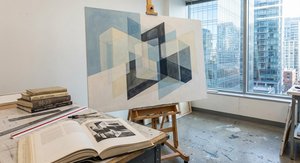
At first glance, “Exhibition Sign” appears remarkably restrained. Four rectangles – red, blue, yellow, and black – are arranged in a square formation against a subtly textured gray background. However, this simplicity is deceptive. Each rectangle isn’t merely a block of color; it's imbued with a palpable sense of weight and presence. Nicholson masterfully employs color not as decoration but as a fundamental building block, each hue carefully considered for its interaction with the others. The red, bold and assertive, commands attention while the blue offers a cool counterpoint. Yellow introduces warmth, and black grounds the composition, providing a necessary anchor. The thin black lines delineating each rectangle aren’t merely borders; they are active participants in the painting's structure, defining edges and creating a sense of contained space. The deliberate flatness of the forms – achieved through careful layering of paint – further emphasizes their geometric nature, recalling the principles of Constructivism while retaining Nicholson’s distinctly personal style.Contextualizing the Sign
To fully appreciate “Exhibition Sign,” it's crucial to understand its historical context. Created in 1933, the painting emerged from a vibrant and rapidly evolving art scene in Britain. The aftermath of World War I had profoundly impacted artistic sensibilities, leading to a rejection of traditional representational styles and an exploration of new modes of expression. Nicholson, along with other artists like Paul Nash and Christopher Wood, was deeply engaged with these developments, experimenting with abstraction, geometric forms, and the influence of European movements such as Cubism and Constructivism. The painting’s subject – a signage panel – reflects this broader interest in everyday objects and their potential for artistic transformation. It's a deliberate move away from grand historical or mythological themes, aligning with a growing desire to find meaning and beauty in the ordinary.Symbolic Resonance and Emotional Impact
Beyond its formal qualities, “Exhibition Sign” carries a subtle symbolic weight. The sign itself represents communication, information, and access – yet Nicholson strips it down to its essential components, removing any extraneous details. This reductionist approach invites viewers to contemplate the fundamental nature of representation and the relationship between form and meaning. The painting’s quiet intensity evokes a sense of contemplation and stillness. It's not an emotionally charged work in the traditional sense; rather, it offers a meditative experience through its carefully considered composition and harmonious color palette. The restrained use of color and shape creates a feeling of calm and order, inviting the viewer to slow down and appreciate the beauty of simplicity. The painting’s enduring appeal lies in its ability to resonate with our own desire for clarity and balance in an increasingly complex world.A Reproduction Worth Considering
Reproductions of “Exhibition Sign” capture much of the original's subtle power, offering a beautiful addition to any interior space. The meticulous attention to detail – from the textured background to the precise placement of each rectangle – is faithfully reproduced, ensuring that the painting’s visual impact remains intact. Whether displayed in a modern gallery or a carefully curated home, “Exhibition Sign” serves as a reminder of Nicholson's profound insights into the language of art and his ability to transform the mundane into something truly remarkable.艺术家简介
本·尼科尔森 OM:抽象艺术的一生
- 出生:1894年4月10日,英国白金汉郡丹汉姆
- 逝世:1982年2月6日,英国伦敦
早年生活与艺术训练
- 本·尼科尔森出生于一个充满艺术气息的家庭;他的父亲威廉·尼科尔森爵士与母亲梅贝尔·普赖德皆为造诣深厚的画家。这种熏陶使他自幼便对艺术怀有深刻的鉴赏力。
- 他在泰滕汉加·洛奇预备学校、西福德、汉普斯特德的赫登法院以及诺福克郡霍尔特的格雷舍姆学校接受了早期的教育。
- 尼科尔森随后在斯莱德美术学院(1910-1911)接受了正式的学习,在那里,他与保罗·纳什、斯坦利·斯宾塞、马克·格特勒和爱德华·沃兹沃斯等著名艺术家并肩成长。逸闻记载,他在这一时期曾花费大量时间打台球,并从这项运动的几何结构与动态美感中发现了独特的审美趣味。
艺术发展与影响
- 早期作品:尼科尔森最初的艺术尝试侧重于自然主义静物画,深受其父绘画风格的影响。
- 立体主义的影响:大约在1926年,他开始探索抽象领域,这在很大程度上受到了综合立体主义以及毕加索作品的启发。
- 新造型主义与原始主义风格:与皮特·蒙德里安的会面让他接触到了新造型主义,而与亨利·卢梭的相遇则激发了他对原始主义风格的兴趣。这些影响深刻地塑造了他的艺术走向。
- 关键艺术运动:尼科尔森积极参与了当时多个重要的艺术运动,包括他曾担任主席的“七人与五人协会”(Seven and Five Society)、“单位一”(Unit One)以及“抽象创作”(Abstraction-Création)组织。
主要作品与艺术风格
- 浮雕作品:尼科尔森以其始于1933年的抽象浮雕而闻名遐迩。这些作品将绘画与雕塑元素巧妙结合,创造出一种独特的视觉体验。其中,1930年代中期的白色浮雕被公认为他最卓越的成就之一。
- 静物与风景:尽管以抽象艺术著称,尼科尔森也创作了引人入胜的静物画与风景画,作品中常融入几何形态与柔和的色调。
- 尼科尔森墙:其著名的公共艺术作品包括为萨里郡吉尔福德萨顿广场花园创作的壁画“尼科尔森墙”,这体现了他坚信抽象艺术应当面向更广泛受众的理念。
- 材料与技法:他热衷于实验各种材料与技法,包括油彩、铅笔、碎石和美耐板,并经常以创新的方式将它们融合在一起。
遗产与历史地位
- 英国现代艺术:本·尼科尔森被公认为英国现代艺术的关键人物,为抽象艺术及浮雕雕塑的发展做出了巨大贡献。
- 国际认可:他的作品赢得了国际赞誉,曾在威尼斯双年展等顶级艺术殿堂展出,并在全球各大博物馆举办回顾展。他曾获得多项殊荣,包括1968年的功绩勋章(Order of Merit)。
- 拍卖纪录:尼科尔森的画作在拍卖会上屡创高价,彰显了其艺术价值与历史重要性。例如,《1953年9月(巴利阿里)》于2011年在纽约佳士得拍出1,650,500美元;而《小提琴与西班牙吉他》则在2012年巴黎佳士得拍得3,313,000欧元。
- 对后世艺术家的影响:尼科尔森在抽象领域的前瞻性探索,以及他对形式与空间的深刻挖掘,持续影响着一代又一代的艺术家。

本·尼科尔森
1894 - 1982 , 英国
艺术家简介
- Artistic Movement Or Style:
- 抽象艺术
- 立体主义
- 构成主义
- Artists Who Influenced This Artist:
- 亨利·卢梭
- 皮特·蒙德里安
- 巴勃罗·毕加索
- 塞尚
- Date Of Birth: 1894年4月10日
- Date Of Death: 1982年
- Full Name: 本·尼科尔森 OM
- Nationality: 英国
- Notable Artworks:
- 1953年9月 (巴利阿里)
- 小提琴与西班牙吉他
- 1946 (静物)
- Place Of Birth: 英国伦敦
相关文章
Beyond Form & Color: Geometric Abstraction's Enduring Legacy in Art History
Explore the captivating world of geometric abstraction! Discover its origins, key artists like Malevich & Mondrian, and why this movement remains highly valued by art collectors today. Expert insights at OriginalUniqueArt.

几何抽象艺术十大杰作:定义现代家居装饰的经典之作
探索几何抽象艺术的十大杰作!康定斯基、蒙德里安等大师作品,色彩构成与非具象之美。OriginalUniqueArt.com提供博物馆级艺术复制品,为您的家居带来现代艺术灵感。立即在线探索完整系列!

Neo-Abstract Art: The High-Impact Evolution of Modern Visual Energy and Geometric Sophistication
Discover the power of Neo-Abstract art. Explore how bold geometric forms and high-impact visual energy are redefining modern design. Learn to curate sophisticated, high-energy spaces with the latest trends in contemporary abstraction and structural color.

Ben Nicholson OM: Modernism's Abstract Pioneer & the Poetics of Relief
Explore the revolutionary abstract art of Ben Nicholson OM. Discover his geometric masterpieces, collaborations with Barbara Hepworth & investment potential. Expert insights for collectors.

Beyond Form & Color: Geometric Abstraction's Evolution in 20th/21st Century Art
Explore the evolution of geometric abstraction from Cubism to contemporary art. Discover key artists like Malevich & Mondrian, investment insights, and expert collecting advice at OriginalUniqueArt.

