

 效果预览
效果预览
 购买手绘画作
 分享
分享 分享
分享
 详情
详情

 下载
下载
 相似作品
相似作品 X射线
X射线 幻灯片播放
幻灯片播放Sisga Suicides III


 展开详情
展开详情




P118B $10

P118H $10

P118W $10

P438Z $10

P508JH $12

P508YH $12

P805H $10

P805Z $10

P919BZ $10

P919G $10

P919XJ $10

P959ZH $10

P968JZ $12

W106C $8

W218G $10

W218JH $8

W218Y $10

W307PJ $10

W316G $10

W316PJ $8

W316Y $10

W398PJ $8

W4111J $10

W500HY $15

W500JH $15

W692G $12

W849H $8

W940BG $15

W953PJ $8




从与原作比例一致的预设尺寸中进行选择。

您可以输入自定义尺寸,以适配特定的画框或空间。如果您选择的尺寸与原图比例不符,我们将对作品进行裁剪,或通过镜像填充/纯色填充边缘的方式来扩展图像。在开始制作之前,我们会向您发送一份数字效果图供您确认。
请注意,屏幕上的预览并不能反映实际的裁剪或扩展效果。只有效果图才能准确展示最终的构图。
虽然我们提供定制尺寸,但为了保持原图比例,我们建议您从预设列表中选择尺寸。


 玻璃选项仅适用于110厘米以下的尺寸。

Sisga Suicides III
艺术微喷/版画
复制品尺寸
-


最终总价
$ 80
艺术家简介
A Visionary of Colombian Identity
Beatriz González stands as a pivotal figure in Colombian art history, recognized for her distinctive blend of Pop Art aesthetics and poignant explorations of national identity during turbulent periods—particularly La Violencia, Colombia’s brutal civil conflict. Unlike many artists of her era who embraced the international trends of Pop Art, González remained firmly rooted in her homeland, channeling her artistic vision to confront social realities and capture the spirit of a nation grappling with violence and instability. Her work does not merely observe history; it reinterprets the very fabric of Colombian society through a lens that is simultaneously playful and deeply unsettling.
Born in Tunja, Colombia, in 1938, González’s formative years coincided with the intense political polarization that defined Colombian society throughout the 1950s and 60s. Although she initially pursued studies in architecture, her creative impulse led her to abandon academic blueprints for the expressive possibilities of the canvas. Her artistic journey commenced at Universidad de los Andes, where she studied under luminaries like Joan Antonio Roda and the influential critic Marta Traba. It was Traba’s mentorship that proved particularly significant, fostering a spirit of independence and encouraging González to challenge conventional expectations within the Colombian art scene.
The Power of Narrative and Controversy
González’s career gained profound momentum with the controversial reception of The Suicides of Sisga. This painting, inspired by a newspaper photograph depicting a young couple who tragically ended their lives in an attempt to preserve the purity of their love, became a landmark moment in her development. Initially rejected by the Salon of Colombian Artists due to its perceived lack of adherence to prevailing artistic standards, the painting’s fate was dramatically altered when Marta Traba passionately advocated for its reconsideration. This piece signaled the arrival of an artist capable of transforming mass media imagery into high art, using the aesthetics of the everyday to discuss the profound tragedies of the human condition.
Her technical evolution is marked by a fascinating departure from traditional supports. While her early works established her mastery of color and composition, she later became renowned for her innovative use of furniture-based works. By painting directly onto objects like beds or chairs, such as seen in Naturaleza casi muerta, she blurred the lines between fine art and domestic reality. This technique forces the viewer to confront the artwork not as a distant object on a museum wall, but as an intimate part of the living environment, mirroring how political violence and social shifts permeate the most private spaces of Colombian life.
Legacy and Artistic Significance
The enduring significance of Beatriz González lies in her ability to synthesize the vibrant, often garish colors of Pop Art with a somber, socio-political weight. Her work serves as a visual archive of a nation's memory, utilizing motifs from newspapers, advertisements, and popular culture to critique power structures and memorialize the forgotten. Through her mastery of both painting and sculpture, she has achieved several milestones:
- Redefining Pop Art: She successfully localized the global Pop Art movement, stripping it of its purely consumerist focus and replacing it with a deep, localized political consciousness.
- Innovation in Medium: Her use of found objects and furniture transformed the relationship between the viewer and the artwork, making art an immersive, domestic experience.
- Historical Documentation: Her oeuvre acts as a powerful commentary on La Violencia, ensuring that the social upheavals of Colombia are etched into the global art historical canon.
Today, González remains a towering presence, her work continuing to resonate with anyone seeking to understand the complex intersection of personal tragedy and national history. Her ability to find beauty in the tragic and significance in the mundane ensures that her voice remains an essential part of the contemporary artistic dialogue.

beatriz gonzález aranda
1938 - , Colombia
艺术家简介
- Artistic Movement Or Style: Pop Art
- Artists Or Movements Influenced By This Artist: ['Fernando Botero']
- Artists Who Influenced This Artist:
- Marta Traba
- Joan Antonio Roda
- Date Of Birth: November 16, 1938
- Full Name: Beatriz González Aranda
- Nationality: Colombian
- Notable Artworks:
- The Suicides of Sisga I, II and III
- La Última Mesa
- Nací en Florencia
- Place Of Birth: Tunja, Colombia
相关文章

Slate Blue Masterpieces: 10 Iconic Paintings & Timeless Home Decor Ideas
Immerse yourself in the captivating world of slate blue! Explore 10 iconic paintings by Monet, Van Gogh & Renoir. Discover their stories, techniques & find museum-quality art reproductions for your home at .
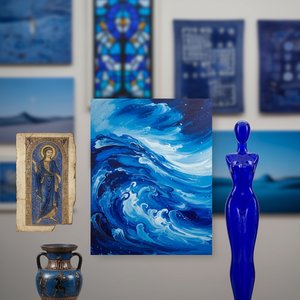
The Allure of Azure: Exploring the Symbolic & Aesthetic Depths of Blue in Art History
Explore the rich history of blue in art! Discover its symbolism, from ancient pigments to modern masterpieces by Kandinsky & Seurat. Uncover the psychological impact and cultural meanings behind this captivating hue.

Golden Hues: 10 Masterpieces Dominated by Chrome Yellow | OriginalUniqueArt
Immerse yourself in golden light! Explore 10 famous paintings dominated by 'Chrome Yellow', from Van Gogh’s Sunflowers to Monet's Haystacks. Discover the stories behind these iconic Impressionist & Post-Impressionist masterpieces and find museum-quality art reproductions at OriginalUniqueArt.com.
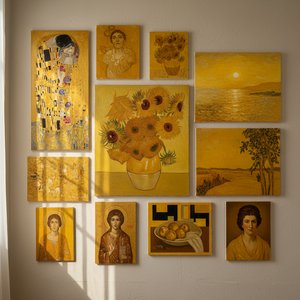
Golden Hues: Top 10 Paintings Dominated by Yellow Ochre |
Explore 10 iconic paintings bathed in golden yellow ochre! From Van Gogh's sunflowers to Monet’s haystacks, discover the stories behind these masterpieces. Find museum-quality art reproductions & elevate your home decor on .

The Golden Hue: Exploring Symbolism & Emotion in Yellow Art
Explore the rich symbolism & emotional power of yellow in art history! From Van Gogh to Kandinsky, discover how artists used this vibrant hue. Expert analysis & high-quality reproductions at OriginalUniqueArt.

