
 效果预览
效果预览
 切换至印刷版
 分享
分享 分享
分享
 详情
详情

 下载
下载
 相似作品
相似作品 X射线
X射线 幻灯片播放
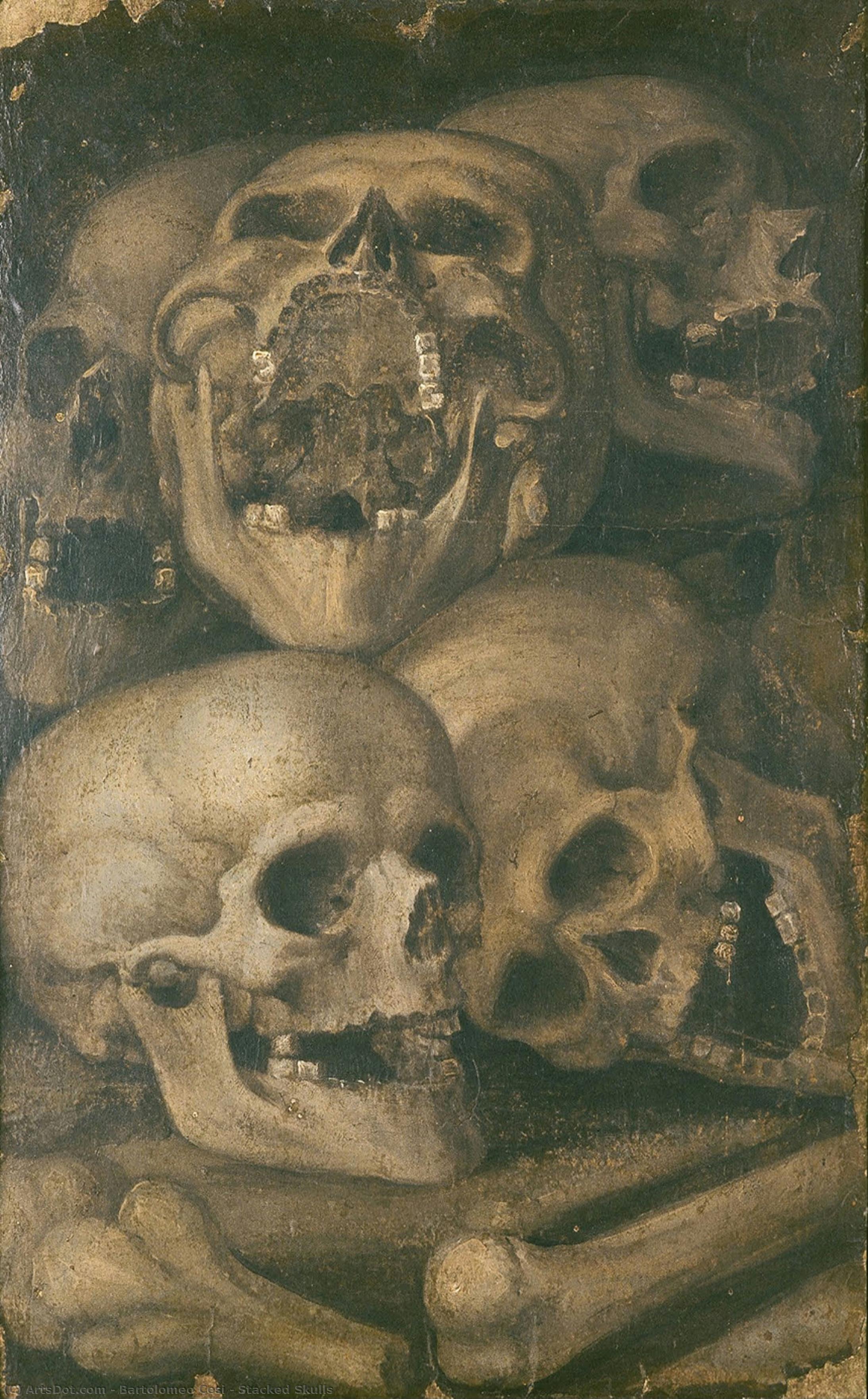
幻灯片播放Stacked Skulls


 展开详情
展开详情




































从与原作比例一致的预设尺寸中进行选择。

您可以输入自定义尺寸,以适配特定的画框或空间。如果所选尺寸与原图比例不符,我们将通过裁剪作品或添加手绘元素来扩展画面。数字样稿将在制作开始前发送给您确认。
请注意,屏幕预览无法准确反映实际的裁剪或扩展效果,只有样稿才能真实呈现最终的构图。
虽然我们提供定制尺寸服务,但为了保留原作比例,建议您从预设列表中选择尺寸。
下单后,OriginalUniqueArt.com 团队将通过电子邮件联系客户获取具体要求,并提供效果预览图。


 玻璃选项仅适用于110厘米以下的尺寸。

Stacked Skulls
复制材质
复制品尺寸
-


最终总价
$ 300
艺术家简介
Bartolomeo Cesi: Life and Legacy
Early Life and Training
- Born in Bologna, Italy in 1556, Bartolomeo Cesi hailed from the noble House of Cesi, a family of Umbrian origin.
- He began his artistic training under Giovanni Francesco Bezzo, gaining foundational skills in painting and draftsmanship.
- Cesi’s early exposure to the vibrant artistic environment of Bologna shaped his aesthetic sensibilities.
Artistic Development and Influences
- Cesi's style evolved through collaborations with prominent artists like Ludovico Carracci and Prospero Fontana.
- A period spent in Rome working alongside Scipione Pulzone further refined his technique, particularly in portraiture.
- He was deeply influenced by the Counter-Reformation’s emphasis on art as a tool for religious education and reaffirmation of Catholic doctrine. This is reflected in the didactic nature of much of his work.
- His artistic development demonstrates a blend of Mannerist elegance with emerging Baroque sensibilities.
Major Works and Artistic Style
- Cesi excelled in both easel paintings and large-scale frescoes.
- He is particularly renowned for his religious paintings, which often depict scenes from the life of Christ and the saints.
- A significant achievement was his series of frescoes on the Passion of Christ completed for the Carthusian monastery (Charterhouse) of San Girolamo in Bologna in 1595. These works showcase his narrative skill and dramatic use of color.
- While primarily known for religious subjects, Cesi also created portraits and mythological scenes, demonstrating versatility in his artistic practice.
- His designs were often based on meticulous studies from life, indicating a commitment to realism within a stylized framework.
Later Life and Teaching
- In 1620, Cesi became the drawing master of the Accademia degli Ardenti in Bologna, contributing to the education of future generations of artists.
- His most notable pupil was Alessandro Tiarini, who continued his teacher’s artistic legacy.
- Interestingly, Cesi also pursued a religious career; on September 18, 1605, he was consecrated as Bishop by Bonfazio Caetani, serving alongside other co-consecrators.
Historical Significance and Legacy
- Bartolomeo Cesi represents a key figure in the Bolognese School of painting, bridging the gap between Mannerism and Baroque styles.
- His work embodies the spirit of the Counter-Reformation, utilizing art to reinforce religious beliefs and inspire piety.
- Though not as widely celebrated as some of his contemporaries, Cesi’s contributions to 17th-century Italian art are significant, particularly in the context of Bolognese artistic traditions.
- He died in Tivoli in 1629, leaving behind a legacy of devotional paintings and skilled draftsmanship.

Bartolomeo Cesi
1556 - 1629 , Italy
艺术家简介
- Birth Date: 1556
- Birth Place: Bologna, Italy
- Death Date: 1629
- Influenced: ['Alessandro Tiarini']
- Influenced By:
- Giovanni Francesco Bezzo
- Ludovico Carracci
- Prospero Fontana
- Scipione Pulzone
- Movement: Bolognese School
- Name: Bartolomeo Cesi
- Nationality: Italian
- Notable Works: Frescoes on the Passion of Christ (San Girolamo)

