
 实景预览
实景预览
 分享
分享 分享
分享
 详情
详情 指南
指南

 下载作品
下载作品
 相似作品
相似作品 X射线
X射线 幻灯片播放
幻灯片播放 Q&A
Q&A 统计数据
统计数据Canto VII

- 37.0 x 32.0 cm


 展开全文
展开全文
艺术微喷/版画
博物馆级艺术微喷或帆布版画,制作高效,并提供多种饰面选择。 ( 订购纯手工绘制画作 切换至数字图像销售渠道)




P118B ¥10

P118H ¥10

P118W ¥10

P438Z ¥10

P508JH ¥12

P508YH ¥12

P805H ¥10

P805Z ¥10

P919BZ ¥10

P919G ¥10

P919XJ ¥10

P959ZH ¥10

P968JZ ¥12

W106C ¥8

W218G ¥10

W218JH ¥8

W218Y ¥10

W307PJ ¥10

W316G ¥10

W316PJ ¥8

W316Y ¥10

W398PJ ¥8

W4111J ¥10

W500HY ¥15

W500JH ¥15

W692G ¥12

W849H ¥8

W940BG ¥15

W953PJ ¥8




您可以从与原作比例一致的预设尺寸中进行选择。

请输入您所需的宽度和高度,以适配您的画框或墙面。由于印刷品只能进行裁剪,无法超出原图尺寸,因此若比例不一致,画面的一部分将会被裁切。在正式印刷之前,我们会为您发送一份数字效果图供您确认。本页面显示的图片并非最终裁剪后的效果——只有效果图才能展示真实的裁剪情况。


 玻璃选项仅适用于110厘米以下的尺寸。

Canto VII
艺术微喷/版画
复刻品尺寸
-


最终结算价
¥ 538
Canto VII: A Symphony in Blue – Barnett Newman’s Color Field Masterpiece
Barnett Newman's "Canto VII," created in 1963 as part of his seminal 18 Cantos series, is more than just a painting; it’s an immersive experience. This lithograph offers a profound meditation on color and space, embodying the core tenets of Newman’s revolutionary approach to abstract expressionism. The artwork immediately draws the eye with its bold use of blue – not a single hue, but rather a complex interplay of shades that bleed into one another, creating a sense of ethereal depth. Two distinct blue stripes dominate the composition, offset by a vast expanse of pale blue background, testing the very boundaries of perception and inviting contemplation.
- Technique: Executed as a lithograph, "Canto VII" showcases Newman’s masterful control over color and texture. The technique relies on the subtle variations in ink density to achieve the layered effect, characteristic of his “zips” – thin bands of color that seem to float within the larger field.
- Composition: The off-set nature of the stripes disrupts any sense of traditional perspective, forcing the viewer to actively engage with the artwork and navigate its spatial ambiguities. Each stripe seems to dissolve into the surrounding blue, creating a dynamic tension between form and void.
- Size & Materials: Measuring 37 x 32 cm, this print is perfectly sized for display in a variety of settings. The lithographic process ensures exceptional color fidelity and archival quality, guaranteeing that the artwork’s vibrancy will endure for generations.
The 18 Cantos: Musicality and Spiritual Longing
Newman conceived the 18 Cantos series as a unified whole, drawing inspiration from musical forms – specifically, symphonies. He described his work using musical analogies, stating that “their symphonic mass lends additional clarity to each individual canto” and “at the same time, each canto adds its song to the full chorus.” This deeply personal philosophy underscores the artwork’s intention: to evoke a sense of spiritual resonance through carefully orchestrated color relationships. The series represents Newman's desire to move beyond representational art and tap into something more profound – a universal harmony that transcends individual experience.
The title, "Canto VII," suggests a specific movement within this larger composition, inviting the viewer to consider it as one element of a greater whole. The artwork’s emotional impact is undeniably serene yet subtly unsettling, prompting introspection and a sense of awe in the face of its vastness.
Contextualizing Newman: Abstract Expressionism and Beyond
"Canto VII" firmly places itself within the context of abstract expressionism, but it also distinguishes itself through its remarkable simplicity and elegance. While artists like Jackson Pollock embraced gestural abstraction with raw energy, Newman sought a more restrained approach – one that prioritized color as a primary subject matter. His work shares affinities with Henri Matisse’s celebrated use of color and fluid draughtsmanship, evident in the works showcased at The Matisse Museum in Nice, France. However, unlike Matisse's often decorative style, Newman aimed for something far more austere and contemplative.
Newman’s artistic journey is marked by a deliberate rejection of earlier work, signifying his commitment to forging a new visual language. This process reflects a broader trend within post-war art – a desire to break free from traditional conventions and explore the potential of abstraction as a means of expressing profound human emotions.
A Legacy of Color: Owning a Piece of History
"Canto VII" is not merely a beautiful artwork; it’s an investment in artistic history. A hand-painted reproduction offers a tangible connection to one of the 20th century's most influential artists, allowing you to bring Newman’s vision into your own space. This lithograph represents a pivotal moment in the evolution of color field painting and stands as a testament to Newman’s enduring legacy. Consider this piece not just for its aesthetic qualities, but for the profound questions it raises about perception, spirituality, and the very nature of art itself.
艺术家简介
巴内特·纽曼:抽象表现主义的先驱
巴内特·纽曼,1905年出生于纽约市的一个波兰犹太移民家庭,成长为美国艺术领域举足轻重的人物。他的旅程并非一帆风顺,而是一场缓慢而深刻的艺术探索和哲学探究,最终重新定义了抽象绘画的可能性。最初在艺术学生联盟学习,后来进入纽约市立学院深造,纽曼吸收了那个时代的诸多影响——毕加索蓬勃发展的立体主义以及马蒂斯的鲜艳色彩是他早期的触石。然而,他很快感到受到这些既定表现形式的束缚,意识到需要创造一种新的视觉语言,能够表达战后时代人们的焦虑和精神渴望。他甚至销毁了大量的早期具象作品,这是一个刻意的举动,象征着他对一条全新艺术道路的承诺。这段自我强迫的创作毁灭时期至关重要;它为他成熟风格的彻底简约奠定了基础。“Zip” 的诞生与色彩的拓展
纽曼的突破源于他著名的“zip”——垂直色带,横跨大片单色调的画布。“Zip”并非仅仅是线条,而是动态的力量,在画布的广阔空旷中宣示着存在感。1943年在贝蒂·帕森斯画廊举办的首次个人展览是他迈出的重要一步,尽管最初的反响褒贬不一。直到《一元六号》(Onement VI) (1950-51)问世,纽曼才真正确立了他独特的审美风格。这幅画作巨大的规模和朴素的构图——一条红色“zip”将画布划分为橙色和红色的区域——具有革命性意义。《英雄主义的崇高》(Vir Heroicus Sublimis) (1958-60),作为一件纪念性的作品,进一步巩固了这种手法,其多条“zip”创造出一种空间深度感,并唤起敬畏和沉思之情。“Zip”不仅仅是一种审美装置;它同时分割和统一画布的结构元素,充当着无限空间中人类存在的象征标记。纽曼的作品还包括《罗斯科·纽曼》(Rothko by Newman)等作品,展示了他独特的风格与抽象表现主义另一位关键人物之间的关系。灵性、崇高与哲学基础
超越单纯的美学层面,纽曼的艺术深深植根于哲学和精神关怀之中。他拒绝绘画仅仅描绘外部世界的观念,认为它可以作为探索深刻存在问题的媒介。他试图通过抽象形式捕捉他所说的“崇高”——一种压倒性的宏伟和超脱的体验。这并非关于宗教偶像,而是尝试在观众心中唤起原始的敬畏和惊奇感。纽曼深受第二次世界大战恐怖事件以及核时代到来的影响,认为传统的艺术惯例不足以表达这个新时代的焦虑和道德复杂性。他的绘画成为对抗这些问题的场所,不提供答案,而是为沉思和情感共鸣创造空间。他将自己的作品视为对社会规范的拒绝和对个人自由的肯定,努力创作既具有智力严谨性又具有强烈情感力量的艺术品。遗产与对现代艺术的影响
巴内特·纽曼对抽象表现主义的发展——与马克·罗斯科和杰克逊·波洛克等同时代艺术家一起——是不可否认的。他不仅仅是一位画家;他还是一位理论家、一位作家,以及倡导一种新型艺术的先驱,这种艺术优先考虑情感真理而非代表性准确性。他对色彩和形式的创新深刻影响了后来的几代艺术家,特别是那些从事色彩田绘画和极简主义创作的人们。追随者在他的简约方法和对艺术体验品质的强调中找到了灵感。今天,纽曼的作品被世界各大博物馆收藏,包括纽约现代艺术博物馆和华盛顿特区国家美术馆,巩固了他作为20世纪艺术史上核心人物的地位。他的绘画继续挑战和激励着观众,邀请他们参与关于人类存在、灵性和抽象形式力量的基本问题的思考。进一步探索
- 关键主题:灵性、崇高、人类存在、战后焦虑。
- 影响:亨利·马蒂斯、毕加索、立体主义、超现实主义。
- 代表作品:一元六号,《英雄主义的崇高》,“罗斯科·纽曼”、奥菲斯的歌。
- 艺术风格:抽象表现主义、色彩田绘画,其特点是大片色域和垂直“zip”。

巴内特·纽曼
1905 - 1970
艺术家简介
- Artistic Movement Or Style: 抽象表现主义
- Artists Or Movements Influenced By This Artist:
- 色彩田绘画
- 极简主义
- Artists Who Influenced This Artist:
- 亨利·马蒂斯
- 巴勃罗·毕加索
- Date Of Birth: 1905年1月29日
- Date Of Death: 1970年7月4日
- Full Name: 巴内特·纽曼
- Nationality: 美国国籍
- Notable Artworks (List Of Titles):
- Onement VI
- Vir Heroicus Sublimis
- Place Of Birth (City And Country): 美国纽约市
相关文章

Echoes of Time: Exploring the Enduring Appeal & Historical Context of Vintage Art Prints
Explore the captivating world of vintage art prints! Discover their history, collecting tips & enduring appeal. Expert insights on chromolithography and building a legacy collection with OriginalUniqueArt.

高檔藝術品複製技術:Giclée微噴的檔案品質與鑑賞細節
深入了解Giclée微噴技術:檔案品質、色彩還原的專業解析。探索高檔藝術品複製的細節與保存技巧,為您的收藏提供博物館級別的選擇。專家指導,確保完美呈現原作神韻。

The Enduring Legacy of Fine Art Prints: Technique, History & Aesthetic Impact
Explore the rich history & techniques of fine art prints. Discover investment potential, assess authenticity, and learn how to preserve your collection with expert guidance. Trusted insights for discerning collectors.

Carl Newman: Exploring Abstraction's Spiritual Resonance Through Color Field Painting
Explore the profound spiritual resonance of Color Field Painting with insights into Rothko, Newman & Still. Discover the techniques & legacy of this influential abstract art movement.
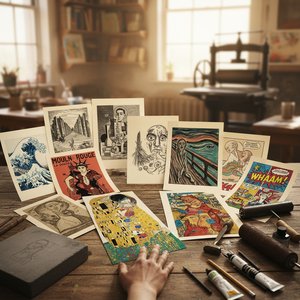
Top 10 Lithographs That Revolutionized Art | OriginalUniqueArt
Explore 10 legendary lithographs by Toulouse-Lautrec, Munch & Picasso that redefined art! Discover the stories behind these iconic prints and find museum-quality reproductions for your home decor at OriginalUniqueArt.com. Explore the full collection online.
