切换至版画销售渠道
 展开全文
展开全文







































 对于任何边长超过 105 厘米(约 41 英寸)的艺术品或复制品,画框将以拆解后的组件形式发货。此方法可确保安全送达并防止运输过程中的损坏。


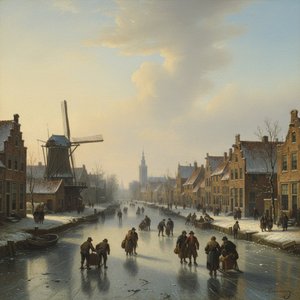
A Winter's Embrace: Exploring Barend Cornelis Koekkoek’s “Winter Landscape”
The Dutch Romantic landscape painter Barend Cornelis Koekkoek’s “Winter Landscape,” completed in 1833, transcends mere depiction; it embodies the spirit of a bygone era and speaks to enduring themes of resilience and beauty amidst adversity. Executed on wood with oil paint—a technique favored by Koekkoek for its ability to capture subtle tonal variations—the painting presents a serene yet poignant tableau of a snowy road winding through a sparsely populated Dutch countryside.Style and Technique: Romantic Precision
Koekkoek’s artistic vision aligns perfectly with the tenets of Romanticism, prioritizing emotional intensity alongside meticulous observation. Unlike earlier Baroque landscapes that sought to impose grandeur upon nature, Koekkoek embraced its inherent wildness, conveying a sense of contemplative solitude rather than triumphant dominion. His brushstrokes are deliberate and controlled, blending seamlessly to create luminous washes of color—primarily blues and whites—that dominate the composition. The artist skillfully utilizes chiaroscuro—the interplay between light and shadow—to sculpt the forms of trees, snowdrifts, and distant buildings, enhancing depth and creating a palpable atmosphere of coldness and stillness.Historical Context: Reflecting Dutch Identity
“Winter Landscape” emerged during a period of significant artistic ferment in Holland, mirroring broader cultural anxieties surrounding the Napoleonic Wars and the subsequent Restoration. The painting served as a powerful emblem of Dutch national identity—a celebration of its pastoral heritage and an assertion of moral fortitude in the face of political upheaval. Koekkoek’s depiction of a quiet rural scene resonated deeply with viewers who longed for stability and continuity amidst turbulent times, reflecting a desire to reconnect with simpler values and traditions.Symbolism: Resilience Amidst Winter's Grip
Beyond its aesthetic qualities, “Winter Landscape” is laden with symbolic significance. The snow itself represents hardship and purification—a blank slate upon which new beginnings can emerge. Yet, despite the bleakness of the winter season, Koekkoek’s careful rendering of trees bearing fruit underscores the promise of fecundity and renewal. Furthermore, the solitary figures traversing the road symbolize perseverance and determination—individuals striving onward despite obstacles, mirroring the broader human experience of confronting challenges with courage and grace.Emotional Impact: A Momentary Pause for Reflection
Ultimately, Koekkoek’s “Winter Landscape” invites contemplation and introspection. Its muted palette and tranquil composition evoke a profound sense of peace and melancholy—a recognition of beauty found in vulnerability and solitude. The painting compels viewers to pause amidst the frenetic pace of modern life, encouraging them to appreciate the quiet grandeur of nature and to contemplate the enduring power of resilience and hope. It remains an exquisite testament to Koekkoek’s artistic prowess and a timeless masterpiece capturing the essence of Romantic sensibility.常见问题与解答
哪里可以买到 Barend Cornelis Koekkoek 的《Winter landscape》 的版画?
您可以通过 采用棉质帆布或档案级画布纸制作的艺术版画 购买 “Winter landscape” 的版画。您可以前往其 艺术版画 页面,根据您的需求选择尺寸并下单。
Barend Cornelis Koekkoek 的《Winter landscape》 的色调是明亮还是深沉?
Barend Cornelis Koekkoek 的《Winter landscape》 的亮度记录为 bright,亮度值为 Gentle Luminance。
Barend Cornelis Koekkoek 的《Winter landscape》 属于哪种艺术流派,又处于哪个时代?
Barend Cornelis Koekkoek 的《Winter landscape》 属于 Romantic Landscape Painting 流派,创作于其作者的 19th Century 时期。
 实景预览
实景预览
 分享
分享 分享
分享
 详情
详情 指南
指南

 下载作品
下载作品
 相似作品
相似作品 X射线
X射线 幻灯片播放
幻灯片播放 问答
问答 统计数据
统计数据