

 发送
发送 分享
分享
 详情
详情 指南
指南

 下载图片
下载图片
 相似作品
相似作品 幻灯片播放
幻灯片播放 统计数据
统计数据Single Form (Chûn Quoit)
 Bronze
- Sculpture
- Modernism
 1961
1961 106.0 x 66.0 cm
 The Hepworth Wakefield
 阅读全文
阅读全文
艺术微喷/版画
博物馆级艺术微喷或帆布版画,制作高效,并提供多种饰面选择。 ( 订购此收藏品的纯手工复刻画作 切换至数字图像销售渠道)




































您可以从与原作比例一致的预设尺寸中进行选择。

请输入您所需的宽度和高度,以适配您的画框或墙面。由于印刷品只能进行裁剪,无法超出原图尺寸,因此若比例不一致,画面的一部分将会被裁切。在正式印刷之前,我们会为您发送一份数字效果图供您确认。本页面显示的图片并非最终裁剪后的效果——只有效果图才能展示真实的裁剪情况。


 玻璃选项仅适用于110厘米以下的尺寸。

Single Form (Chûn Quoit)
艺术微喷/版画
复刻品尺寸说明
-


总计金额
¥ 537
Single Form (Chûn Quoit): A Meditation on Neolithic Echoes
Barbara Hepworth’s “Single Form (Chûn Quoit),” crafted in 1961, isn't merely a sculpture; it’s an invitation to contemplate the enduring resonance of ancient ritual and the fundamental geometry of human experience. This remarkable piece, rendered in textured plaster and presented on a subtly shaded wooden base, embodies Hepworth’s signature style – a masterful blend of abstraction and deeply rooted connection to the natural world. The work immediately draws the eye with its deceptively simple form: a broad, gently curving plane punctuated by a single, precisely incised circle. Yet, within this apparent stillness lies a profound complexity, hinting at layers of meaning derived from both the artist’s personal vision and the evocative power of prehistoric sites.
The title itself offers a crucial key to understanding the sculpture's genesis. “Chûn Quoit” refers to a specific type of Neolithic chamber tomb found in Cornwall – megalithic structures built as sacred spaces, often associated with ancestor veneration and rites of passage. Hepworth’s choice of this name suggests an intentional dialogue between the modern world and the ancient past. The smooth, almost polished surface of the plaster evokes the cool, grey stone of these prehistoric monuments, while the incised circle acts as a visual echo – a subtle reminder of the circularity of life, death, and rebirth, a motif frequently explored in Neolithic art.
The Sculptor’s Process: A Dialogue with Material
Hepworth's approach to sculpture was deeply rooted in a tactile engagement with her materials. She rarely worked from detailed drawings or preparatory sketches, preferring instead to begin with a block of stone or wood and allow the form to emerge through a process of intuitive manipulation. “Single Form (Chûn Quoit)” exemplifies this method perfectly. The plaster was likely sculpted directly from a rough block, guided by Hepworth’s sensitivity to its inherent qualities. The subtle variations in texture – the slight undulations, the delicate scoring – are not accidental; they represent the artist's deliberate interaction with the material, imbuing it with her own energy and vision.
Interestingly, the sculpture was created during a period of intense personal reflection for Hepworth. Following the death of Dag Hammarskjöld, Secretary-General of the United Nations, she sought to create a work that honored his memory while simultaneously exploring themes of human connection and timelessness. The circular incision, mirroring the shape of a tomb entrance, can be interpreted as a symbolic portal – a gateway between the earthly realm and something beyond.
A Legacy of Form and Space
“Single Form (Chûn Quoit)” is more than just an object; it’s a carefully considered arrangement of form and space. The sculpture's placement within its environment—whether in a museum, a private collection, or even as part of an interior design scheme—significantly impacts its overall effect. The subtle contrast between the smooth surface of the plaster and the warm tones of the wooden base creates a visual tension that draws the eye inward, inviting contemplation. The work’s inherent simplicity belies its profound emotional resonance, making it a timeless addition to any setting.
Hepworth's influence extends far beyond her own lifetime. Her pioneering approach to abstraction and her deep respect for the natural world continue to inspire artists today. Reproductions of “Single Form (Chûn Quoit)” offer a remarkable opportunity to bring this powerful work into your home or office, allowing you to experience its beauty and complexity firsthand.
Technical Details & Historical Context
The sculpture is crafted from plaster, painted in a muted brown hue, and presented on a walnut base. It measures 106 cm (height) x 66.5 cm (width) x 45 cm (depth). Created in 1961, it’s part of a series of works Hepworth produced during this period, exploring themes of memory, ritual, and the relationship between humanity and the landscape. The work was commissioned as a memorial to Dag Hammarskjöld, Secretary-General of the United Nations, reflecting Hepworth's commitment to social justice and her belief in the importance of human connection.
Further research reveals that this piece is closely related to another sculpture from the same year, “Single Form (September),” which also features a circular indentation. Both works were created during a period of intense personal reflection for Hepworth following Hammarskjöld’s death and are considered key examples of her mature style.
问答详情
"Single Form (Chûn Quoit)" 的艺术风格与其创作时代有何关联?
"Single Form (Chûn Quoit)" 属于 Modernism 流派,其创作者活跃于 现代主义 时期。
芭芭拉·海沃斯 的《Single Form (Chûn Quoit)》 的图像可以自由转载吗?
芭芭拉·海沃斯 的《Single Form (Chûn Quoit)》 的版权说明:该作品属于 仍受版权保护。这决定了是否可以自由进行图像复制。
针对 芭芭拉·海沃斯 的《Single Form (Chûn Quoit)》 的版画,推荐的尺寸和方向是什么?
建议将 芭芭拉·海沃斯 的《Single Form (Chûn Quoit)》 打印为 Large 大小,并采用 Portrait 构图。
艺术家简介
早年生活与教育
芭芭拉·海普沃斯女爵 (Dame Barbara Hepworth) 是一位享誉世界的英国艺术家与雕塑家,于1903年1月10日出生于约克郡的威克菲尔德。她的艺术启蒙始于1920年的利兹艺术学院,随后凭借优异的成绩获得郡奖学金,前往伦敦皇家艺术学院 (RCA) 深造,并于1924年正式获得学位。艺术生涯
- 芭芭拉·海普沃斯女爵 的作品是现代主义,尤其是现代雕塑的典范。在那个时代,她是极少数能够获得国际声望的女性艺术家之一。
- 1933年,她与 本·尼科尔森、保罗·纳什 等人共同创立了“一号单元”(Unit One) 艺术运动,旨在将超现实主义与抽象主义融入英国艺术之中。
- 海普沃斯早期的创作以抽象风格为特征,并积极参与了总部位于巴黎的“抽象创造”(Abstraction-Création) 艺术运动。
代表作品与展览
- 青铜雕塑作品《椭圆形式 (Trezion)》 (Oval Form (Trezion)) 目前收藏于美国沃斯堡的肯贝尔艺术博物馆。(在 OriginalUniqueArt 查看)
- 雕塑作品《两种形式》 (Two Forms) 正在英国威克菲尔德的 海普沃斯威克菲尔德美术馆 进行展出。(在 OriginalUniqueArt 查看)
- 大理石雕塑《图腾》 (Totem) 同样被收录于 海普沃斯威克菲尔德美术馆 的馆藏中。(在 OriginalUniqueArt 查看)
艺术遗产与博物馆收藏
芭芭拉·海普沃斯 的作品得到了广泛的认可,她的雕塑与绘画作品已成为全球各大博物馆的重要馆藏。以艺术家本人命名的 海普沃斯威克菲尔德美术馆 收藏了众多艺术大师的杰作,其中也包括海普沃斯本人的传世之作。(在 OriginalUniqueArt 探索更多关于海普沃斯威克菲尔德美术馆的信息)结语
芭芭拉·海普沃斯女爵 在现代英国雕塑领域的开拓性工作,已在艺术史上留下了不可磨灭的印记。她的艺术遗产持续激励着艺术家与艺术爱好者,她的作品至今仍是其创新精神与艺术天才的永恒见证。在维基百科了解更多关于芭芭拉·海普沃斯的信息
芭芭拉·海沃斯
1903 - 1975 , 英国
快速概览
- Artistic Movement Or Style: 现代主义, 抽象主义
- Artists Or Movements Influenced By This Artist:
- 抽象创作 (Abstraction-Création)
- 一号小组 (Unit One)
- Artists Who Influenced This Artist:
- 亨利·摩尔 (Henry Moore)
- 本·尼科尔森 (Ben Nicholson)
- Date Of Birth: 1903-01-10
- Date Of Death: 1975-05-20
- Full Name: 芭芭拉·海沃斯 (Barbara Hepworth)
- Nationality: 英国
- Notable Artworks:
- 椭圆形式 (Trezion)
- 两种形式
- 图腾
- Place Of Birth: 英国,威克菲尔德
相关文章

Bronze Sculptures That Defined Art History | OriginalUniqueArt
Journey through art history with our Top 10 bronze sculptures! Explore masterpieces by Rodin, Michelangelo & more. Discover stories behind iconic statues and find museum-quality reproductions for your home decor at OriginalUniqueArt.com.
The Enduring Legacy of Bronze Sculpture: A Collector's Guide to Form & Cultural Significance
Explore the rich history & enduring appeal of bronze sculpture with expert insights for collectors at OriginalUniqueArt. Learn about casting techniques, iconic artists, and collecting tips to build a discerning art collection.
The Enduring Legacy of Bronze: A Historical & Artistic Exploration for the Collector
Explore the rich history & enduring appeal of bronze sculpture with expert insights for collectors at OriginalUniqueArt. Learn about casting techniques, iconic artists, collecting tips & contemporary interpretations.
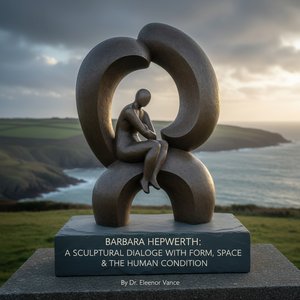
Barbara Hepworth: A Sculptural Dialogue with Form, Space & the Human Condition
Explore the profound world of Barbara Hepworth's sculpture. Discover her artistic evolution, iconic forms, and lasting influence on modern art. A guide for collectors & enthusiasts.

Bronze Age to Modern Masters: 10 Sculptures That Redefined Art | OriginalUniqueArt
Journey through art history with 10 legendary bronze sculptures – from Michelangelo's David to Rodin’s Thinker. Explore the stories, techniques & timeless beauty of these masterpieces. Find museum-quality reproductions & elevate your home decor on OriginalUniqueArt.com.


