切换至版画销售渠道
 展开全文
展开全文







































 对于任何边长超过 105 厘米(约 41 英寸)的艺术品或复制品,画框将以拆解后的组件形式发货。此方法可确保安全送达并防止运输过程中的损坏。


Oval Form (Trezion): A Dance of Light and Stone
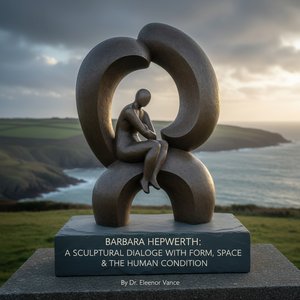
Barbara Hepworth’s “Oval Form (Trezion),” created in 1962, isn't merely a sculpture; it’s an invitation to contemplate the very essence of form, space, and the profound connection between human experience and the natural world. This monumental bronze, currently residing within the esteemed collection of the Kimbell Art Museum in Fort Worth, Texas, stands as a testament to Hepworth’s pioneering approach to abstract sculpture – one that moved beyond representational imagery to explore pure geometric relationships and tactile sensations.
At first glance, the piece presents a deceptively simple form: a vast, gently curving oval bisected by a deep, resonant hollow. However, prolonged observation reveals an intricate interplay of textures and surfaces. The exterior is deliberately rough, bearing the marks of the casting process – evidence of the sculptor’s hand shaping the molten metal. This contrasts dramatically with the smooth, polished interior, creating a dynamic tension between solidity and void, presence and absence. The subtle shifts in color, ranging from warm browns to muted greens, further enhance this visual dialogue, evoking the shifting light and shadows found on weathered stone or the surface of water.
A Cornish Inspiration: Echoes of Landscape
Hepworth’s relationship with Cornwall is inextricably linked to “Oval Form (Trezion).” Following a pivotal shift in her artistic practice during World War II, she sought refuge and inspiration from the rugged coastline of St Ives. The dramatic cliffs, crashing waves, and intricate rock formations profoundly influenced her work during this period, leading to a renewed focus on capturing the essence of landscape through abstract forms. “Trezion,” named after Hepworth’s beloved Cornish home, embodies this connection – it's a distillation of the coastline’s power and beauty, translated into a singular, enduring form.
The sculpture’s genesis can be traced back to her exploration of Neolithic standing stones found at Chûn Castle hillfort. These ancient monoliths, weathered by centuries of exposure to the elements, served as a visual catalyst for Hepworth's creative process. She sought to capture their monumental presence and inherent energy, translating them into a contemporary language of form and space. The deep recesses within “Oval Form” are reminiscent of caves and hollows found in the Cornish landscape, further reinforcing this connection.
The Language of Sculpture: Materiality and Movement
Hepworth’s mastery lies not just in her conceptual approach but also in her technical skill. She skillfully employed the lost-wax casting process, allowing for a remarkable degree of control over the final form. The bronze itself was carefully selected – its inherent qualities of density, reflectivity, and malleability were crucial to achieving the desired effect. Hepworth’s technique involved building up layers of plaster on an armature, carving away excess material to reveal the underlying form. This subtractive process created a dynamic tension between mass and void, contributing to the sculpture's sense of movement and depth.
The deliberate roughness of the exterior surface is particularly noteworthy. Hepworth intentionally left visible traces of the casting process – tool marks, imperfections, and variations in color – as a reminder of the human hand that shaped the piece. This engagement with materiality elevates “Oval Form (Trezion)” beyond mere abstraction, imbuing it with a sense of history and authenticity.
A Legacy of Modernism: Resonance Today
“Oval Form (Trezion)” stands as a cornerstone of Hepworth’s oeuvre and a defining example of British modern sculpture. Its influence can be seen in the work of countless artists who followed, demonstrating her enduring legacy as a pioneer of abstract form. The sculpture's exploration of space, texture, and material remains profoundly relevant today, inviting viewers to engage with its complex interplay of visual elements and contemplate the timeless relationship between art and nature. Reproductions of this iconic piece offer a remarkable opportunity to bring Hepworth’s vision into any setting, adding a touch of sophisticated elegance and contemplative depth.
常见问题与解答
"Oval Form (Trezion)" 是否支持增强现实 (AR) 预览?
“Oval Form (Trezion)” 支持增强现实(AR)预览:通过作品的 AR 效果预览 页面,您可以在兼容设备上查看该作品呈现在您专属空间的效果。
“Oval Form (Trezion)”是否一直留在其艺术家的故乡?
不,该作品目前存放于海外。“Oval Form (Trezion)”现藏于美國,而芭芭拉·海沃斯出生于英国。
芭芭拉·海沃斯 的《Oval Form (Trezion)》 的视觉明亮度如何?
总体而言,"Oval Form (Trezion)" 的亮度记录为 balanced。感知亮度描述了作品呈现出的明暗程度。
 分享
分享 分享
分享
 详情
详情 指南
指南

 下载作品
下载作品
 相似作品
相似作品 幻灯片播放
幻灯片播放 问答
问答 统计数据
统计数据