

 实景预览
实景预览
 发送
发送 分享
分享
 详情
详情 指南
指南

 下载图片
下载图片
 相似作品
相似作品 X射线
X射线 幻灯片播放
幻灯片播放 统计数据
统计数据Fruit, Flowers, and Shells
 Oil On Canvas
- WallArt
- Baroque Still Life
 1629
1629- Renaissance
 55.0 x 89.0 cm
 托莱多艺术博物馆
 阅读全文
阅读全文
手工油画复制品
由我们的艺术家按需定制,为您提供您所选尺寸及画框的布面手工油画。 ( 切换至版画销售渠道 切换至数字图像销售渠道)




P118B ¥10

P118H ¥10

P118W ¥10

P438Z ¥10

P508JH ¥12

P508YH ¥12

P805H ¥10

P805Z ¥10

P919BZ ¥10

P919G ¥10

P919XJ ¥10

P959ZH ¥10

P968JZ ¥12

W106C ¥8

W218G ¥10

W218JH ¥8

W218Y ¥10

W307PJ ¥10

W316G ¥10

W316PJ ¥8

W316Y ¥10

W398PJ ¥8

W4111J ¥10

W500HY ¥15

W500JH ¥15

W692G ¥12

W849H ¥8

W940BG ¥15

W953PJ ¥8




您可以从与原作比例一致的预设尺寸中进行选择。

请输入您需要的宽度和高度,以适配您的画框或墙面。由于作品为手工绘制,若您选择不同的尺寸比例,艺术家可能会在画面边缘多画一些或稍作裁剪 —— 由您决定。在开始绘画之前,我们会为您发送一份数字效果图供您确认。本页面上展示的图片并非最终实物 —— 只有效果图才能反映真实结果。
下单后,OriginalUniqueArt.com 团队将通过电子邮件联系客户获取具体要求,并提供效果预览图


 玻璃选项仅适用于110厘米以下的尺寸。

Fruit, Flowers, and Shells
复制品材质
复刻品尺寸说明
-


总计金额
¥ 2017
A Symphony of Natural Wonders: Balthasar van der Ast’s *Fruit, Flowers, and Shells*
Balthasar van der Ast's 1629 masterpiece, *Fruit, Flowers, and Shells*, is more than a still life; it’s a meticulously crafted window into the burgeoning world of Dutch Golden Age artistry and intellectual curiosity. This painting, measuring 55 x 89 cm, immediately captivates with its astonishing detail – a profusion of exquisitely rendered fruit, flowers, and shells that seem poised to leap from the canvas. Van der Ast’s skill isn't merely in depicting these objects; it lies in his ability to imbue them with a sense of scientific observation and humanist contemplation, reflecting the profound shifts occurring across Europe during the 16th and 17th centuries.
The Art of Shell Painting and Scientific Observation
Van der Ast’s reputation rests largely on his pioneering work in shell painting, a technique demanding an almost obsessive attention to detail. He elevates the humble shell – sourced from exotic locales like the South Pacific and Indian Ocean – into objects of profound beauty and scientific interest. The inclusion of these shells, alongside rare tulips (introduced to Europe from Turkey around 1550), parrots, lizards, and crickets, speaks to the era’s fascination with natural history and the collecting of curiosities. This wasn't simply about aesthetic pleasure; it mirrored the burgeoning scientific revolution, where artists like Van der Ast were engaged in a rigorous study of form, texture, and color – mirroring the advancements being made in astronomy, physics, and medicine.
A Dutch Masterpiece: Technique and Composition
The painting’s composition is masterful. Each element—the apples, grapes, pears, plums, peaches, cherries, oranges, rose, and carnation – occupies a distinct space, inviting the viewer to examine each object with careful attention. The inclusion of the Chinese Wan-li porcelain vase, enhanced with a gilded base crafted by a European goldsmith, further underscores the cross-cultural influences shaping Dutch art at the time. Van der Ast’s use of light and shadow is particularly noteworthy, creating a sense of depth and volume that brings the still life to vibrant life. His meticulous layering of glazes – a hallmark of Flemish painting – ensures an incredible richness of color and texture, allowing for subtle variations in tone that contribute significantly to the work's realism.
Symbolism and Emotional Resonance
*Fruit, Flowers, and Shells* transcends mere representation; it’s laden with symbolic meaning. The abundance of fruit represents fertility, prosperity, and the bounty of nature – themes frequently explored in Dutch art. The flowers, particularly the rose and carnation, carry their own traditional associations, adding layers of interpretation. Beyond this, the painting evokes a sense of quiet contemplation and appreciation for the beauty of the natural world. It’s a testament to Van der Ast's ability to capture not just what he saw, but also the emotions and ideas associated with his subject matter – a skill that continues to resonate with viewers today.
问答详情
“Fruit, Flowers, and Shells”被归于哪位艺术家名下?
《Fruit, Flowers, and Shells》被归为巴尔塔萨·范德阿斯特的作品。
"Fruit, Flowers, and Shells" 在 Baroque Still Life 流派中有多高的知名度?
在Baroque Still Life运动中,"Fruit, Flowers, and Shells"具有Recognized的知名度。
巴尔塔萨·范德阿斯特 的《Fruit, Flowers, and Shells》 是在何时创作的?
"Fruit, Flowers, and Shells"创作于1629年。这一日期将该作品置于巴尔塔萨·范德阿斯特的艺术生涯及其所处时代之中。
艺术家简介
微观宇宙的大师:巴尔塔萨·范德阿斯特
在十七世纪荷兰那片充满前所未有的繁荣与科学好奇心的金色光辉中,巴尔塔萨·范德阿斯特作为微型杰作的艺术大师脱颖而出。约于1593年出生于米德尔堡,范德阿斯特不仅仅是在描绘物体,他更是在画布上编排着一场场无声的戏剧。他的生命与泽兰省蓬勃发展的商人文化紧密交织,作为成功羊毛商人汉斯·范德阿斯特之子,这种背景带给他的不仅是社会地位的稳固,更让他得以在早期便与那些异域珍品和稀有标本建立起亲密的接触,而这些元素后来都成为了他传世静物画中的主角。
他艺术灵魂的轨迹,因与博斯查特王朝的渊源而发生了不可逆转的塑造。通过家族纽带,范德阿斯特成为了其继父、传奇画家安布罗休斯·博斯查特长辈的门生。在这样的教导下,他掌握了创作“花卉画”所需的极度精准,这种流派要求艺术家具备近乎显微镜般的观察力。这种卓越的艺术传承使他能够精炼出一种以细腻色调渐变和对自然物理质感的深切尊重为特征的技法。在追求完美的道路上,他并非孤身一人;他与姻亲兄弟们共同推动了一场风格运动,优先表现光影间微妙的交织,将简单的植物研究升华为对生命存在的深刻冥想。
贝壳与花卉的交响乐
尽管当时的许多同辈艺术家仅专注于花朵那转瞬即逝的美丽,但范德阿斯特却通过对软体动物学的开创性探索,赢得了艺术史上的永恒地位。他成为了贝壳绘画的先驱,以对待最柔软的花瓣般的虔诚,去描绘海洋生物钙化的遗骸。在诸如《带有李子、樱桃与贝壳的静物画》等作品中,人们可以见证不同质感之间令人屏息的结合:水果多汁且半透明的果皮,与异域贝壳坚硬且带有珍珠光泽的表面形成了鲜明对比。这种痴迷并非仅仅出于审美;它反映了那个时代对自然史日益增长的科学兴趣,以及荷兰海上贸易在全球范围内的扩张。
他的构图功能远不止于展示财富或植物学的准确性。细细品味范德阿斯特的画作,便是与植根于人文主义哲学的复杂象征网络进行对话。在他的作品布局中,人们可以发现:
- 生命的瞬息万变:通过凋谢的花瓣或正在蚕食自身栖息之美的昆虫来体现。
- 科学观察:对物种进行细致入微的记录,反映了大航海时代及那个时代对知识的渴求。
- 虚空主题(Vanitas):对死亡的微妙提醒,其中水果的腐烂化作了令人动容的“死亡警告”(memento mori)。
传承与艺术意义
巴尔塔萨·范德阿斯特的影响力远超他在乌得勒支的画室。通过接纳罗兰特·萨弗里等艺术家进入当地行会,他帮助营造了一个色调与写实主义得以蓬勃发展的环境。他赋予无生命物体以生命感的能力——这种品质在他描绘穿梭于水果间的蜥蜴与昆虫时表现得淋漓尽致——为荷兰黄金时代树立了新的标准。他引领静物画流派脱离了静态的陈列,转向了一种更加动态、富有呼吸感的现实。
时至今日,他的作品依然是全球博物馆收藏的基石,从大英博物馆到欧洲各大美术馆皆有其踪迹。他的遗产存在于捕捉叶片上露珠或贝壳虹彩光泽的每一笔触中。巴尔塔萨·范德阿斯特始终是静物画(Stilleven)领域的巨擘,他教会了世人如何在极微小之中发现无限,并将自然界平凡的物体转化为永恒的美学图腾。

巴尔塔萨·范德阿斯特
1593 - 1657 , 荷兰
快速概览
- Artistic Movement Or Style: 黄金时代绘画
- Artists Or Movements Influenced By This Artist: 荷兰巴洛克
- Artists Who Influenced This Artist: 安布罗休斯·博斯查特
- Date Of Birth: 1593
- Date Of Death: 1657
- Full Name: 巴尔塔萨·范德阿斯特
- Nationality: 荷兰
- Notable Artworks:
- 窗台上的水果与贝壳
- 郁金香
- 蜥蜴与贝壳
- Place Of Birth: 荷兰,米德尔堡
相关文章
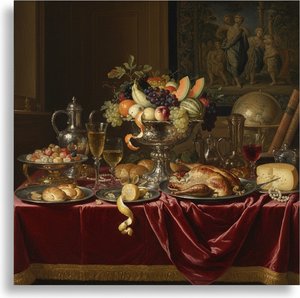
Abraham Hendricksz van Beyeren: Pioneering Dutch Still Life & the Banquet Tradition
Explore the captivating world of Dutch Golden Age still life with Abraham van Beyeren. Discover his innovative techniques, symbolic banquet scenes & lasting influence on art history. Learn about collecting these masterpieces.

伦勃朗25幅杰作:光影大师的艺术传奇与家居臻选
探索伦勃朗25幅杰作,领略荷兰黄金时代光影大师的艺术传奇!从《夜巡》到自画像,深入了解巴洛克艺术、历史绘画与人物肖像背后的故事。OriginalUniqueArt.com提供高清艺术复制品及家居装饰灵感。立即探索完整系列!

Golden Light & Dutch Skies: The Timeless Magic of Dutch Golden Age Landscapes
Discover the breathtaking beauty of Dutch Golden Age landscapes. Explore the mastery of light, chiaroscuro, and 17th-century realism through an expert art history lens, celebrating the enduring legacy of the Dutch Masters for discerning collectors and art lovers.

荷兰黄金时代绘画:文化创新中的现实主义反思
深入探索荷兰黄金时代绘画的文化创新与现实主义反思。本文解读伦勃朗、维米尔等大师的作品,并结合玛莉特·韦斯特曼的图像学研究,揭示艺术史背后的社会语境与现代性意识觉醒。

荷兰黄金时代:十幅定义艺术史的巨作 | OriginalUniqueArt
探索荷兰黄金时代的艺术巅峰! 伦勃朗、维米尔等大师名作,带您领略巴洛克艺术的辉煌。高清画作、博物馆级品质,点亮您的家居空间。OriginalUniqueArt.com 提供精选艺术复制品和定制装饰方案。立即在线探索全系列!