- 首页

- 帆布打印
- bahar oganer
- Rainy Sunday
 Preview
 定制手绘复刻品
 分享
分享 分享
分享
 详情
详情

 下载
下载
 相似作品
相似作品 X射线
X射线 幻灯片播放
幻灯片播放Rainy Sunday
 Painting
- Contemporary Realism
 Contemporary
 185.0 x 205.0 cm
 Elgiz Museum of Contemporary Art
 展开详情
展开详情




P118B $10

P118H $10

P118W $10

P438Z $10

P508JH $12

P508YH $12

P805H $10

P805Z $10

P919BZ $10

P919G $10

P919XJ $10

P959ZH $10

P968JZ $12

W106C $8

W218G $10

W218JH $8

W218Y $10

W307PJ $10

W316G $10

W316PJ $8

W316Y $10

W398PJ $8

W4111J $10

W500HY $15

W500JH $15

W692G $12

W849H $8

W940BG $15

W953PJ $8




从与原作比例一致的预设尺寸中进行选择。

您可以输入自定义尺寸,以适配特定的画框或空间。如果您选择的尺寸与原图比例不符,我们将对作品进行裁剪,或通过镜像填充/纯色填充边缘的方式来扩展图像。在开始制作之前,我们会向您发送一份数字效果图供您确认。
请注意,屏幕上的预览并不能反映实际的裁剪或扩展效果。只有效果图才能准确展示最终的构图。
虽然我们提供定制尺寸,但为了保持原图比例,我们建议您从预设列表中选择尺寸。


 玻璃选项仅适用于110厘米以下的尺寸。

Rainy Sunday
艺术微喷/版画
复制品尺寸
-


最终总价
-
藏品详情
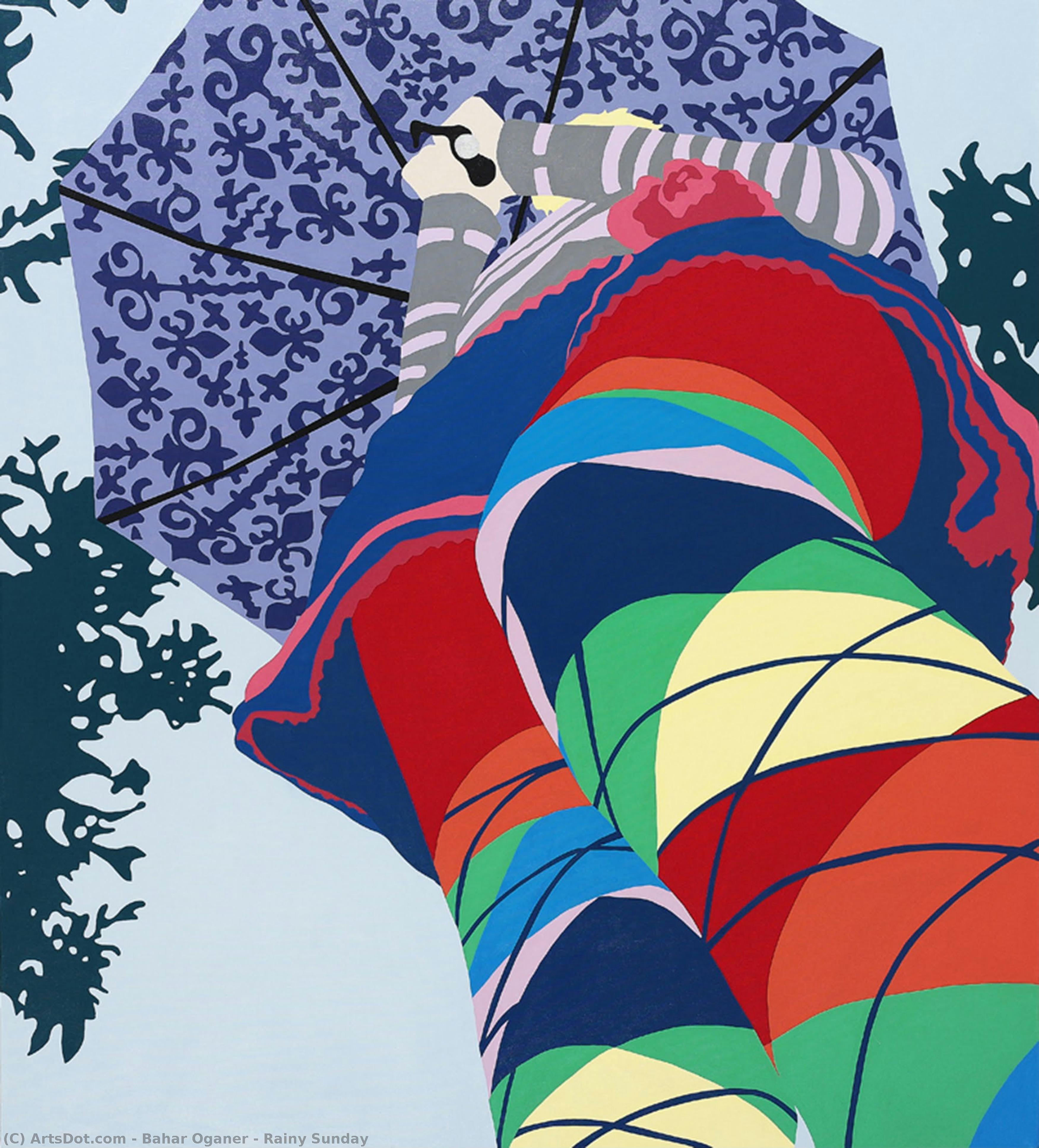
A Symphony of Color Amidst the Deluge
In the evocative painting Rainy Sunday, the Turkish artist Bahar Oganer invites us into a moment of profound stillness captured within a transient downpour. At first glance, the viewer is met with a striking juxtaposition: the somber, rhythmic descent of rain contrasted against an explosion of chromatic vitality. The central figure, sheltered beneath a meticulously patterned umbrella, serves as the emotional anchor of the composition. Clad in a flowing garment that dances with hues of crimson, amber, azure, and emerald, the subject transforms a potentially melancholic scene into a celebration of life's resilience. The movement within the fabric suggests a gentle breeze, adding a layer of kinetic energy to an otherwise tranquil, frozen moment in time.
The technique employed by Oganer breathes life into the canvas, utilizing a vibrant palette that defies the gray expectations of a rainy day. Each brushstroke contributes to a sense of texture and depth, where the interplay of light and shadow mimics the way moisture clings to surfaces and softens the edges of the world. The umbrella, far from being a mere utilitarian object, becomes a decorative masterpiece in its own right, featuring intricate patterns that draw the eye inward toward the heart of the figure. This careful attention to detail ensures that the painting functions not just as a depiction of weather, but as an exploration of how color can act as a sanctuary against the elements.
Beyond its visual splendor, Rainy Sunday carries a deep symbolic weight that resonates with anyone who has sought refuge during a storm. The umbrella acts as a metaphor for protection, boundaries, and the internal strength required to maintain one's vibrancy when faced with external gloom. Oganer’s work often touches upon themes of human vulnerability and the inevitability of change, yet here, she offers a vision of hope. The painting suggests that even in the midst of life's most persistent rains, there exists an inherent beauty and a capacity for joy that remains untouched by the clouds.
For the discerning collector or interior designer, this piece serves as a magnificent focal point capable of transforming any space. Its large-scale presence (185 x 205 cm) allows the intricate details and bold colors to command attention, making it an ideal selection for contemporary living rooms, sophisticated galleries, or creative studios. As a high-quality reproduction, it brings the soulful essence of Oganer’s Turkish heritage and her unique ability to capture human emotion into the home, offering a permanent window into a world where every rainy Sunday is an opportunity for color to shine.
艺术家简介
Jean-Michel Basquiat: A Voice of the Streets and a Revolutionary Artist
Born in Brooklyn, New York City, on December 22, 1960, Jean-Michel Basquiat emerged from the vibrant, chaotic crucible of the Lower East Side during the late 1970s and early 1980s. His life was tragically cut short at the age of 27 in August 1988 due to a heroin overdose, but his impact on the art world—and beyond—remains profound. Basquiat’s work wasn't merely painting; it was an urgent and often searing commentary on race, power, poverty, and the American experience, delivered with a raw intensity that continues to resonate today.
Initially collaborating with Al Diaz under the moniker SAMO (Street Art Method of Operation), Basquiat began his artistic journey by tagging subway cars throughout Manhattan. These early interventions were more than just graffiti; they were cryptic epigrams—short, provocative phrases layered with social critique and a distinctly urban sensibility. The duo’s work explored themes of consumerism, inequality, and the decay of the city, reflecting the burgeoning hip-hop culture that was simultaneously taking root in New York's streets. This early period established Basquiat’s core aesthetic: a fusion of street art techniques with intellectual depth.
The Rise of Neo-Expressionism and a Unique Voice
By the early 1980s, Basquiat transitioned from SAMO to working as a solo artist. He quickly gained recognition within the burgeoning neo-expressionist movement, a reaction against the perceived sterility of minimalism and conceptual art. Unlike many of his contemporaries, however, Basquiat didn’t simply embrace traditional painting techniques; he actively dismantled them, incorporating elements of collage, drawing, poetry, and historical references into his work. His canvases became densely layered with text, symbols, and images—a visual vocabulary that was both intensely personal and broadly accessible.
Basquiat's artistic language drew heavily from his African American heritage, as well as the history of slavery, colonialism, and racial injustice in America. He frequently depicted skulls, crowns (representing royalty), and figures referencing historical events and personalities—often juxtaposing them with contemporary symbols of wealth and power. His work was a direct challenge to established artistic norms and a powerful statement about identity and social commentary. The influence of the Black Arts Movement, which sought to celebrate African American culture and history through art, is clearly visible in his approach.
Key Themes and Techniques
Basquiat’s paintings are characterized by their layered complexity and often unsettling juxtapositions. Recurring motifs include skulls (representing mortality), crowns (symbolizing power and identity), hands (suggesting both creation and destruction), and portraits—often of African American figures. He frequently incorporated text, using his own handwriting alongside snippets of poetry, historical quotes, and social commentary. His use of color was often bold and contrasting, reflecting the energy and intensity of his subject matter.
Technically, Basquiat’s process involved a combination of techniques—painting, collage, drawing, and assemblage. He frequently used found objects – newspapers, magazines, maps – to add texture and layers of meaning to his canvases. His work was not about achieving photographic realism; it was about conveying ideas and emotions through a highly stylized and symbolic language.
Legacy and Historical Significance
Despite his tragically short life, Jean-Michel Basquiat’s impact on the art world is undeniable. He quickly rose to prominence in the early 1980s, becoming one of the youngest artists ever exhibited at prestigious institutions like the Whitney Museum of American Art and Documenta. His work continues to be celebrated for its raw honesty, social commentary, and innovative approach to painting. Basquiat’s legacy extends beyond the art world; he is remembered as a cultural icon who challenged conventions, amplified marginalized voices, and used his art as a tool for social change.
His paintings have consistently commanded high prices at auction, demonstrating the enduring value of his work and solidifying his place among the most important artists of the 20th century. Basquiat’s influence can be seen in contemporary artists who continue to explore themes of identity, race, and social justice through their art.

bahar oganer
1980 - , Turkey
艺术家简介
- Artistic Movement Or Style: Neo-expressionism
- Artists Or Movements Influenced By This Artist:
- Graffiti art
- Hip-hop culture
- Artists Who Influenced This Artist:
- Andy Warhol
- Keith Haring
- Date Of Birth: December 22, 1960
- Date Of Death: August 12, 1988
- Full Name: Jean-Michel Basquiat
- Nationality: American
- Notable Artworks:
- Irony of Negro Policeman
- Skull of Doom
- Untitled
- Boy and Dog in a Johnnypump
- Defacement
- Hollywood Africans
- Place Of Birth: New York City, U.S.
相关文章
Chromatic Masterpieces: 10 Artworks That Define Color & Inspire Your Home Decor
Explore 10 iconic artworks – from Monet to Matisse – that masterfully use color! Discover the stories behind these vibrant paintings, their techniques & emotional impact. Find museum-quality art reproductions and inspiring decor ideas on OriginalUniqueArt.com.

马蒂斯大师25幅杰作:色彩与光影的艺术传奇 | OriginalUniqueArt
探索亨利·马蒂斯25幅杰作,感受野兽派色彩的魅力!从《舞蹈》到《红色和谐》,揭秘大师背后的故事与艺术灵感。OriginalUniqueArt.com提供博物馆级高质量油画复制品,为您的家居增添奢华艺术气息。立即在线探索完整系列!
弗朗西斯·培根:25幅震撼人心的杰作,重塑艺术与家居空间 | Francis Bacon's 25 Masterpieces
探索弗朗西斯·培根25幅震撼人心的杰作,深入了解这位现代艺术大师的创作故事与情感世界。从《三幅习作》到肖像画,感受抽象表现主义的魅力。OriginalUniqueArt.com提供高品质艺术品复制,为您的家居空间增添艺术气息!立即探索完整系列。

莫奈大师25幅杰作:光影艺术与家居臻选 | Claude Monet's 25 Masterpieces
探索克劳德·莫奈25幅杰作,沉浸于印象派大师的光影世界。从《睡莲》到《日出·印象》,感受色彩与情感的完美交融。OriginalUniqueArt.com提供博物馆级艺术复制品,为您的家居带来臻选装饰灵感!立即探索完整系列。

Chromatic Abundance: Exploring the Psychological Impact of Rich Color Palettes in Painting
Explore the fascinating world of color theory in painting! Discover how Impressionist & Post-Impressionist masters used vibrant hues to evoke emotion and create lasting impact. Expert insights for collectors & art enthusiasts.

