
 效果预览
效果预览
 切换至手工绘画版
 分享
分享 分享
分享
 详情
详情

 下载
下载
 相似作品
相似作品 X射线
X射线 幻灯片播放
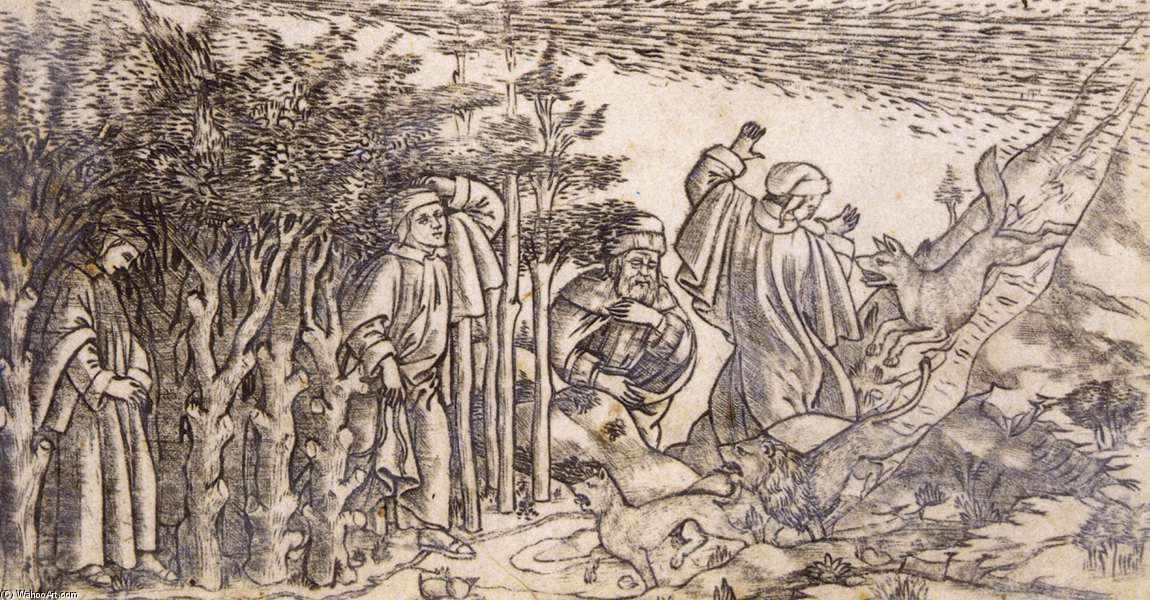
幻灯片播放Inferno I


 展开详情
展开详情




































从与原作比例一致的预设尺寸中进行选择。

您可以输入自定义尺寸,以适配特定的画框或空间。如果您选择的尺寸与原图比例不符,我们将对作品进行裁剪,或通过镜像填充/纯色填充边缘的方式来扩展图像。在开始制作之前,我们会向您发送一份数字效果图供您确认。
请注意,屏幕上的预览并不能反映实际的裁剪或扩展效果。只有效果图才能准确展示最终的构图。
虽然我们提供定制尺寸,但为了保持原图比例,我们建议您从预设列表中选择尺寸。


 玻璃选项仅适用于110厘米以下的尺寸。

Inferno I
艺术微喷/版画
复制品尺寸
-


最终总价
$ 80
艺术家简介
Baccio Baldini: A Florentine Renaissance Goldsmith and Engraver
- Born: Florence, Italy (1436)
- Died: 1487
Early Life and Training
Baccio Baldini was an Italian goldsmith and engraver active in Florence during the Renaissance. Information about his life is scarce, primarily derived from Giorgio Vasari's writings. Vasari stated that Baldini was a goldsmith and a student of Maso Finiguerra, who Vasari incorrectly credited as the inventor of engraving. It appears Baldini relied heavily on designs by Sandro Botticelli, purportedly due to a perceived lack of his own artistic skill in disegno (drawing). This assertion has been debated by art historians.
Key Works and Collaborations
- Collaboration with Botticelli: Baldini is best known for his involvement in the 1481 printing of Dante's works, specifically the first printed edition of *Inferno*. It’s believed that Botticelli provided the initial drawings, which Baldini then translated into engravings. However, the extent to which all of Baldini’s work was based on Botticelli’s designs remains a subject of scholarly discussion.
- Attributed Engravings: Over 100 prints have been attributed to Baldini or his workshop. These works showcase a distinctive "fine manner" of Florentine engraving, characterized by:
- Sharp, deeply incised outlines
- Detailed ornamentation in costumes and architecture
- Fine lines used for cross-hatching, creating a textured, almost furry appearance in draperies
- Florentine Picture-Chronicle: Baldini (or his circle) is credited with the *Florentine Picture-Chronicle*, an album of 55 drawings depicting scenes and figures from ancient history housed in the British Museum.
- Otto Prints: Jay Levinson attributed a series of engravings known as the "Otto prints" to Baldini, depicting amorous subjects and hunting scenes intended for pasting into gift boxes. However, the British Museum has not confirmed this attribution as of 2017.
Artistic Style and Technique
Baldini’s engraving style is notable for its attempt to replicate the quality of pen-and-wash drawings. His technique involved a combination of deeply incised lines for outlines and finer, cross-hatched lines for shading. This approach resulted in a unique visual texture that distinguished his work from other contemporary engravers. He appears to have also been skilled in drawing, as evidenced by the *Florentine Picture-Chronicle*. The prints attributed to Baldini and the drawings in the chronicle share characteristics such as intricate surface patterns, a somewhat rudimentary grasp of perspective, and reliance on figure types inspired by Maso Finiguerra.
Historical Significance and Legacy
Baldini’s work represents an important development in Florentine engraving. During his active period (roughly 1460-1490), two distinct styles emerged: the "fine manner" exemplified by Baldini and the “Master of the Vienna Passion,” and the "broad manner," associated with artists like Francesco Rosselli and Antonio Pollaiuolo. While Vasari expressed disapproval of Baldini’s contribution to the printed Dante, his work demonstrates an early attempt to reproduce a painter's designs through printmaking—a practice that would become increasingly significant in later centuries. Despite uncertainties surrounding authorship of some works attributed to him, Baccio Baldini remains a key figure in understanding the evolution of Renaissance engraving and its relationship to painting.

Baccio Baldini
1436 - 1487 , Italy
艺术家简介
- Artistic Movement Or Style: Renaissance
- Artists Who Influenced This Artist:
- Maso Finiguerra
- Sandro Botticelli
- Date Of Birth: 1436
- Date Of Death: 1487
- Full Name: Baccio Baldini
- Nationality: Italian
- Notable Artworks:
- First printed Dante (1481)
- Florentine Picture-Chronicle
- Place Of Birth: Florence, Italy

