

 效果预览
效果预览
 购买手绘画作
 分享
分享 分享
分享
 详情
详情

 下载
下载
 相似作品
相似作品 X射线
X射线 幻灯片播放
幻灯片播放Rythms
 73.0 x 153.0 cm
 Biennale Internazionale dell'Antiquariato di Firenze
 展开详情
展开详情




































从与原作比例一致的预设尺寸中进行选择。

您可以输入自定义尺寸,以适配特定的画框或空间。如果您选择的尺寸与原图比例不符,我们将对作品进行裁剪,或通过镜像填充/纯色填充边缘的方式来扩展图像。在开始制作之前,我们会向您发送一份数字效果图供您确认。
请注意,屏幕上的预览并不能反映实际的裁剪或扩展效果。只有效果图才能准确展示最终的构图。
虽然我们提供定制尺寸,但为了保持原图比例,我们建议您从预设列表中选择尺寸。


 玻璃选项仅适用于110厘米以下的尺寸。

Rythms
艺术微喷/版画
复制品尺寸
-


最终总价
$ 80
艺术家简介
A Life Sculpted in Motion: The World of Attilio Marcello Selva
Attilio Marcello Selva, born in the vibrant port city of Trieste, Italy, in 1888, emerged as a compelling voice within the Italian sculpture scene during a period of profound artistic transformation. His life, spanning until 1970, coincided with and actively participated in the evolution from traditional forms to the dynamic energy of modernism, particularly the burgeoning Futurist movement. Selva wasn’t merely a sculptor; he was an interpreter of motion, a chronicler of human vitality rendered in bronze and stone. His early life experiences within Trieste – a crossroads of cultures and ideas – undoubtedly fostered his openness to experimentation and his fascination with capturing fleeting moments. While biographical details remain somewhat sparse, the impact of his work speaks volumes about a dedicated artist deeply engaged with the aesthetic currents of his time.The Embrace of Futurism and Artistic Development
Selva’s artistic trajectory was significantly shaped by the Italian Futurist movement, a radical cultural force that celebrated speed, technology, and the raw energy of modern life. He became a member of the Italian Futurist Association, aligning himself with artists like Umberto Boccioni and Giacomo Balla who sought to break from the past and forge a new artistic language. However, Selva’s Futurism wasn't simply an adoption of manifestos; it was a deeply personal interpretation. While embracing the dynamism central to the movement, he maintained a strong focus on the human form – a characteristic that distinguished his work from some of his more abstract Futurist contemporaries. His sculptures weren’t depictions *of* machines or speed, but rather explorations of how the human body experienced and embodied those forces. This is evident in his early works where traditional modeling techniques are subtly infused with a sense of implied movement, figures poised on the verge of action, muscles tensed, lines flowing with an almost liquid grace. He skillfully blended classical training with the Futurist desire to represent simultaneity and energy.Key Works: ‘Rhythms’ and Beyond
‘Rythms’, arguably Selva's most celebrated creation, encapsulates his artistic philosophy perfectly. This sculpture isn’t a static representation of a figure; it is an attempt to capture the very essence of movement itself. The forms are fragmented yet harmonious, suggesting a continuous flow of energy and transformation. It embodies the Futurist ideal of representing multiple perspectives simultaneously, conveying the dynamism of life rather than a single frozen moment. Beyond ‘Rythms’, ‘The Fountain of the Caryatids’ stands as another testament to his skill and vision. This work demonstrates Selva's ability to translate classical motifs into a modern idiom, imbuing traditional architectural elements with a sense of vitality and expressive power. While these two pieces are frequently highlighted, Selva produced a substantial body of work throughout his career, consistently exploring themes of human emotion, physical exertion, and the interplay between form and space.Exhibitions, Recognition, and Lasting Legacy
Attilio Selva wasn’t confined to the studio; he actively sought to engage with the public through numerous exhibitions held across Italy and internationally. These showings provided a platform for his work to be seen and appreciated by a wider audience, contributing to his growing reputation as a significant figure in Italian sculpture. He received several awards and accolades throughout his career, acknowledging his contributions to the field and solidifying his position within the artistic community. Although perhaps not as widely recognized today as some of his Futurist peers, Selva’s work continues to resonate with its expressive power and innovative approach to form. His sculptures offer a unique perspective on the intersection of classical tradition and modern experimentation, reminding us of the enduring human fascination with movement, energy, and the beauty of the sculpted form. He left behind a legacy of dynamic works that continue to inspire artists and captivate audiences, proving his place as an important sculptor in Italian art history.The Enduring Appeal of Selva’s Vision
Attilio Marcello Selva's sculptures are more than just objects; they are embodiments of energy, emotion, and the human spirit. His ability to infuse classical forms with Futurist dynamism created a unique artistic language that continues to captivate viewers today. In an era increasingly dominated by digital art and fleeting images, Selva’s work serves as a powerful reminder of the enduring beauty and tactile presence of sculpture. He invites us to contemplate the human condition, not through static representation, but through a celebration of movement, vitality, and the inherent power of form. His legacy is one of innovation, expression, and a profound understanding of the relationship between art and life.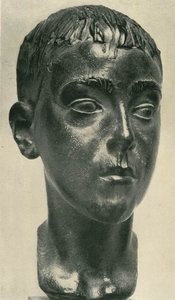
attilio marcello selva
1888 - 1970 , Italy
艺术家简介
- Artistic Movement Or Style: Futurism
- Date Of Birth: 1888
- Date Of Death: 1970
- Full Name: Attilio Marcello Selva
- Nationality: Italian
- Notable Artworks:
- Rhythms
- The Fountain of the Caryatids
- Place Of Birth: Trieste, Italy