
 实景预览
实景预览
 分享
分享 分享
分享
 详情
详情 指南
指南

 下载作品
下载作品
 相似作品
相似作品 X射线
X射线 幻灯片播放
幻灯片播放 Q&A
Q&A 统计数据
统计数据Emil Hertzka

- 29.0 x 36.0 cm


 展开全文
展开全文
艺术微喷/版画
博物馆级艺术微喷或帆布版画,制作高效,并提供多种饰面选择。 ( 订购纯手工绘制画作 切换至数字图像销售渠道)




P118B ¥10

P118H ¥10

P118W ¥10

P438Z ¥10

P508JH ¥12

P508YH ¥12

P805H ¥10

P805Z ¥10

P919BZ ¥10

P919G ¥10

P919XJ ¥10

P959ZH ¥10

P968JZ ¥12

W106C ¥8

W218G ¥10

W218JH ¥8

W218Y ¥10

W307PJ ¥10

W316G ¥10

W316PJ ¥8

W316Y ¥10

W398PJ ¥8

W4111J ¥10

W500HY ¥15

W500JH ¥15

W692G ¥12

W849H ¥8

W940BG ¥15

W953PJ ¥8




您可以从与原作比例一致的预设尺寸中进行选择。

请输入您所需的宽度和高度,以适配您的画框或墙面。由于印刷品只能进行裁剪,无法超出原图尺寸,因此若比例不一致,画面的一部分将会被裁切。在正式印刷之前,我们会为您发送一份数字效果图供您确认。本页面显示的图片并非最终裁剪后的效果——只有效果图才能展示真实的裁剪情况。


 玻璃选项仅适用于110厘米以下的尺寸。

Emil Hertzka
艺术微喷/版画
复刻品尺寸
-


最终结算价
¥ 538
A Portrait of Ambition: Emil Hertzka by Arnold Schoenberg
This intimate portrait, rendered in 1910, offers a rare glimpse into the burgeoning artistic ambitions of Arnold Schoenberg, one of the most revolutionary figures in musical history. Painted by Schoenberg himself – a surprising and revealing act – the work transcends a simple likeness; it’s a carefully constructed statement about his aspirations and the perceived value of his increasingly influential art. The subject, a man with a distinguished reddish-brown beard and mustache, gazes directly at the viewer, an arresting intensity that speaks to Schoenberg's own self-assurance and desire for recognition. The slightly faded appearance of the painting lends it an aged quality, hinting at the passage of time and perhaps a subtle acknowledgement of the challenges he faced in establishing his reputation.
The Context of Innovation
- Vienna's Artistic Landscape: 1910 Vienna was a crucible of artistic innovation. Schoenberg, along with figures like Alban Berg and Anton Webern, was at the forefront of the Second Viennese School, challenging traditional harmonic structures and paving the way for atonality – a radical departure from established musical norms.
- Hertzka's Role: Emil Hertzka was a prominent art dealer who recognized Schoenberg’s potential early on. The correspondence between them reveals Schoenberg’s strategic thinking; he understood the power of association and sought to leverage his reputation within the music world to gain wider acceptance for his visual work.
- A Moment of Transition: This painting represents a pivotal moment in Schoenberg's career, just as he was solidifying his position as a leading composer and beginning to explore new artistic avenues.
Symbolism and Technique – A Calculated Impression
Schoenberg’s technique is characterized by a meticulous attention to detail, particularly in the rendering of the subject's facial features and the textures of his clothing. The use of muted tones and subtle gradations of light and shadow creates a sense of depth and realism, while simultaneously conveying an air of formality and sophistication. The glasses worn by the sitter are not merely a stylistic choice; they suggest intellectualism and perhaps a detachment from conventional perspectives – qualities central to Schoenberg’s revolutionary approach to music. The direct gaze of the subject is particularly significant, demanding engagement from the viewer and subtly asserting Schoenberg's confidence in his artistic abilities.
Beyond the Brushstroke: A Statement of Value
The inscription accompanying the painting – “You know that I paint. What you do not know is that my work is highly praised by experts…” – reveals Schoenberg’s anxieties and strategic calculations. He was acutely aware of the skepticism surrounding his foray into visual art, particularly given his groundbreaking musical innovations. By emphasizing the praise he received from "experts," he sought to bypass public opinion and directly appeal to a discerning audience. His desire for a patron, coupled with his assertion that owning a painting by him would be “much more interesting” than commissioning a work from a lesser-known artist, underscores his ambition to establish himself as a significant figure in both the music and art worlds. This portrait is not simply a representation of a man; it’s a carefully crafted testament to Schoenberg's belief in his own artistic genius.
常见问题与解答
哪里可以买到阿诺德·勋伯格 的《Emil Hertzka》的手绘复制品?
阿诺德·勋伯格 的《Emil Hertzka》 的手绘复制品正在 本站 发售,您可以通过其 手工油画复刻 页面进行订购:亚麻画布手工油画复制品。
在哪里可以购买到 阿诺德·勋伯格 的《Emil Hertzka》 的数字图像?
您可以在 阿诺德·勋伯格 的《Emil Hertzka》 的 高分辨率数字图像 页面购买其数字图像:高分辨率数字图像下载。
Early Modern Music 流派的作品 "Emil Hertzka" 传达了怎样的情感?
"Emil Hertzka" 在 Early Modern Music 运动中蕴含着 Reflective 的情感基调。
艺术家简介
早年生活与音乐启蒙
阿诺德·勋伯格是一位奥地利裔美国作曲家,于1874年9月13日出生于奥地利维也纳。他的早年生活充满了平凡的色彩,父亲是一名鞋店店主。尽管出身并不显赫,但勋伯格对音乐那份与生俱来的热忱,促使他在这一领域进行了大量的自学,为日后的艺术变革奠定了基础。音乐演进与代表作品
勋伯格早期的作品,例如 《情逝》(Verklärte Nacht, 1899),展现了勃拉姆斯与瓦格纳风格的融合。随着创作生涯的深入,他成为了第二维也纳乐派的核心人物,与 安东·韦伯恩 以及 阿尔班·贝尔格 并肩屹立。他的一系列杰作,包括 《第二弦乐四重奏》(1907–1908)、《期待》(Erwartung, 1909) 以及 《皮埃罗·路纳》(Pierrot Lunaire, 1912),都深刻体现了他对无调性音乐的创新探索。教学、移民与晚年生活
1933年,随着纳粹势力的崛起,勋伯格因其音乐被贴上“堕落”的标签而被迫从普鲁士艺术学院辞职。随后,他移居美国并开始从事教学工作,任教于加州大学洛杉矶分校(1936–1944),如今该校仍有设施以他的名字命名。[https://OriginalUniqueArt.com/@/arnold-schoenberg](在 OriginalUniqueArt 进一步探索勋伯格的生平与作品)。- 勋伯格曾涉足电影音乐领域,并创作了更多具有调性特征的音乐,于1939年完成了他的 第二室内交响曲。
- 他曾效仿拜伦,在 《拿破仑颂》(1942) 中对法西斯暴君进行了讽刺。
- 战后的维也纳曾授予他荣誉市民身份,但此时他已身患重病,这一点在他的 《弦乐三重奏》(1946) 中得到了情感的寄托。
遗产与影响
当世界逐渐揭开大屠杀的残酷真相时,勋伯格在 《华沙幸存者》(1947) 中为受害者举行了音乐上的纪念。1951年,以色列音乐学院选举他为名誉校长。[https://OriginalUniqueArt.com/@@/a@d3bqc7-the-museum-destroyed-by-fire-(united-states)](在 OriginalUniqueArt 深入了解他的作品所带来的深远影响)。 关键要点:- 勋伯格的创新音乐是20世纪古典音乐中最具影响力且最具争议的作品之一。
- 至少有三代作曲家延续并扩展了他那具有严谨形式感的创作原则。
- 他的美学观与音乐史观点深刻影响了音乐学家西奥多·阿多诺和卡尔·达尔豪斯。

阿诺德·勋伯格
1874 - 1951 , 奥地利
艺术家简介
- Artistic Movement Or Style: 十二音技法;表现主义
- Artists Or Movements Influenced By This Artist:
- 安东·韦伯恩
- 阿尔班·贝尔格
- Artists Who Influenced This Artist:
- 约翰内斯·勃拉姆斯
- 理查德·瓦格纳
- Date Of Birth: 1874年9月13日
- Date Of Death: 1951年
- Full Name: 阿诺德·勋伯格
- Nationality: 奥地利裔美国人
- Notable Artworks:
- 组曲,作品29
- 音乐打字机
- 五线谱器
- Place Of Birth: 奥地利,维也纳
相关文章

Timeless Vienna: Capturing the Imperial Elegance of Austria Through the Lens of Art History
Explore the imperial grandeur of Vienna through art history. Discover the architectural mastery of Otto Wagner and the elegance of the Secessionist movement in this sophisticated guide to Austria's timeless aesthetic legacy.

Beyond Symbolism: Exploring the Spiritual Landscapes of Mikalojus Konstantinas Čiurlionis's Art
Explore the captivating world of Mikalojus Konstantinas Čiurlionis, a pioneer of abstract art. Discover his unique blend of music and painting, spiritual themes, and lasting influence on Lithuanian culture. Learn more at OriginalUniqueArt.
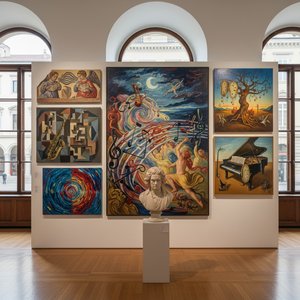
Harmonies on Canvas: Exploring the Visual Representation of Music in Art History
Explore the fascinating history of music's visual representation in art! From ancient symbolism to modern abstraction, discover how artists have captured sound and emotion on canvas. Expert insights & stunning examples.

古斯塔夫·克林姆:25幅大师级杰作,点亮您的艺术生活 | OriginalUniqueArt
探索古斯塔夫·克林姆25幅传世名画,领略维也纳分离派的金色辉煌!深入了解每一件艺术品的创作故事与象征意义。OriginalUniqueArt.com提供博物馆级高质量复制品,为您的家居带来艺术灵感。立即在线探索完整系列!

维也纳分离派:世纪末艺术形式与精神的叛逆
深入探索维也纳分离派的艺术革命!了解克里姆特等大师的作品,其对传统艺术的反叛与现代主义的影响。OriginalUniqueArt.com提供精美复制品和专业艺术咨询服务,助您收藏经典。


