

 实景预览
实景预览
 发送
发送 分享
分享
 详情
详情 指南
指南

 下载图片
下载图片
 相似作品
相似作品 X射线
X射线 幻灯片播放
幻灯片播放 统计数据
统计数据Spring Evening
 Oil On Panel
- Symbolist Painting
 1879
1879 67.0 x 129.0 cm
 匈牙利美术博物馆
 阅读全文
阅读全文
手工油画复制品
由我们的艺术家按需定制,为您提供您所选尺寸及画框的布面手工油画。 ( 切换至版画销售渠道 切换至数字图像销售渠道)




P118B ¥10

P118H ¥10

P118W ¥10

P438Z ¥10

P508JH ¥12

P508YH ¥12

P805H ¥10

P805Z ¥10

P919BZ ¥10

P919G ¥10

P919XJ ¥10

P959ZH ¥10

P968JZ ¥12

W106C ¥8

W218G ¥10

W218JH ¥8

W218Y ¥10

W307PJ ¥10

W316G ¥10

W316PJ ¥8

W316Y ¥10

W398PJ ¥8

W4111J ¥10

W500HY ¥15

W500JH ¥15

W692G ¥12

W849H ¥8

W940BG ¥15

W953PJ ¥8




您可以从与原作比例一致的预设尺寸中进行选择。

请输入您需要的宽度和高度,以适配您的画框或墙面。由于作品为手工绘制,若您选择不同的尺寸比例,艺术家可能会在画面边缘多画一些或稍作裁剪 —— 由您决定。在开始绘画之前,我们会为您发送一份数字效果图供您确认。本页面上展示的图片并非最终实物 —— 只有效果图才能反映真实结果。
下单后,OriginalUniqueArt.com 团队将通过电子邮件联系客户获取具体要求,并提供效果预览图


 玻璃选项仅适用于110厘米以下的尺寸。

Spring Evening
复制品材质
复刻品尺寸说明
-


总计金额
¥ 2016
The Ethereal Embrace of Spring Evening
Arnold Böcklin’s “Spring Evening,” painted in 1879, isn't merely a depiction of a woodland scene; it’s an immersion into a realm of melancholic beauty and profound symbolism. Created during his time in Florence – a city that profoundly shaped his artistic vision – the painting captures a fleeting moment of enchantment, steeped in the atmosphere of late Romanticism and foreshadowing the rise of Symbolism. The canvas breathes with a quiet intensity, dominated by muted greens, blues, and browns, creating an almost dreamlike quality that immediately draws the viewer into its hushed world.
At the heart of the composition stands a woman, her posture suggesting both contemplation and vulnerability. Her hand gently resting on her head is a gesture simultaneously of yielding and quiet strength – she’s not passively observing but actively engaged with the scene unfolding before her. Beside her sits a man, seemingly lost in thought as he peruses a book, his presence offering a grounding element to the ethereal atmosphere. A bear, rendered with surprising tenderness, interacts playfully with both figures, blurring the lines between human and animal, nature and civilization. This carefully orchestrated tableau speaks of harmony, connection, and the delicate balance of the natural world.
A Symphony of Symbolism
Böcklin’s work is deeply rooted in mythology and folklore, drawing heavily on ancient Greek and Roman traditions. The central figure, often interpreted as Pan – the god of nature, shepherds, and wild music – plays his pipes, summoning a chorus of unseen nymphs from the surrounding forest. These dryads, with their flowing hair and graceful movements, represent the spirit of the woods, embodying both beauty and danger. The bear itself is a potent symbol, frequently associated with strength, wisdom, and primal instincts—a reminder of humanity’s connection to the earth.
The painting's muted palette contributes significantly to its symbolic weight. The cool blues and greens evoke a sense of melancholy and introspection, while the browns ground the scene in the tangible reality of the forest floor. The lighting is soft and diffused, creating an atmosphere of twilight—a liminal space between day and night, representing transition, mystery, and perhaps even mortality. Böcklin masterfully uses color not to simply depict a landscape but to convey complex emotions and ideas.
Technique and Artistic Influences
“Spring Evening” exemplifies Böcklin’s distinctive artistic style, characterized by meticulous detail, rich textures, and an almost obsessive attention to the natural world. He employed a technique of layering thin glazes of oil paint, building up color gradually to achieve remarkable depth and luminosity. The brushwork is subtle yet expressive, conveying both the smoothness of the forest floor and the intricate details of the foliage.
Böcklin’s artistic journey was profoundly influenced by his time in Düsseldorf, where he studied under Schirmer and became associated with the Düsseldorf School of Painting. However, it was in Florence that he truly developed his unique Symbolist vision, drawing inspiration from the city's rich cultural heritage and its connection to antiquity. The painting also reflects the influence of Romanticism, particularly the emphasis on emotion, imagination, and the sublime beauty of nature—themes central to the movement.
A Timeless Resonance
“Spring Evening” continues to resonate with viewers today because it taps into universal themes of longing, connection, and the search for meaning. Its evocative atmosphere and symbolic richness invite contemplation and offer a glimpse into the artist’s deeply personal vision. The painting's enduring appeal lies in its ability to transport us to another time and place—a world where myth and reality intertwine, and where the beauty of nature is inextricably linked to the mysteries of the human soul.
问答详情
阿诺德·勃克林 的《Spring Evening》 的复制品推荐用于哪些场景?
"Spring Evening" 艺术复制品的推荐用途为 Statement。
"Spring Evening" 的整体色调明亮吗?
阿诺德·勃克林 的《Spring Evening》 的视觉亮度为 deep_shadow。它可以与目标空间的灯光完美匹配。
是否有面向学生的 阿诺德·勃克林 的《Spring Evening》 详情页?
阿诺德·勃克林 的《Spring Evening》 的 指南 页面提供了一份可打印的两页式学生资料单:包含作品及其身份信息表、将其置于艺术家生平中的年代轴、艺术家的其他作品、经测量的色板,以及四种格式的即用型引用文献。
艺术家简介
早年生活与艺术训练
阿诺德·勃克林 (Arnold Böcklin) 是一位享誉世界的瑞士象征主义画家,于1827年10月16日出生在瑞士巴塞尔。他的父亲 克里斯蒂安·弗雷德里克·勃克林 出身于沙夫豪森的一个古老家族,从事丝绸贸易。阿诺德的母亲 乌苏拉·利佩 亦是巴塞尔本地人。在艺术启蒙阶段,他在杜塞尔多夫学院师从希尔默 (Schirmer),并与 安塞尔姆·费尔巴哈 结下了深厚的友谊。作为杜塞尔多夫画派的重要成员,勃克林早期的艺术根基深植于这一传统之中。艺术生涯与象征主义
勃克林的艺术征途跨越了多个艺术之都,包括他在卢浮宫工作的巴黎,以及深受古罗马景观启发的罗马。他的作品常以古典建筑为背景,通过寓言化与神话化的形象,深刻地探讨着死亡与生命无常的主题。- 《大公园》是他早期的代表作之一,展现了古老神话的魅力。
- 《宁芙与萨堤尔》(1858) 与 《萨福》(1859) 是这一时期的杰出作品。
- 勃克林的 《我的自画像:死神在拉小提琴》 (1872) 完美诠释了他那独树一帜的艺术风格。
传承与影响
勃克林最为人所熟知的莫过于他创作的五个版本的 《死之岛》 (1880-1886)。这组作品唤起了他在佛罗伦萨那座埋葬着女儿的英国式墓园的哀思。他的艺术造诣不仅影响了汉斯·托马等后辈艺术家,更激发了多位晚期浪漫主义作曲家的创作灵感。- 著名评论家克莱门特·格林伯格曾将勃克林的作品描述为那个时代“最完美的表达之一”。
- 勃克林的风格与拉斐尔前派有着交集,共同强调梦境世界与神秘主义的意蕴。
博物馆与收藏
勃克林的作品现存于世界各大博物馆,包括:在 OriginalUniqueArt 探索更多勃克林的作品及象征主义运动: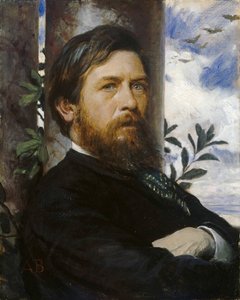
阿诺德·勃克林
1827 - 1901 , 瑞士
快速概览
- Artistic Movement Or Style: 象征主义
- Artists Or Movements Influenced By This Artist:
- 汉斯·托马
- 拉斐尔前派
- Artists Who Influenced This Artist:
- 希尔默
- 费尔巴哈
- Date Of Birth: 1827年10月16日
- Date Of Death: 1901年1月16日
- Full Name: 阿诺德·勃克林
- Nationality: 瑞士
- Notable Artworks:
- 死岛
- 宁芙与萨堤尔
- 萨福
- 自画像
- Place Of Birth: 瑞士巴塞尔
相关文章

Evocations of Place: A Historical Journey Through Landscape Art
Explore the rich history of landscape art with OriginalUniqueArt. Discover renowned artists, movements like Impressionism & tonalism, and expert guidance for collecting timeless pieces. Find your perfect serene escape today!

康斯塔布尔大师之作:25幅传世风景画赏析 | OriginalUniqueArt
探索康斯塔布尔的25幅传世杰作!沉浸于英国田园风光,感受浪漫主义绘画大师的光影与色彩。高清油画复制、艺术品购买尽在OriginalUniqueArt.com,为您的家居增添经典之美。立即在线探索完整系列!

浪漫主义画派的十部巨作:定义风景画的艺术传奇
探索浪漫主义风景画的巅峰!本文精选十部经典名作,带您领略莫奈、库尔贝等大师的艺术魅力。感受色彩与光影的诗意,重温自然风光的震撼。OriginalUniqueArt.com为您提供博物馆级别的艺术复制品和个性化家居装饰方案。尽在OriginalUniqueArt.com!

Evocations of Place: A Historical Journey Through Landscape Art
Explore the rich history of landscape art with OriginalUniqueArt. Discover renowned artists, movements like Impressionism & Romanticism, and expert guidance for collecting timeless pieces. Find your perfect serene escape today!

Nature’s Sanctuary: Curating Enchanting Forest Artworks to Transform Your Home into a Serene Woodland Retreat
Transform your home into a serene woodland retreat with enchanting forest artworks. Discover museum-quality oil reproductions and custom landscape commissions designed to bring the peaceful beauty of nature indoors.
