

 实景预览
实景预览
 发送
发送 分享
分享
 详情
详情 指南
指南

 下载图片
下载图片
 相似作品
相似作品 X射线
X射线 幻灯片播放
幻灯片播放 统计数据
统计数据Shield with Gorgon


 阅读全文
阅读全文
购买高分辨率增强版数字图像,其品质远超在线预览。
每一份文件都由我们的内部专家使用先进工具与专业的后期润色技术精心打造。我们确保每一张图像都具备卓越的清晰度、精准的色彩还原度以及细腻的细节表现。
最终文件将在 72 小时内通过电子邮件交付,并针对专业、编辑及印刷用途进行了优化。其品质与顶级设计工作室、出版社和画廊所信赖的标准完全一致。
数字图像
下载高分辨率文件,用于个人展示、打印及创意项目。 ( 切换至版画销售渠道 订购此收藏品的纯手工复刻画作)
每份数字图像订单均包含的内容
专业级数字交付,品质无忧
选择 OriginalUniqueArt.com,您获得的不仅仅是一张图像——您收到的是经过专业级增强、精雕细琢的数字艺术作品,并享有满意保证。以下是您的订单中自动包含的所有内容:

即时邮件交付
您的高分辨率数字图像文件将在下单后 72 小时内通过电子邮件发送给您 —— 即可立即使用。

AI 增强型数字图像
您的艺术品经过专业优化,结合先进的 AI 技术与人工修饰,确保呈现极致的细节、清晰度与色彩准确度。

终身免费重发服务
不小心删除了文件或找不到了?没关系——我们将随时为您免费重发。

无需进口税费,始终如一
即刻拥有您的艺术作品,无需支付任何关税、税费或运费——数字下载始终免税。

色彩精准保障
我们通过专业工具与色彩管理技术,确保您的数字图像尽可能真实地还原原作色彩。

100天满意保证
如果您对所购数字图像不满意,我们将在100天内为您进行修改或提供100%的全额退款——无需任何理由。

100% 退款保证
不满意?在收到数字文件后的100天内,您可以申请全额退款——无需任何理由。

批量订购优惠
购买 3 张享 10% 折扣 - 购买 5 张享 15% 折扣 - 购买 10 张以上享 20% 折扣。非常适合创意项目、画廊及机构使用。
Shield with Gorgon – A Meditation on Mortality and Ancient Myth
The sculpture “Shield with Gorgon’s Head,” created by Arnold Böcklin in 1897, stands as a haunting testament to the artist's fascination with Greco-Roman mythology and his profound contemplation of death. Exhibited prominently at the Musée d’Orsay in Paris, this piece transcends mere representation; it invites viewers into a realm of psychological exploration where beauty intertwines with unsettling truths. Böcklin, deeply influenced by Nietzschean philosophy – specifically the concept of eternal recurrence – sought to capture not just an image but an experience, mirroring the cyclical nature of existence and confronting us with our inevitable demise.Style and Technique: Symbolist Precision
Böcklin’s style aligns perfectly with the tenets of Symbolism, a movement that rejected realism in favor of conveying emotions and ideas through suggestive imagery rather than literal depiction. Unlike Impressionists who aimed to capture fleeting moments of light and color, Böcklin meticulously crafted his sculpture using a technique rooted in meticulous observation and symbolic distillation. The artist employed a combination of modeling clay and bronze casting – a process demanding considerable skill and patience – to achieve an astonishing level of detail. Notice the subtle gradations of tone within the Gorgon’s head; these aren't merely aesthetic choices but deliberate efforts to convey texture and depth, mirroring the complexities of human emotion. The smooth surface contrasts sharply with the rough contours of the snake’s coils, creating a visual dialogue that underscores the sculpture’s thematic concerns.Historical Context: Nietzschean Echoes and Late Romantic Sentiment
Böcklin's artistic output flourished during the waning years of the Romantic era, a period characterized by an obsession with emotion, imagination, and the sublime—experiences perceived as exceeding human comprehension yet simultaneously elevating the soul. However, Böcklin’s vision extended beyond traditional Romantic tropes; he actively engaged with the burgeoning intellectual currents of his time, particularly Nietzsche's proclamation that “God is dead.” This existential crisis fueled Böcklin’s exploration of themes like nihilism and mortality—concepts central to both Nietzschean thought and Symbolist art. The sculpture reflects a broader cultural preoccupation with confronting death not as an end but as a transformative stage in the cosmic cycle, mirroring Nietzsche's assertion that life itself is an affirmation of eternal recurrence.Symbolism Unleashed: Gorgon’s Head – Terror and Transformation
The Gorgon Medusa represents more than just monstrous horror; she embodies the terrifying power of transformation—a concept inextricably linked to Böcklin’s Symbolist worldview. According to Greek mythology, Medusa possessed snakes for hair that turned anyone who gazed upon them into stone. This image served as a potent symbol of inescapable fate and the destructive force of repressed emotions. The sculptor skillfully captures this duality: the Gorgon's gaze exudes palpable terror, yet simultaneously hints at an underlying process of metamorphosis—a suggestion that confronting death can lead to profound spiritual renewal. Böcklin’s deliberate use of serpentine coils reinforces this symbolism, representing both constriction and liberation – mirroring the artist’s own preoccupation with reconciling beauty and darkness.Emotional Impact: A Confrontation With Eternity
Ultimately, “Shield with Gorgon’s Head” compels viewers to confront their own mortality—to grapple with the inescapable reality that life is finite yet perpetually reborn. The sculpture's unsettling stillness invites contemplation, prompting us to consider our place within the grand scheme of cosmic time. Böcklin doesn’t offer comfort or reassurance; instead, he presents a stark portrait of existence stripped bare – confronting us with the beauty and terror inherent in accepting death as an inevitable component of life’s eternal dance. It is precisely this unflinching gaze—this refusal to shy away from uncomfortable truths—that secures “Shield with Gorgon’s Head”'s enduring power as a masterpiece of Symbolist art and a timeless meditation on the human condition.问答详情
阿诺德·勃克林 的《Shield with Gorgon》 的亮度是多少?
"Shield with Gorgon" 的色彩呈现出 Dark 的亮度。
如何描述 阿诺德·勃克林 的《Shield with Gorgon》 的色调?
阿诺德·勃克林 的《Shield with Gorgon》 的色调被描述为 Earthy。这是对作品色彩的精炼概括。
哪种空间能与 阿诺德·勃克林 的《Shield with Gorgon》 的色彩相得益彰?
凭借其Earthy的色调,阿诺德·勃克林 的《Shield with Gorgon》非常适合布置在Living Room中。其色彩搭配正是这一推荐的核心原因。
艺术家简介
早年生活与艺术训练
阿诺德·勃克林 (Arnold Böcklin) 是一位享誉世界的瑞士象征主义画家,于1827年10月16日出生在瑞士巴塞尔。他的父亲 克里斯蒂安·弗雷德里克·勃克林 出身于沙夫豪森的一个古老家族,从事丝绸贸易。阿诺德的母亲 乌苏拉·利佩 亦是巴塞尔本地人。在艺术启蒙阶段,他在杜塞尔多夫学院师从希尔默 (Schirmer),并与 安塞尔姆·费尔巴哈 结下了深厚的友谊。作为杜塞尔多夫画派的重要成员,勃克林早期的艺术根基深植于这一传统之中。艺术生涯与象征主义
勃克林的艺术征途跨越了多个艺术之都,包括他在卢浮宫工作的巴黎,以及深受古罗马景观启发的罗马。他的作品常以古典建筑为背景,通过寓言化与神话化的形象,深刻地探讨着死亡与生命无常的主题。- 《大公园》是他早期的代表作之一,展现了古老神话的魅力。
- 《宁芙与萨堤尔》(1858) 与 《萨福》(1859) 是这一时期的杰出作品。
- 勃克林的 《我的自画像:死神在拉小提琴》 (1872) 完美诠释了他那独树一帜的艺术风格。
传承与影响
勃克林最为人所熟知的莫过于他创作的五个版本的 《死之岛》 (1880-1886)。这组作品唤起了他在佛罗伦萨那座埋葬着女儿的英国式墓园的哀思。他的艺术造诣不仅影响了汉斯·托马等后辈艺术家,更激发了多位晚期浪漫主义作曲家的创作灵感。- 著名评论家克莱门特·格林伯格曾将勃克林的作品描述为那个时代“最完美的表达之一”。
- 勃克林的风格与拉斐尔前派有着交集,共同强调梦境世界与神秘主义的意蕴。
博物馆与收藏
勃克林的作品现存于世界各大博物馆,包括:在 OriginalUniqueArt 探索更多勃克林的作品及象征主义运动: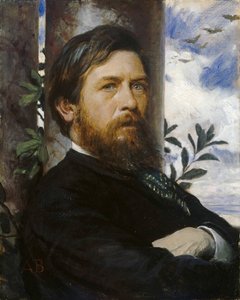
阿诺德·勃克林
1827 - 1901 , 瑞士
概览
- Artistic Movement Or Style: 象征主义
- Artists Or Movements Influenced By This Artist:
- 汉斯·托马
- 拉斐尔前派
- Artists Who Influenced This Artist:
- 希尔默
- 费尔巴哈
- Date Of Birth: 1827年10月16日
- Date Of Death: 1901年1月16日
- Full Name: 阿诺德·勃克林
- Nationality: 瑞士
- Notable Artworks:
- 死岛
- 宁芙与萨堤尔
- 萨福
- 自画像
- Place Of Birth: 瑞士巴塞尔