

 实景预览
实景预览
 发送
发送 分享
分享
 详情
详情 指南
指南

 下载图片
下载图片
 相似作品
相似作品 X射线
X射线 幻灯片播放
幻灯片播放 统计数据
统计数据Centaur Watching Fish
 Oil On Canvas
- WallArt
- Symbolism
 1878
1878- 19th Century
 43.0 x 70.0 cm
 Kunsthaus Zürich
 阅读全文
阅读全文
购买高分辨率增强版数字图像,其品质远超在线预览。
每一份文件都由我们的内部专家使用先进工具与专业的后期润色技术精心打造。我们确保每一张图像都具备卓越的清晰度、精准的色彩还原度以及细腻的细节表现。
最终文件将在 72 小时内通过电子邮件交付,并针对专业、编辑及印刷用途进行了优化。其品质与顶级设计工作室、出版社和画廊所信赖的标准完全一致。
数字图像
下载高分辨率文件,用于个人展示、打印及创意项目。 ( 切换至版画销售渠道 订购此收藏品的纯手工复刻画作)
每份数字图像订单均包含的内容
专业级数字交付,品质无忧
选择 OriginalUniqueArt.com,您获得的不仅仅是一张图像——您收到的是经过专业级增强、精雕细琢的数字艺术作品,并享有满意保证。以下是您的订单中自动包含的所有内容:

即时邮件交付
您的高分辨率数字图像文件将在下单后 72 小时内通过电子邮件发送给您 —— 即可立即使用。

AI 增强型数字图像
您的艺术品经过专业优化,结合先进的 AI 技术与人工修饰,确保呈现极致的细节、清晰度与色彩准确度。

终身免费重发服务
不小心删除了文件或找不到了?没关系——我们将随时为您免费重发。

无需进口税费,始终如一
即刻拥有您的艺术作品,无需支付任何关税、税费或运费——数字下载始终免税。

色彩精准保障
我们通过专业工具与色彩管理技术,确保您的数字图像尽可能真实地还原原作色彩。

100天满意保证
如果您对所购数字图像不满意,我们将在100天内为您进行修改或提供100%的全额退款——无需任何理由。

100% 退款保证
不满意?在收到数字文件后的100天内,您可以申请全额退款——无需任何理由。

批量订购优惠
购买 3 张享 10% 折扣 - 购买 5 张享 15% 折扣 - 购买 10 张以上享 20% 折扣。非常适合创意项目、画廊及机构使用。
A Silent Meditation on Nature and Mortality
In the quietude of Arnold Böcklin’s 1878 masterpiece, “Centaur Watching Fish,” the viewer is invited into a realm where the boundaries between the mythological and the terrestrial dissolve. This evocative oil on canvas, currently held in the prestigious Kunsthaus Zürich, serves as a profound gateway into the Symbolist movement—a period of art history dedicated to exploring the hidden psychological depths of the human soul. Rather than presenting a mere scene from ancient legend, Böcklin crafts an immersive experience that speaks to the universal themes of solitude and the silent, rhythmic pulse of the natural world. The centaur, a creature of dual nature, reclines upon a serene shoreline, his gaze fixed upon the movement beneath the water's surface, creating a moment of suspended animation that feels both eternal and fleeting.
The composition is masterfully orchestrated to evoke a sense of Romantic reverie. Utilizing a horizontal format, Böcklin emphasizes the reclining posture of the centaur, grounding the mythological figure within a landscape of soft sands and swaying grasses. The artist deliberately eschews the rigid precision of strict realism in favor of an emotional truth. Through the use of diffused lighting and gentle shadows, he establishes an atmosphere of melancholic stillness. This technique allows the viewer to feel the weight of the silence, as if the very air around the creature is heavy with contemplation. It is a painting that does not demand attention through spectacle, but rather earns it through a subtle, haunting intimacy.
The Mastery of Texture and Atmosphere
Technically, “Centaur Watching Fish” is a triumph of texture and perspective. Böcklin employs the impasto technique with remarkable skill, applying thick, deliberate layers of paint to render the coarse fur of the centaur’s equine half. This tactile richness provides a palpable sense of physicality, making the creature feel present and breathing within the frame. To balance this heavy texture, the artist utilizes atmospheric perspective to create an illusion of infinite depth. By reducing color saturation and softening the details of the distant horizon, he simulates a hazy, dreamlike distance that reinforces the theme of isolation. This method draws a direct lineage from the Romantic masters like Caspar David Friedrich, using the landscape as a mirror for spiritual introspection.
The color palette is a sophisticated arrangement of earthy tones—ochres, deep browns, and muted beiges—which lends the work an organic, timeless quality. These warm, grounded hues are contrasted by the subtle, shimmering light reflecting off the water, drawing the eye toward the focal point of the centaur’s quiet observation. For the collector or interior designer, this piece offers a unique aesthetic versatility; its somber yet tranquil mood provides a sophisticated anchor for a room, offering a sense of historical depth and intellectual gravity that more contemporary works may lack.
Symbolism: The Intersection of Myth and Being
Beyond its visual splendor, the painting functions as a complex symbolic tapestry. The centaur itself—a hybrid of human intellect and animal instinct—serves as a powerful metaphor for the duality of existence. As he watches the fish, there is a profound sense of the relationship between humanity and the untamed elements of nature. The act of watching becomes a meditation on mortality; the stillness of the figure suggests a resignation to the cycles of life and death that govern both man and beast. There is a touch of sadness in his solitude, yet it is a beautiful, dignified melancholy that celebrates the quiet dignity of existence.
For those seeking to bring a piece of this profound emotional landscape into their personal spaces, a high-quality reproduction of this work offers more than just decoration. It provides a window into a bygone era of artistic exploration, a constant reminder of the beauty found in silence and the enduring power of myth. Whether placed in a library, a study, or a curated gallery space, “Centaur Watching Fish” continues to provoke thought, inviting all who encounter it to pause, breathe, and reflect upon the silent wonders of the world.
问答详情
哪种尺寸的 阿诺德·勃克林 的《Centaur Watching Fish》 打印件更适合推荐的房间?
阿诺德·勃克林 的《Centaur Watching Fish》 的推荐搭配:在 Living Room 中悬挂尺寸为 Small 的版画。
阿诺德·勃克林 的《Centaur Watching Fish》 传达了怎样的心境与情感?
《阿诺德·勃克林 的《Centaur Watching Fish》》所传达的意境为Romantic,其情感基调为Melancholic。
我可以在这里订购"Centaur Watching Fish"的油画复制品吗?
您可以在阿诺德·勃克林 的《Centaur Watching Fish》的手工油画复刻页面直接订购其手绘复制品:亚麻画布手工绘制油画复制品,按需定制。
艺术家简介
早年生活与艺术训练
阿诺德·勃克林 (Arnold Böcklin) 是一位享誉世界的瑞士象征主义画家,于1827年10月16日出生在瑞士巴塞尔。他的父亲 克里斯蒂安·弗雷德里克·勃克林 出身于沙夫豪森的一个古老家族,从事丝绸贸易。阿诺德的母亲 乌苏拉·利佩 亦是巴塞尔本地人。在艺术启蒙阶段,他在杜塞尔多夫学院师从希尔默 (Schirmer),并与 安塞尔姆·费尔巴哈 结下了深厚的友谊。作为杜塞尔多夫画派的重要成员,勃克林早期的艺术根基深植于这一传统之中。艺术生涯与象征主义
勃克林的艺术征途跨越了多个艺术之都,包括他在卢浮宫工作的巴黎,以及深受古罗马景观启发的罗马。他的作品常以古典建筑为背景,通过寓言化与神话化的形象,深刻地探讨着死亡与生命无常的主题。- 《大公园》是他早期的代表作之一,展现了古老神话的魅力。
- 《宁芙与萨堤尔》(1858) 与 《萨福》(1859) 是这一时期的杰出作品。
- 勃克林的 《我的自画像:死神在拉小提琴》 (1872) 完美诠释了他那独树一帜的艺术风格。
传承与影响
勃克林最为人所熟知的莫过于他创作的五个版本的 《死之岛》 (1880-1886)。这组作品唤起了他在佛罗伦萨那座埋葬着女儿的英国式墓园的哀思。他的艺术造诣不仅影响了汉斯·托马等后辈艺术家,更激发了多位晚期浪漫主义作曲家的创作灵感。- 著名评论家克莱门特·格林伯格曾将勃克林的作品描述为那个时代“最完美的表达之一”。
- 勃克林的风格与拉斐尔前派有着交集,共同强调梦境世界与神秘主义的意蕴。
博物馆与收藏
勃克林的作品现存于世界各大博物馆,包括:在 OriginalUniqueArt 探索更多勃克林的作品及象征主义运动: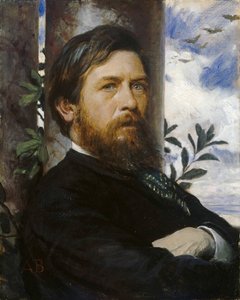
阿诺德·勃克林
1827 - 1901 , 瑞士
概览
- Artistic Movement Or Style: 象征主义
- Artists Or Movements Influenced By This Artist:
- 汉斯·托马
- 拉斐尔前派
- Artists Who Influenced This Artist:
- 希尔默
- 费尔巴哈
- Date Of Birth: 1827年10月16日
- Date Of Death: 1901年1月16日
- Full Name: 阿诺德·勃克林
- Nationality: 瑞士
- Notable Artworks:
- 死岛
- 宁芙与萨堤尔
- 萨福
- 自画像
- Place Of Birth: 瑞士巴塞尔