

 效果预览
效果预览
 分享
分享 分享
分享
 详情
详情

 下载
下载
 相似作品
相似作品 X射线
X射线 幻灯片播放
幻灯片播放 统计数据
统计数据Self-portrait


 展开详情
展开详情
手工油画复制品
由我们的艺术家按需定制,为您提供您所选尺寸及画框的布面手工油画。 ( 切换至版画销售渠道 切换至数字图像销售渠道)




































从与原作比例一致的预设尺寸中进行选择。

您可以输入自定义尺寸,以适配特定的画框或空间。如果所选尺寸与原图比例不符,我们将通过裁剪作品或添加手绘元素来扩展画面。数字样稿将在制作开始前发送给您确认。
请注意,屏幕预览无法准确反映实际的裁剪或扩展效果,只有样稿才能真实呈现最终的构图。
虽然我们提供定制尺寸服务,但为了保留原作比例,建议您从预设列表中选择尺寸。
下单后,OriginalUniqueArt.com 团队将通过电子邮件联系客户获取具体要求,并提供效果预览图。


 玻璃选项仅适用于110厘米以下的尺寸。

Self-portrait
复制材质
复制品尺寸
-


最终总价
$ 300
艺术家简介
Aristarkh Lentulov: A Pioneer of Russian Modernism
Aristarkh Vasilyevich Lentulov, born in 1882 in a small village near Penza, Russia, was not merely a painter; he was a vital architect of the Russian avant-garde. His life’s work represents a fascinating confluence of influences – from traditional folk art and religious iconography to the radical experimentation of Cubism and Futurism – resulting in a uniquely vibrant and emotionally charged style that continues to captivate viewers today. Lentulov's journey, marked by both artistic breakthroughs and periods of political alignment, offers a compelling glimpse into the turbulent era of early 20th-century Russia.
Early influences shaped Lentulov’s formative years. Initially drawn to realism, he honed his skills at various art schools in Penza, Kiev, and St. Petersburg, absorbing techniques from masters like Ilya Repin and Dmitry Kardovsky. However, it was his encounter with the Parisian avant-garde in 1911 that proved transformative. Immersed in the circles of Cubists such as Robert Delaunay, he embraced fragmentation, geometric abstraction, and a bold use of color – elements that would become cornerstones of his distinctive style. This period wasn’t simply an imitation of Western trends; Lentulov skillfully integrated these influences with his own deeply rooted Russian sensibility.
The Jack of Diamonds and the Rise of Cubo-Futurism
Lentulov's artistic trajectory gained momentum through his involvement in the “Jack of Diamonds” group, a notoriously rebellious collective that emerged in Moscow during 1910. This association was far more than just a social circle; it represented a deliberate challenge to established artistic norms and a fervent embrace of innovation. The Jack of Diamonds, known for their provocative exhibitions and outspoken critiques, sought to shock the public and force a re-evaluation of art’s role in society. Lentulov's participation solidified his position within this dynamic movement, pushing him towards increasingly experimental forms.
His work during this period – exemplified by paintings like “Moscow” (1916) and “Church. New Jerusalem” (1917) – is characterized by a remarkable dynamism. Planes are fractured and reassembled, colors clash and harmonize in unexpected ways, and the familiar world is rendered with an almost hallucinatory intensity. Lentulov’s use of color wasn't merely decorative; it conveyed emotion, energy, and a sense of underlying chaos. He drew inspiration from Russian folklore, incorporating elements of traditional patterns and imagery into his abstract compositions, creating a visual language that was both modern and deeply rooted in the nation’s cultural heritage.
From Cubo-Futurism to Social Realism
Following the 1917 Revolution, Lentulov navigated the shifting political landscape of Soviet Russia. While initially aligned with the avant-garde, he gradually adapted his style to align with the prevailing artistic directives. He continued to work as a stage designer for prominent theaters, contributing significantly to the visual identity of numerous productions. This period saw a shift towards more tonal and representational works, often depicting landscapes and portraits imbued with a sense of warmth and vitality.
Despite these changes, Lentulov never abandoned his core artistic principles. His paintings from the 1920s and 30s – such as “Dawn at Volga” (1928) and “Sun over the Roofs. Sunrise” (1928) – retain a remarkable energy and emotional depth. He continued to experiment with color and composition, exploring themes of everyday life and the beauty of the Russian countryside. His later work, particularly his stage designs for productions like "Spanish Priest" (1934), demonstrated his enduring creativity and versatility.
Legacy and Significance
Aristarkh Lentulov’s legacy extends far beyond his individual works. He was a pivotal figure in the development of Russian modernism, bridging the gap between European avant-garde movements and the unique cultural traditions of Russia. His innovative use of color, fragmented forms, and symbolic imagery profoundly influenced generations of artists. Lentulov's art serves as a testament to the power of artistic experimentation and the enduring spirit of creativity in the face of political and social upheaval. He remains an important voice in Russian art history, celebrated for his bold vision and unwavering commitment to pushing the boundaries of artistic expression.

aristarkh vasilevich lentulov
1882 - 1943
艺术家简介
- Artistic Movement Or Style:
- Cubism
- Cubo-Futurism
- Orphism
- Fauvism
- Artists Or Movements Influenced By This Artist:
- Wassily Kandinsky
- Kazimir Malevich
- Artists Who Influenced This Artist:
- Robert Delaunay
- Henri Le Fauconnier
- J. Metzenge
- Dmitry Kardovsky
- Date Of Birth: January 16, 1882
- Date Of Death: April 15, 1943
- Full Name: Aristarkh Vasilyevich Lentulov
- Nationality: Russian
- Notable Artworks:
- Moscow
- Portrait of N. Svendonskaya
- Street, Moscow
- Churches, New Jerusalem
- Place Of Birth: Penza Oblast, Russia
相关文章
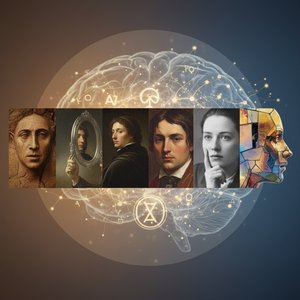
Reflecting the Self: A History of Portraiture & Psychological Insight
Explore the fascinating history of self-portraiture from Renaissance masters like Dürer & Rembrandt to modern interpretations. Discover the psychological insights and artistic techniques behind these iconic works. Expert analysis for art enthusiasts.

Zinaida Serebriakova: A Pioneer of Russian Modernism & Embodiment of Female Experience
Explore the life & art of Zinaida Serebriakova, a pioneering Russian Modernist painter. Discover her intimate scenes, striking self-portraits, and lasting impact on 20th-century art. A deep dive into her world.

Ivan Bilibin: A Synthesis of Folklore, Modernism & National Identity in Russian Illustration
Explore the enchanting world of Ivan Bilibin, a master Russian illustrator who synthesized folklore, Art Nouveau & national identity. Discover his iconic fairy tale illustrations and legacy with OriginalUniqueArt.

Vladimir Makovsky: Realism, Social Commentary & Russian Life in Late 19th-Century Painting
Explore the captivating world of Vladimir Makovsky, a leading Russian realist painter. Discover his insightful depictions of 19th-century life, social commentary & legacy with OriginalUniqueArt.

Victor Vasnetsov: Myth, Nationalism & the Revival of Russian Fairy Tale Painting
Explore the captivating world of Victor Vasnetsov, a co-founder of Russian folklorist painting. Discover his iconic works, influence on national identity, and lasting legacy in this expert guide.