
 实景预览
实景预览
 分享
分享 分享
分享
 详情
详情 指南
指南

 下载作品
下载作品
 相似作品
相似作品 X射线
X射线 幻灯片播放
幻灯片播放 问答
问答 统计数据
统计数据Harpsichord


 展开全文
展开全文
艺术微喷/版画
博物馆级艺术微喷或帆布版画,制作高效,并提供多种饰面选择。 ( 订购纯手工绘制画作 切换至数字图像销售渠道)




P118B ¥10

P118H ¥10

P118W ¥10

P438Z ¥10

P508JH ¥12

P508YH ¥12

P805H ¥10

P805Z ¥10

P919BZ ¥10

P919G ¥10

P919XJ ¥10

P959ZH ¥10

P968JZ ¥12

W106C ¥8

W218G ¥10

W218JH ¥8

W218Y ¥10

W307PJ ¥10

W316G ¥10

W316PJ ¥8

W316Y ¥10

W398PJ ¥8

W4111J ¥10

W500HY ¥15

W500JH ¥15

W692G ¥12

W849H ¥8

W940BG ¥15

W953PJ ¥8




您可以从与原作比例一致的预设尺寸中进行选择。

请输入您所需的宽度和高度,以适配您的画框或墙面。由于印刷品只能进行裁剪,无法超出原图尺寸,因此若比例不一致,画面的一部分将会被裁切。在正式印刷之前,我们会为您发送一份数字效果图供您确认。本页面显示的图片并非最终裁剪后的效果——只有效果图才能展示真实的裁剪情况。


 玻璃选项仅适用于110厘米以下的尺寸。

Harpsichord
艺术微喷/版画
复刻品尺寸
-


最终结算价
¥ 544
A Symphony in Wood and Ivory: Antonio Scotti’s Harpsichord
The harpsichord stands as an emblem of Baroque elegance—a testament to meticulous craftsmanship and a conduit for musical expression that transcends time. This particular instrument, attributed to the Milanese maestro Antonio Scotti (1866-1936), embodies the spirit of its era with breathtaking detail, inviting contemplation on both its artistic merit and its place within the broader history of music. Its presence commands attention not merely as an object of beauty but as a tangible link to a period defined by opulent ornamentation and intellectual fervor.The Instrument’s Anatomy: A Celebration of Marquetry
At first glance, the harpsichord captivates with its rich visual vocabulary. The case itself is constructed from maple and walnut, meticulously joined in herringbone marquetry—a technique that elevates the wood grain into intricate geometric patterns. This masterful inlay extends seamlessly across the sides of the instrument, demonstrating a dedication to precision and artistry that speaks volumes about Scotti’s skill as a builder. But it's the nameboard – crafted from ebony, mother-of-pearl, and walnut burl – which truly proclaims its grandeur. The swirling patterns of walnut burl create an organic counterpoint to the polished sheen of mother-of-pearl, resulting in a harmonious blend of textures and colors that draws the eye inward. Furthermore, an ebony frame encircles the instrument’s perimeter, reinforcing its structural integrity while adding another layer of visual sophistication.A Delicate Balance: Ebony Jackrail and Palm Leaf Inlays
The harpsichord's interior is equally impressive. The ebony jackrail—the strip of wood that supports the jacks—is adorned with intricate mother-of-pearl inlay, mirroring the decorative motifs found on the nameboard. This painstaking detail underscores Scotti’s commitment to elevating every element of the instrument’s design. Perhaps most striking are the palm leaf inlays that embellish the instrument's profile – stylized representations of tropical foliage meticulously inlaid into the wood surface. These delicate patterns evoke images of lush gardens and serene landscapes, subtly hinting at the musical atmosphere intended for this instrument.The Keyboard: A Stylistic Echo of Baroque Ornamentation
While the keyboard itself doesn’t appear to be original—a fact that lends an air of scholarly intrigue—it adheres faithfully to the stylistic conventions of its time. The keys are ivory, reflecting the prevailing preference for luminous materials during the Baroque period. Their smooth surface and subtle sheen contribute to the instrument's overall aesthetic appeal, mirroring the polished surfaces characteristic of furniture and decorative arts from the era. The keyboard’s design embodies a broader preoccupation with symmetry and proportion—principles that underpinned much of Baroque artistic expression.A Legacy of Sound: Giovanni Antonio Scotti’s Contribution to Musical History
The attribution to Giovanni Antonio Scotti is significant, placing this harpsichord within the context of Milanese musical culture during the mid-18th century. Scotti was a prominent figure in his time—a composer and instrument maker who helped establish opera as a globally recognized art form. This particular harpsichord represents not only a masterpiece of craftsmanship but also a tangible embodiment of Scotti’s artistic vision, inviting listeners to imagine the music that once resonated from its strings. It stands as a poignant reminder of a bygone era—a time when beauty and intellect intertwined to create works of enduring artistic power.常见问题与解答
什么样的摆放方式最适合 Antonio Scotti (1866-1936) 的《Harpsichord》 的画幅?
关于 Antonio Scotti (1866-1936) 的《Harpsichord》,记录了其规格 (Landscape) 与建议摆放空间 (Living Room) 这两项陈列信息。
“Harpsichord”可以下载吗?
您可以在作品的下载数字图像页面下载Antonio Scotti (1866-1936) 的《Harpsichord》的数字图像:高分辨率数字图像下载。
Antonio Scotti (1866-1936) 的《Harpsichord》 的复制品推荐用于哪些场景?
"Harpsichord" 艺术版画的推荐用途为 Accent。
艺术家简介
A Voice of Elegance and Dramatic Power
Antonio Scotti, born in the vibrant musical heart of Naples in 1866, stands as a monumental figure in the history of Italian opera—a baritone whose resonant voice captivated audiences across Europe and America for over three decades. More than just a singer, Scotti embodied the spirit of his era, representing a period defined by immense artistic ambition and refined musical sensibilities. His legacy resides not only in his impressive repertoire but also in his profound contribution to establishing opera as a globally recognized art form, bridging the gap between traditional Italian mastery and the burgeoning international stage.
Scotti’s formative years were deeply steeped in the rich musical traditions of his homeland. Encouraged by parents who were themselves musicians, he received an exceptional vocal education under the guidance of Esther Trifari-Paganini and Vincenzo Lombardi. These mentors instilled in him a rigorous understanding of technique and a deep sense of artistry, shaping him into an instrument of extraordinary power and beauty. His early performances at Malta’s Theatre Royal in 1889 marked the beginning of his ascent to fame, establishing him as a performer destined for greatness—a role he would inhabit with unparalleled distinction throughout his long career.
The International Stage and Operatic Mastery
The trajectory of Scotti's career was marked by a series of triumphs that solidified his reputation as a prodigious talent. His debut in Verdi’s Aida served as a powerful introduction to the operatic world, setting the stage for an extensive international tour. As he traveled through Spain, Portugal, Russia, and South America, Scotti did more than merely perform; he honed his skills and broadened his artistic perspective, enriching his repertoire with the diverse musical influences of the globe. A pivotal moment in his career arrived in 1898, when he debuted at the legendary La Scala in Milan with Verdi’s Falstaff, showcasing a versatility that would become synonymous with his name.
His ability to navigate the complexities of various operatic styles allowed him to master roles ranging from the dramatic intensity of Puccini’s Tosca to the nuanced characterizations in Mozart's Don Giovanni and Giordano’s Fedora. This mastery was not merely vocal but theatrical, as he possessed a rare ability to inhabit his characters with a dramatic presence that moved audiences to tears. His engagements at prestigious venues such as the Metropolitan Opera and Covent Garden cemented his position as one of the foremost singers of his generation, making him a household name in the world of classical music.
Legacy and Historical Significance
The historical significance of Antonio Scotti extends far beyond the notes he sang. He was a vital link in the evolution of the baritone repertoire, helping to define the standard for dramatic excellence in the late 19th and early 20th centuries. His career spanned an era of transition in opera, and his ability to maintain vocal prowess while embracing the changing demands of the stage ensured his enduring relevance. Even today, his recordings serve as a window into a bygone era of operatic grandeur, preserving the echoes of a voice that once commanded the world's greatest stages.
Reflecting on his life and achievements, several key elements define his impact:
- Vocal Pedigree: His training under masters like Trifari-Paganini provided the technical foundation for his legendary resonance.
- Global Reach: His tours through South America and Europe helped spread the influence of Italian operatic tradition worldwide.
- Repertoire Versatility: His success in roles from Verdi to Puccini demonstrated a rare ability to balance power with nuance.
- Cultural Iconography: He remains a symbol of the golden age of opera, representing the peak of vocal artistry and dramatic storytelling.

Antonio Scotti (1866-1936)
1866 - 1936 , Italy
艺术家简介
- Artists Who Influenced This Artist:
- Esther Trifari-Paganini
- Vincenzo Lombardi
- Full Name: Antonio Scotti
- Nationality: Italian
- Profession: Italian operatic baritone
- Place Of Birth: Naples, Italy
- Date Of Birth: 1866
- Date Of Death: 1936
相关文章

巴洛克戏剧性:将辉煌与情感融入当代室内设计
探索巴洛克艺术的辉煌与奢华!OriginalUniqueArt提供精湛的手工油画复制、定制服务和专业艺术咨询,助您将经典作品融入当代室内设计,提升家居品味。投资艺术,传承价值。

Drama and Light: A Definitive Guide to the Italian Baroque Masterpieces and the Revolution of Chiaroscuro
Explore the dramatic world of Italian Baroque art. Discover how masters like Caravaggio used chiaroscuro and tenebrism to revolutionize painting through light, shadow, and profound realism. A definitive guide for history lovers and art collectors.

Italian Baroque Unlocked: High-Drama Art That Hits Hard
Dive into the high-drama world of Italian Baroque art. Discover how chiaroscuro, intense emotion, and theatrical lighting redefined aesthetics. Explore the visceral power of the Counter-Reformation through a modern lens with expert insights from OriginalUniqueArt.com.
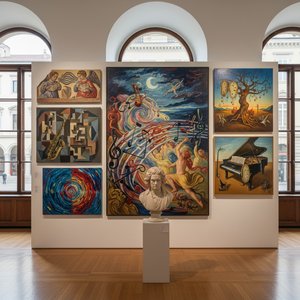
Harmonies on Canvas: Exploring the Visual Representation of Music in Art History
Explore the fascinating history of music's visual representation in art! From ancient symbolism to modern abstraction, discover how artists have captured sound and emotion on canvas. Expert insights & stunning examples.

巴洛克艺术巅峰:十部巨作定义时代,点亮您的臻品格调
探索巴洛克艺术的辉煌!本文精选十部巨作,带您领略卡拉瓦乔、伦勃朗等大师的光影魔法与戏剧张力。从黄金时代到宗教绘画,感受奢华与精致。OriginalUniqueArt.com为您提供博物馆品质的艺术复制品和家居装饰灵感。尽在OriginalUniqueArt.com!