
 效果预览
效果预览
 购买印刷品
购买印刷品 分享
分享 分享
分享
 详情
详情

 下载
下载
 相似作品
相似作品 X射线
X射线 幻灯片播放
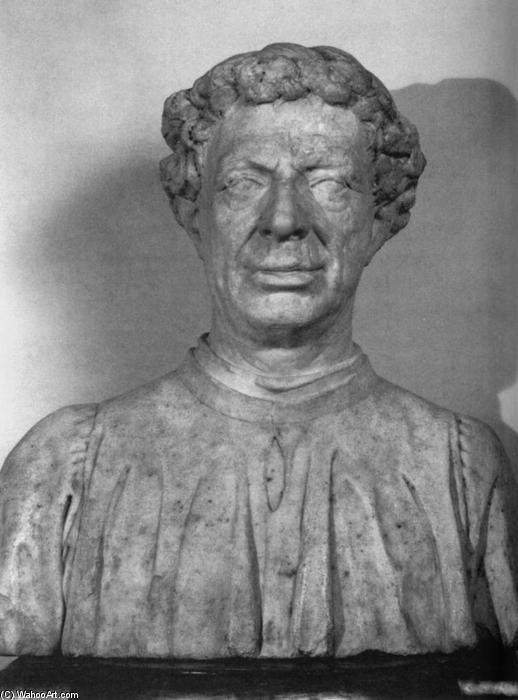
幻灯片播放Matteo Palmieri


 展开详情
展开详情




































从与原作比例一致的预设尺寸中进行选择。

您可以输入自定义尺寸,以适配特定的画框或空间。如果所选尺寸与原图比例不符,我们将通过裁剪作品或添加手绘元素来扩展画面。数字样稿将在制作开始前发送给您确认。
请注意,屏幕预览无法准确反映实际的裁剪或扩展效果,只有样稿才能真实呈现最终的构图。
虽然我们提供定制尺寸服务,但为了保留原作比例,建议您从预设列表中选择尺寸。
下单后,OriginalUniqueArt.com 团队将通过电子邮件联系客户获取具体要求,并提供效果预览图。


 玻璃选项仅适用于110厘米以下的尺寸。

Matteo Palmieri
复制材质
复制品尺寸
-


最终总价
$ 300
艺术家简介
The Sculptor of Florentine Humanism
Antonio Gamberelli, known to history by the evocative moniker Antonio Rossellino—a name inspired by the distinctive color of his hair—stands as a luminous figure within the pantheon of the Italian Renaissance. Born in the quiet, artistic enclave of Settignano near Florence around 1427, he emerged not merely as a craftsman, but as a sculptor capable of breathing life into cold marble and malleable terracotta. His journey was inextricably linked to the intellectual and aesthetic currents of Florence, a city then undergoing a profound transformation driven by humanist ideals. Through his hands, the rigid forms of the medieval past dissolved, replaced by a new language of anatomical precision, emotional vulnerability, and a deep reverence for the natural world.
The foundations of Rossellino’s mastery were laid under the watchful eye of his elder brother, Bernardo Rossellino. A titan of architectural innovation, Bernardo provided Antonio with an unparalleled apprenticeship, introducing him to the complexities of large-scale monumental works and the delicate art of polychrome marble inlay. This early exposure to the structural demands of architecture and the decorative richness of the Cappella dei Medici style instilled in Antonio a meticulous attention to detail. He learned that a sculpture was not merely an object to be viewed, but a presence to inhabit a space, a lesson that would later define his ability to command both grand ecclesiastical commissions and intimate devotional reliefs.
A Mastery of Form and Emotion
As his career flourished, Rossellino developed a signature style characterized by a breathtaking balance between classical grace and poignant realism. His work often sought to capture the fleeting nuances of human expression, a feat achieved through subtle gestures and a profound understanding of light and shadow. In his marble works, such as the Young Saint John the Baptist, one observes a remarkable anatomical accuracy that reflects the burgeoning scientific curiosity of the Renaissance. Yet, beneath this technical perfection lies a soulful tenderness, an ability to evoke empathy in the viewer through the soft curve of a limb or the gentle tilt of a head.
This emotional depth reached new heights in his use of terracotta, a medium that allowed for even greater fluidity and immediacy. His relief, Virgin and the Shivering Child, serves as a poignant testament to this mastery. In this work, the warmth of the clay facilitates a sense of intimacy and vulnerability, showcasing the delicate beauty of the Madonna and the raw, human reality of the infant. Such pieces demonstrate how Rossellino could navigate the spectrum of Renaissance art, moving seamlessly from the monumental narrative power required for pulpit decorations to the quiet, contemplative intensity of private devotional objects.
Legacy and Historical Significance
The significance of Antonio Rossellino extends far beyond his individual masterpieces; he was a vital participant in the collective artistic evolution of 15th-century Florence. His collaborations, most notably with Mino da Fiesole on the ambitious sculptural programs for Prato’s pulpit, highlight his role within a vibrant community of artists working toward a shared vision of beauty and truth. His contributions to the Chapel of Cardinal Portugal at San Miniato al Monte further cement his reputation as a sculptor capable of handling complex theological narratives through sophisticated relief work.
Ultimately, Rossellino’s legacy is found in the enduring resonance of his subjects. He captured the essence of the human condition during one of history's most transformative eras, bridging the gap between the divine and the earthly. His ability to infuse stone and clay with a sense of living breath ensured that his work would remain a cornerstone of Florentine art, inspiring generations of sculptors to pursue the same harmonious union of technical brilliance and profound human emotion.

Antonio Rossellino
1427 - 1479 , Italy
艺术家简介
- Artistic Movement Or Style: Renaissance Sculpture
- Artists Or Movements Influenced By This Artist: ['Renaissance']
- Artists Who Influenced This Artist: ['Bernardo Rossellino']
- Date Of Birth: Settignano, Italy (1427)
- Date Of Death: Naples (1479)
- Full Name: Antonio Rossellino
- Nationality: Italian
- Notable Artworks:
- Young Saint John the Baptist
- Virgin and the Shivering Child
- Mary with child (Fragment)
- Place Of Birth: Settignano

