切换至版画销售渠道
 展开全文
展开全文







































 对于任何边长超过 105 厘米(约 41 英寸)的艺术品或复制品,画框将以拆解后的组件形式发货。此方法可确保安全送达并防止运输过程中的损坏。


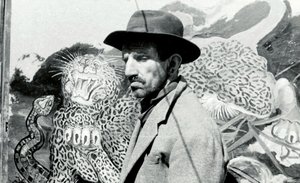
Identification of the Self-portrait by Antonio Laccabue
The artwork titled Self-portrait was created by the artist Antonio Laccabue in 1954. This specific piece is a representation of the artist himself, captured during a period of his life marked by significant personal movement and transition. The work exists as a physical record of the artist's presence and his relationship to the surrounding environment.
This painting is currently held within a permanent collection. The specific location and repository for this work are as follows:
- Title: Self-portrait
- Artist: Antonio Laccabue
- Date: 1954
- Museum: Fondazione - Archivio Antonio Ligabue di Parma
- Location: Parma, Italy
The provenance of the work links it directly to the archives of the Fondazione - Archivio Antonio Ligabue di Parma. This institution maintains the historical record of the artist's output in Parma, Italy. The 1954 date marks a specific point in the chronology of Laccabue's career, distinguishing this particular composition from his other self-portraits produced in different years.
Visual Composition and Subject Matter
The composition is centered on a portrait of a man. This central figure is characterized by a furrowed brow and an intense gaze directed toward the viewer. The subject's facial features are set against a background that integrates elements of a landscape. This setting includes trees and buildings, which are rendered with simplified and geometric shapes. The arrangement combines the human form with these environmental components, merging portraiture and landscape into a single field of view.
The spatial organization of the work follows these specific structural elements:
- A central portrait of a man acting as the primary focal point.
- A background composed of trees and architectural structures.
- Simplified, geometric forms used to define the landscape elements.
- A combination of portraiture and natural scenery.
The arrangement of the man within the landscape creates a sense of integration between the subject and the surroundings. The background elements, such as the buildings and trees, lack traditional depth cues, resulting in a flattened perspective. This approach emphasizes the relationship between the figure and the simplified shapes of the environment.
Technical Execution and Artistic Style
The execution of this 1954 work relies on a heavy, tactile impasto technique. Thick, gestural brushstrokes define the surface, creating a rugged terrain of ridges and valleys across the canvas. This physical depth results in a highly textured surface that catches light unevenly. The application of paint is vigorous, giving the work a sculptural quality that emphasizes the materiality of the medium.
The stylistic approach leans towards Expressionism and Abstract Expressionism. Rather than adhering to realistic color representation, the artist employs colors expressively to define form and mood. The visual language is characterized by:
- Thick, gestural brushwork
- Heavy impasto texture
- Expressive, non-realistic color application
- Fragmented, geometric shapes in the background
The composition utilizes a flattened perspective. Traditional depth cues are absent, which directs attention toward the raw use of line and the physical texture of the oil paint. The style is reminiscent of the textured grit found in the works of Antoni Tàpies, prioritizing the physical presence of the paint over precise anatomical or environmental realism.
Related Works and Artist Legacy
Antonio Laccabue produced several other works that explore the theme of self-representation. These include Self-portrait with a fly (1960) and another Self-portrait from 1960. His output also features Self-portrait with dog (1957). These pieces demonstrate his continued interest in the intersection of the human figure and specific subjects.
The artist's broader body of work is defined by specific subject matter and color application. His paintings often feature depictions of animals and landscapes. These subjects are rendered with a focus on color and form. His reputation is built upon these colorful depictions of the natural world.
- Self-portrait with a fly (1960)
- Self-portrait (1960)
- Self-portrait with dog (1957)
常见问题与解答
安东尼奥·拉卡布埃 的《Self-portrait》 传达了怎样的情感?
安东尼奥·拉卡布埃 的《Self-portrait》 在整体 Dramatic 的氛围中,传达出一种 Melancholic 的情感。
"Self-portrait" 有艺术版画出售吗?
若想订购 安东尼奥·拉卡布埃 的《Self-portrait》 的版画,只需前往其 艺术版画 页面进行订购即可:采用棉质帆布或档案级画布纸制作的艺术版画。
哪家博物馆收藏了《Self-portrait》的原作?
安东尼奥·拉卡布埃 的《Self-portrait》 的原作收藏于 Fondazione - Archivio Antonio Ligabue di Parma, Parma, Italy。通过复制品,您也可以在居家环境中欣赏这部杰作。
 实景预览
实景预览
 分享
分享 分享
分享
 详情
详情 指南
指南

 下载作品
下载作品
 相似作品
相似作品 X射线
X射线 幻灯片播放
幻灯片播放 问答
问答 统计数据
统计数据