

 实景预览
实景预览
 分享
分享 分享
分享
 详情
详情 指南
指南

 下载作品
下载作品
 相似作品
相似作品 X射线
X射线 幻灯片播放
幻灯片播放 Q&A
Q&A 统计数据
统计数据Untitled (Back)
 Abstract Expressionism
 5.0 x 64.0 cm
 UPF Art Track
 展开全文
展开全文
艺术微喷/版画
博物馆级艺术微喷或帆布版画,制作高效,并提供多种饰面选择。 ( 订购纯手工绘制画作 切换至数字图像销售渠道)




































您可以从与原作比例一致的预设尺寸中进行选择。

请输入您所需的宽度和高度,以适配您的画框或墙面。由于印刷品只能进行裁剪,无法超出原图尺寸,因此若比例不一致,画面的一部分将会被裁切。在正式印刷之前,我们会为您发送一份数字效果图供您确认。本页面显示的图片并非最终裁剪后的效果——只有效果图才能展示真实的裁剪情况。


 玻璃选项仅适用于110厘米以下的尺寸。

Untitled (Back)
艺术微喷/版画
复刻品尺寸
-


最终结算价
¥ 537
艺术家简介
Early Life and Influences
- Born: Barcelona, Spain (1923)
- Died: 2012
- Son of a lawyer and Catalan nationalist, Josep Tàpies i Mestre.
- Grew up in an environment exposed to Catalan public life and republicanism.
- First introduced to contemporary art through the magazine *d’ací i d’allà* at age 17.
- Suffered a near-fatal heart attack at 17 due to tuberculosis, spending two years convalescing in the mountains where he pursued his interest in art.
- Studied law for three years before dedicating himself solely to painting from 1943 onwards.
- Early influences included Paul Klee and Joan Miró.
Artistic Development and "Pintura Matèrica"
- Co-founded the avant-garde movement *Dau al Set* in 1948, connected to Surrealism and Dadaism.
- Developed a distinctive style known as *pintura matèrica* (matter painting).
- Experimented with non-traditional materials like clay, marble dust, waste paper, string, rags, and burned canvas.
- Incorporated philosophical ideas, particularly from Sartre and Eastern thought.
- Became a prominent figure in Spanish Informalism, alongside artists like Enrique Tàbara, Antonio Saura, and Manolo Millares.
- His work is associated with both Tachisme and Abstract Expressionism.
Major Themes and Techniques
- Catalan Identity: Often incorporated symbols of Catalan identity in his works, particularly during periods of political oppression under Franco.
- Matter as a Medium: Explored the transformative qualities of matter, using it to evoke solidity, mass, and a sense of history.
- Textural Exploration: Created rich textures through layering materials and experimenting with unconventional techniques.
- Symbolism: Employed symbolic imagery, often drawing from Eastern philosophy and personal experiences.
- Later Works: Incorporated objects into his paintings and explored themes of man-nature identity and the denial of dualism.
Recognition and Legacy
- Gained international recognition by the late 1950s, with exhibitions in major museums worldwide.
- Received the Praemium Imperiale in 1986.
- Established the Fundació Antoni Tàpies in Barcelona to promote contemporary art.
- Represented Spain at the Venice Biennale in 1993, winning the Golden Lion.
- His work has had a significant influence on painting, sculpture, etching, and lithography.
- Considered one of Spain's most renowned artists of the second half of the 20th century.
Historical Significance
- A key figure in the development of Art Informel, contributing significantly to abstract art movements after World War II.
- Pioneered the use of non-traditional materials and techniques in painting, influencing subsequent generations of artists.
- His exploration of Catalan identity provided a powerful artistic expression during times of political repression.
- His work continues to be exhibited and studied worldwide, solidifying his place as an important figure in modern art history.

Antoni Tàpies
1923 - 2012 , Spain
艺术家简介
- Full Name: Antoni Tàpies i Puig
- Nationality: Spanish (Catalan)
- Date Of Birth: 1923
- Date Of Death: 2012
- Place Of Birth: Barcelona, Spain
- Notable Artworks:
- Untitled (Back)
- Concert
- Ambrosia
- Relieve blanco con cruces
- Calavera I
- Artistic Movement Or Style: Art Informel, Surrealism
- Artists Who Influenced This Artist:
- Paul Klee
- Joan Miró
- Marcel Duchamp
- Georges Braque
- Artists Or Movements Influenced By This Artist: ['Julian Schnabel']
相关文章

抽象表现主义:十幅定义艺术史的杰作
探索抽象表现主义的十幅经典杰作!波洛克、罗斯科等大师作品,揭秘艺术史上的重要瞬间。OriginalUniqueArt.com为您呈现高品质艺术品复制和精选家居装饰方案,感受现代艺术的力量与魅力。立即浏览全系列!
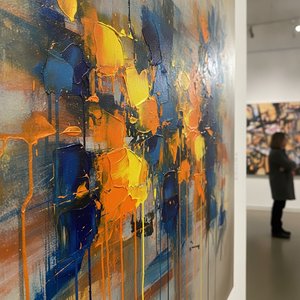
Beyond the Lines: Mastering the High-Impact World of Contemporary Abstraction
Master the high-impact world of contemporary abstraction. Discover how bold colors, textures, and modern movements like Abstract Expressionism can transform your space with premium, high-energy art curated for the design-conscious professional.

Mastering Abstraction: The 25 Most Iconic Works by Wassily Kandinsky
Explore 25 iconic Kandinsky masterpieces and the birth of abstraction. Discover the full collection online at OriginalUniqueArt.com.

马克·罗斯科25幅杰作:色彩与情感的深度之旅 | OriginalUniqueArt
探索马克·罗斯科25幅杰作,感受抽象表现主义的色彩力量与深刻情感。从经典色域绘画到无题系列,了解艺术史上的大师及其作品背后的故事。OriginalUniqueArt.com提供博物馆级高质量复制品,为您的家居装饰带来艺术灵感!立即探索完整收藏。
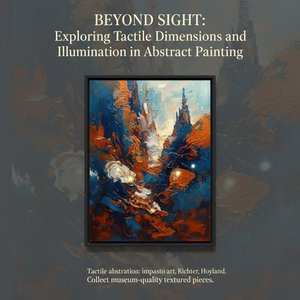
Beyond Sight: Exploring Tactile Dimensions and Illumination in Abstract Painting
Explore the captivating world of tactile abstraction! Discover impasto techniques, influential artists like Richter & Hoyland, and expert insights for collecting textured art. Elevate your space with museum-quality pieces.