切换至版画销售渠道
 展开全文
展开全文







































 对于任何边长超过 105 厘米(约 41 英寸)的艺术品或复制品,画框将以拆解后的组件形式发货。此方法可确保安全送达并防止运输过程中的损坏。


The Arresting Power of the Everyday
In the vibrant landscape of 1963, Andy Warhol unleashed a visual provocation that would forever alter the trajectory of modern art. Untitled (3181) is not merely a depiction of a common street fixture; it is an intentional disruption of the viewer's gaze. A singular, crimson stop sign dominates the canvas, its bold red hue acting as a visceral command to pause and contemplate. Behind this iconic symbol, a muted cityscape unfolds—a delicate, almost ghostly architecture that provides a somber contrast to the foreground's intensity. This juxtaposition creates a profound tension between the familiar, regulated world of urban life and the raw, unyielding energy of Pop Art, inviting anyone who stands before it to find extraordinary meaning within the ordinary.
The Mechanics of Mass Production
To understand the soul of this piece, one must look through the lens of Warhol’s revolutionary technique. Eschewing the traditional, heavy layers of oil paint favored by the Abstract Expressionists, Warhol embraced the silkscreen printing process—a method borrowed directly from the world of commercial advertising and industrial manufacturing. By transferring photographic images onto acetate and rolling them repeatedly over paper, he achieved a level of uniformity that mirrored the mass-produced goods of the era. The subtle presence of halftone dots creates a textured surface that mimics the grain of newsprint or magazine advertisements, blurring the line between fine art and consumer media. This calculated use of repetition serves as a profound commentary on the burgeoning culture of replication, where the unique is replaced by the infinitely reproducible.
A Reflection of a Changing World
Emerging during the height of the Kennedy administration, Untitled (3181) captures the pulse of an America caught between unprecedented economic prosperity and a growing fascination with celebrity and mass media. Warhol’s work acts as a mirror to a society increasingly defined by what it consumes. By elevating a mundane traffic sign to the status of a masterpiece, he challenged the elitism of the art world, suggesting that the true icons of our age are found in the streets and on the supermarket shelves. For the contemporary collector or interior designer, this piece offers more than just a striking visual; it provides a sophisticated dialogue between history and modernity. Its bold colors and graphic clarity make it an unparalleled centerpiece for any space, injecting a sense of historical weight and avant-garde spirit into a modern aesthetic.
常见问题与解答
安迪·沃霍尔 的《untitled (3181)》 适合悬挂在哪个房间?
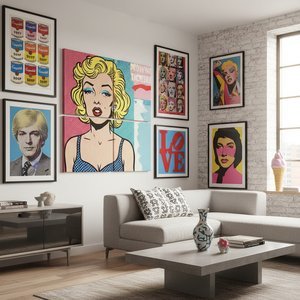
安迪·沃霍尔 的《untitled (3181)》 推荐陈列于 Living Room。此建议是基于作品的主题、色彩与意境而定。
哪里可以买到安迪·沃霍尔 的《untitled (3181)》的手绘复制品?
您可以在安迪·沃霍尔 的《untitled (3181)》的手工油画复刻页面直接订购其手绘复制品:亚麻画布手工油画复制品,按需定制。
“untitled (3181)”的浏览量是多少?
关于 安迪·沃霍尔 的《untitled (3181)》 的统计数据可在该作品的 访问统计 页面查看:包括作品的每月访问量、艺术家其他作品的访问量,以及近期访客的国家和语言分布情况。
 实景预览
实景预览
 分享
分享 分享
分享
 详情
详情 指南
指南

 下载作品
下载作品
 相似作品
相似作品 X射线
X射线 幻灯片播放
幻灯片播放 问答
问答 统计数据
统计数据