
 实景预览
实景预览
 分享
分享 分享
分享
 详情
详情 指南
指南

 下载作品
下载作品
 相似作品
相似作品 X射线
X射线 幻灯片播放
幻灯片播放 Q&A
Q&A 统计数据
统计数据狩猎灯光下

- 34.0 x 27.0 cm


 展开全文
展开全文
艺术微喷/版画
博物馆级艺术微喷或帆布版画,制作高效,并提供多种饰面选择。 ( 订购纯手工绘制画作 切换至数字图像销售渠道)




P118B ¥10

P118H ¥10

P118W ¥10

P438Z ¥10

P508JH ¥12

P508YH ¥12

P805H ¥10

P805Z ¥10

P919BZ ¥10

P919G ¥10

P919XJ ¥10

P959ZH ¥10

P968JZ ¥12

W106C ¥8

W218G ¥10

W218JH ¥8

W218Y ¥10

W307PJ ¥10

W316G ¥10

W316PJ ¥8

W316Y ¥10

W398PJ ¥8

W4111J ¥10

W500HY ¥15

W500JH ¥15

W692G ¥12

W849H ¥8

W940BG ¥15

W953PJ ¥8




您可以从与原作比例一致的预设尺寸中进行选择。

请输入您所需的宽度和高度,以适配您的画框或墙面。由于印刷品只能进行裁剪,无法超出原图尺寸,因此若比例不一致,画面的一部分将会被裁切。在正式印刷之前,我们会为您发送一份数字效果图供您确认。本页面显示的图片并非最终裁剪后的效果——只有效果图才能展示真实的裁剪情况。


 玻璃选项仅适用于110厘米以下的尺寸。

狩猎灯光下
艺术微喷/版画
复刻品尺寸
-


最终结算价
¥ 538
《狩猎灯光》:荷兰黄金时代的神秘与精湛
荷兰黄金时代艺术的璀璨光辉中,格里特·杜伊(Gerrit Dou)是一位常常被忽视但却极富魅力的人物。他并非像伦勃兰德或维米尔那样广为人知的名字,但他凭借其卓越的绘画技巧和对光影的精准运用,在艺术史上占据了重要地位。杜伊的作品不仅展现了当时艺术创作的巅峰水平,更蕴含着深刻的历史文化意义,值得我们细细品味。 杜伊的艺术生涯与莱顿这座充满艺术气息的城市息息相关。他的父亲是一位玻璃制造商,这无疑为他接触艺术和培养审美能力创造了有利的环境。杜伊早期的创作风格深受伦勃兰德的影响,但同时又发展出一种独特的个人特色——这种风格强调对细节的极致追求和对光影效果的巧妙控制,使他的作品具有一种难以言喻的美感。 作品解读:黑白对比与灯光象征 这幅黑白照片捕捉到了一个令人着迷的瞬间:一群人围坐在一个人周围,这个人裸露身体,展现出一种原始而充满力量的形象。这些人物构成了一个复杂而富有戏剧性的场景,其中一些人站在前景较近的位置,另一些人则在背景远处。一位女性抱着婴儿,为画面增添了一丝温馨与母爱的光辉。整个环境呈现出黑暗的氛围,仿佛置身于洞穴之中,几盏烛光点缀其间,营造出一种深邃而神秘的空间感。烛光不仅照亮了人物的面庞和身体,更象征着光明与希望,也暗示着作品蕴含的哲学思考。杜伊对烛光的运用堪称艺术大师的精湛技艺,他能够通过微妙的光影变化来塑造形象,并赋予画面一种难以言喻的情感冲击力。这种技巧在当时已经达到了极致水平,至今仍被后人赞颂不已。 历史背景与伦勃兰德的影响:对光线和阴影的精准掌控 杜伊的作品创作于荷兰黄金时代,这是一个充满活力和创造力的时期。伦勃兰德作为杜伊的师长和艺术偶像,为他提供了坚实的理论基础和技术指导。然而,杜伊并没有完全继承伦勃兰德的风格,而是将其与自己的审美观念相结合,从而形成了独特的艺术语言。杜伊对光线和阴影的处理手法与伦勃兰德截然不同,但同样具有强大的表现力。杜伊的作品注重捕捉瞬间的光影变化,并运用精湛的绘画技巧来创造出一种真实而富有张力的视觉效果。这种风格在当时已经成为主流审美标准,也为后人创作提供了重要的借鉴意义。通过对光线和阴影的巧妙控制,杜伊能够将人物形象塑造得栩栩如生,并赋予画面一种深刻的情感表达能力。这正是杜伊艺术成就的核心所在,也是他作品之所以能够感动观众的原因之一。 杜伊的作品不仅具有极高的艺术价值,也反映了当时社会文化精神的面貌。他创作的题材广泛而多样,涵盖了肖像画、风景画和历史画等多种类型。杜伊的作品风格简洁而优雅,线条流畅而富有节奏感。他的绘画技巧精湛无比,能够准确地捕捉人物形象的细微变化,并运用色彩和光影来营造出一种和谐而富有美感的视觉效果。杜伊的作品不仅是艺术史上的瑰宝,也是荷兰黄金时代文化精神的象征。 总而言之,《狩猎灯光》是一幅充满神秘与精湛技艺的杰作,它展现了荷兰黄金时代艺术的辉煌成就和人文精神的光辉。无论是收藏家还是室内设计师,都可以在这幅作品中感受到艺术大师的智慧和创造力,并从中汲取创作灵感。 这幅画作不仅是一件艺术品,更是一份历史文化的遗产,值得我们细细研究和欣赏。常见问题与解答
Andries Both 的《狩猎灯光下》创作于哪个时期?
Andries Both 的《狩猎灯光下》 创作于 近代早期 时期,这一时期为作品提供了深厚的历史背景。
如何下载 Andries Both 的《狩猎灯光下》 的图片?
您可以在作品的下载数字图像页面下载Andries Both 的《狩猎灯光下》的数字图像:高分辨率数字图像下载。
"狩猎灯光下" 的色彩呈现出浓郁还是柔和的视觉感?
Andries Both 的《狩猎灯光下》 中的色彩呈现出 单色调 的强度。
艺术家简介
A Life Captured in the Shadows of Rome
The life of Andries Both was as transient and dramatic as the scenes he captured on canvas. Born in Utrecht, the son of a glass painter, his early years were steeped in the rich traditions of Dutch craftsmanship. Under the tutelage of Abraham Bloemaert, Both began to refine a vision that would eventually lead him far from the familiar landscapes of the Netherlands. His journey took him through Rouen and ultimately into the heart of Rome, where he became a notable figure among the bamboccianti—a spirited group of Dutch and Flemish painters who found inspiration in the gritty, unvarnished reality of Italian life.
In Rome, Both’s presence was firmly established between 1635 and 1641. He lived a life shared with his brother, Jan, navigating the vibrant artistic circles of the city. The brothers resided on the Via Vittoria, within the parish of San Lorenzo in Lucina, and may have been part of the Bentvueghels, an influential group of artists active in Rome. This period of his life was marked by a deep immersion in the everyday rhythms of the Roman countryside and its lower classes, providing him with a wealth of subject matter that would define his artistic legacy.
The Art of the Bambocciata
Both’s work is celebrated for its Bambocciata style, a genre characterized by small-scale cabinet paintings that depict the more rauceless and often humorous aspects of common life. His brushstrokes were broad and expressive, capable of conveying both a sense of harsh reality and a certain farcical charm. He did not shy away from the seamier side of existence; instead, he embraced it with an eye for detail that could be both objective and outrageous.
His compositions often functioned as subtle moral admonitions. In works such as The Card Players, he masterfully wove together independent narratives to critique social vices. Through the depiction of card-playing—a pastime then equated with idleness and deceit—and suggestive symbols like an egg representing fertility or infidelity, Both invited viewers to contemplate the consequences of immoral behavior. This ability to blend the mundane with the moral gave his work a profound depth that resonated far beyond simple genre painting.
Influences and Artistic Legacy
The lineage of Both’s artistry is a tapestry of great masters. He drew significant inspiration from the 16th-century Netherlandish traditions, particularly the peasant subjects pioneered by Pieter Brueghel the Elder. Furthermore, the influence of Flemish painters like Adriaen Brouwer and Adriaen van Ostade is evident in his caricatural figures and tavern scenes. These influences allowed him to create characters that felt both grounded in reality and heightened by a sense of theatricality.
Though his career was tragically cut short when he died by drowning in a Venetian canal while returning to the Netherlands, his impact on the genre painting tradition remains significant. He helped cultivate a specific aesthetic that found beauty in the overlooked and the unrefined, ensuring that the lives of the common people were etched into the history of European art with both humor and truth.

Andries Both
1613 - 1642 , Netherlands
艺术家简介
- Artistic Movement Or Style: Bamboccianti, genre painting
- Artists Who Influenced This Artist:
- Abraham Bloemaert
- Pieter Brueghel the Elder
- Adriaen Brouwer
- Full Name: Andries Both
- Nationality: Dutch
- Notable Artworks: ['The Card Players']
- Place Of Birth: Utrecht, Netherlands
- Date Of Birth: 1613
- Date Of Death: 1642
相关文章

10 Iconic Masterpieces That Defined the Dutch Golden Age
Immerse yourself in the luminous mastery of the Dutch Golden Age. From Rembrandt’s dramatic shadows to Vermeer’s serene light, explore 10 iconic masterpieces and find museum-quality art reproductions to elevate your decor. Discover all masterpieces on OriginalUniqueArt.com.
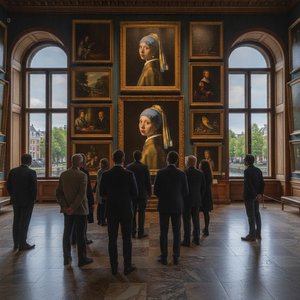
25 Must-See Masterpieces at the Mauritshuis: A Journey Through Dutch Golden Age Art
Step into the Dutch Golden Age with our curated guide to the 25 greatest masterpieces at the Mauritshuis. From Vermeer’s luminous light to Rembrandt’s drama, explore the stories behind these iconic works and find museum-quality art reproductions. Discover all masterpieces on OriginalUniqueArt.com.

Golden Light & Dutch Skies: The Timeless Magic of Dutch Golden Age Landscapes
Discover the breathtaking beauty of Dutch Golden Age landscapes. Explore the mastery of light, chiaroscuro, and 17th-century realism through an expert art history lens, celebrating the enduring legacy of the Dutch Masters for discerning collectors and art lovers.
10 Iconic Masterpieces That Defined the Dutch Golden Age
Journey through the Dutch Golden Age with 10 iconic masterpieces. From Rembrandt's light to Vermeer's elegance, explore the stories behind these timeless oil paintings and find museum-quality reproductions for your decor. Discover all masterpieces on OriginalUniqueArt.com.

25 Must-See Masterpieces at the Mauritshuis: A Journey Through Dutch Golden Age Art
Step into the Dutch Golden Age with our curated guide to 25 iconic masterpieces from the Mauritshuis. From Vermeer’s luminous light to Rembrandt’s drama, explore the stories behind these timeless works and find museum-quality art inspiration. Discover all masterpieces on OriginalUniqueArt.com.
