

 实景预览
实景预览
 发送
发送 分享
分享
 详情
详情 指南
指南

 下载图片
下载图片
 相似作品
相似作品 X射线
X射线 幻灯片播放
幻灯片播放 统计数据
统计数据Feast of Belshazzar
 Oil On Canvas
- WallArt
- Baroque
 1705
1705 157.0 x 203.0 cm
 冬宫博物馆 (Hermitage Museum)
 阅读全文
阅读全文
手工油画复制品
由我们的艺术家按需定制,为您提供您所选尺寸及画框的布面手工油画。 ( 切换至版画销售渠道 切换至数字图像销售渠道)




P118B $10

P118H $10

P118W $10

P438Z $10

P508JH $12

P508YH $12

P805H $10

P805Z $10

P919BZ $10

P919G $10

P919XJ $10

P959ZH $10

P968JZ $12

W106C $8

W218G $10

W218JH $8

W218Y $10

W307PJ $10

W316G $10

W316PJ $8

W316Y $10

W398PJ $8

W4111J $10

W500HY $15

W500JH $15

W692G $12

W849H $8

W940BG $15

W953PJ $8




您可以从与原作比例一致的预设尺寸中进行选择。

您可以输入自定义尺寸,以适配特定的画框或空间。如果所选尺寸与原图比例不符,我们将通过裁剪作品或添加手绘元素来扩展画面。数字样稿将在制作开始前发送给您确认。
请注意,屏幕预览无法准确反映实际的裁剪或扩展效果,只有样稿才能真实呈现最终的构图。
虽然我们提供定制尺寸服务,但为了保留原作比例,建议您从预设列表中选择尺寸。
下单后,OriginalUniqueArt.com 团队将通过电子邮件联系客户获取具体要求,并提供效果预览图


 玻璃选项仅适用于110厘米以下的尺寸。

Feast of Belshazzar
复制品材质
复刻品尺寸说明
-


总计金额
$ 300
Andrea Celesti’s “Feast of Belshazzar”: A Baroque Drama Illuminated
The painting by Andrea Celesti, “Feast of Belshazzar,” stands as a monumental testament to the grandeur and dramatic intensity characteristic of Baroque art. Executed around 1705, this oil on canvas masterpiece resides within the National Gallery’s collection, offering viewers an unparalleled glimpse into a pivotal moment in biblical history—the opulent celebration held by King Nebuchadnezzar II's son, Belshazzar, following the desecration of Jerusalem and the Temple. More than just a depiction of an event, Celesti’s canvas delves into themes of pride, divine judgment, and ultimately, redemption, capturing the palpable tension and psychological complexity that define Baroque artistic vision.- Subject Matter: The scene portrays Belshazzar's lavish banquet—a defiant assertion of Babylonian power against God’s decree—as recounted in Daniel chapter 5. Guests consume a sumptuous meal amidst towering columns, symbolizing imperial authority and earthly splendor.
- Style & Composition: Celesti adheres to the Baroque style’s penchant for theatricality and emotional expression. The composition is meticulously crafted, utilizing diagonal lines to draw the eye across the canvas and creating a sense of dynamism despite the stillness of the figures. Light plays a crucial role, emanating from an unseen source—likely positioned above the central table—highlighting key elements and casting dramatic shadows that amplify the mood.
- Technique: Celesti’s masterful brushwork demonstrates exceptional skill in capturing texture and conveying emotion. Thick impasto—a technique involving applying paint thickly onto the canvas—dominates the depiction of the dining table, emphasizing its materiality and contributing to the overall sense of grandeur. The artist skillfully blends colors to achieve luminous effects, particularly noticeable in the drapery and illuminated faces, reflecting Baroque artists’ fascination with chiaroscuro – the interplay between light and dark – as pioneered by Caravaggio.
Historical Context: Nebuchadnezzar's Hubris and Divine Retribution
The Feast of Belshazzar isn’t merely a narrative illustration; it’s deeply rooted in the theological concerns of its time. The biblical story serves as an allegory for the dangers of arrogance—Nebuchadnezzar’s defiance of God’s covenant culminates in Babylon's downfall, mirroring Celesti’s artistic exploration of moral responsibility and divine justice. Contemporary viewers would have understood the painting as a reminder that earthly rulers are accountable to a higher power, and that pride inevitably leads to ruin. The depiction of the Temple vessels desecrated underscores the significance of religious piety and obedience—a core element of Baroque spirituality.Symbolism: Light, Darkness, and Revelation
Celesti’s use of light and shadow is laden with symbolic meaning. The radiant illumination emanating from above symbolizes divine grace and illuminates the faces of the guests, highlighting their expressions of astonishment and fear as they witness the prophetic writing on the wall. Conversely, dark shadows envelop the columns and drapery, representing earthly darkness and concealing God's judgment. This duality reinforces the painting’s central message: that true understanding requires confronting both illumination and obscurity—that divine revelation necessitates acknowledging human fallibility. The writing itself embodies the inescapable truth of God’s sovereignty and serves as a catalyst for spiritual introspection.Emotional Impact: Capturing Dramatic Tension
“Feast of Belshazzar” succeeds in conveying profound emotional tension—a palpable sense of dread mingled with fascination. Celesti captures the psychological state of the characters with remarkable accuracy, portraying their faces as etched with apprehension and disbelief. The artist’s masterful brushwork conveys movement and dynamism within the stillness of the scene, mirroring the dramatic unfolding of events. Ultimately, the painting compels viewers to contemplate questions of morality, faith, and the consequences of defying divine law—a testament to Celesti's ability to transform a biblical narrative into an enduring masterpiece of Baroque art.艺术家简介
The Venetian Master of Light and Drama
In the vibrant, water-bound splendor of late seventeenth-century Venice, Andrea Celesti emerged as a formidable force of the Baroque era. Born in 1637, Celesti’s life and artistry were deeply intertwined with the shifting tides of Venetian culture. His early training, shaped by the disciplined hands of Matteo Ponzoni and later Sebastiano Mazzoni, instilled in him a foundation of academic rigor. Yet, as his career unfolded, one could witness a breathtaking metamorphosis in his technique. The heavy, almost turgid weightiness that characterized his early compositions gradually dissolved, giving way to a luminous, fluid brushstroke that captured the ephemeral essence of light and movement—a hallmark of the maturing Venetian style.
Celesti’s ascent within the Venetian social and artistic hierarchy was marked by significant prestige and occasional scandal. His early years in Venice were defined by monumental labors, ranging from intricate frescoes for the main salon of the Palazzo Erizo to prestigious commissions within the Doge's Palace. In 1676, his talent earned him the honor of painting a portrait of Doge Nicolò Sagredo for the Sala dello Scrutinio, and by 1681, he was formally bestowed with the title of Cavalieri by Doge Alvise Contarini. However, the artist’s legendary wit may have been his undoing in the capital; local lore tells of a daring moment when Celesti, following a public exhibition in Piazza San Marco, allegedly depicted the Doge with the ears of a donkey. This act of satirical defiance forced him to flee Venice under the protection of his patron, Scipione Delaj, leading him toward a new chapter of creative flourishing in the inland territories.
A Legacy Carved in Canvas and Stone
The relocation from the lagoons of Venice to the shores of Lake Garda allowed Celesti to establish a prolific studio in Brescia and later Toscolano. It was here that his religious fervor and narrative mastery found their most enduring expression. Working extensively for the Delaj family, he embarked on an ambitious cycle of canvases for the Cathedral of Peter and Paul in Toscolano. These works, which include The Vocation of Paul and Andrew and St. Peter Heals the Sick, demonstrate his ability to weave complex theological themes into sweeping, dramatic compositions that command the viewer's attention.
His later achievements were characterized by a profound ability to decorate sacred spaces with both grandeur and intimacy. His contributions to the church of San Zaccaria and his return to Toscolano to paint the Massacre of the Innocents showcase an artist capable of handling both the epic scale of historical tragedy and the delicate nuances of divine light. Celesti’s significance lies not only in his technical evolution but in his role as a bridge between the structured academic traditions of the mid-seventeenth century and the more expressive, atmospheric freedom that would define the coming era. Through his hands, the heavy shadows of the past were transformed into the radiant, dancing light of the Venetian Baroque.

andrea celesti
1637 - 1712 , Italy
快速概览
- Artistic Movement Or Style: Classical, Baroque
- Artists Or Movements Influenced By This Artist:
- Jacques-Louis David
- Ingres
- Cézanne
- Artists Who Influenced This Artist:
- Raphael
- Caravaggio
- Date Of Birth: 1594-06-15
- Date Of Death: 1665-11-19
- Full Name: Nicolas Poussin
- Nationality: French
- Notable Artworks:
- Et in Arcadia ego
- The Four Seasons
- Massacre of Innocents
- Seven Sacraments
- Place Of Birth: Paris, France
相关文章
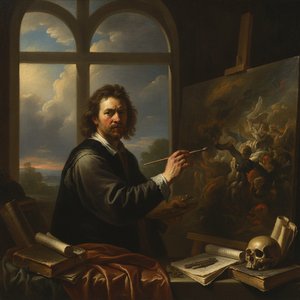
Dutch Baroque Unlocked: Mastering Chiaroscuro, Epic Drama, and the High-Impact Legacy of Rembrandt
Explore the dramatic power of Dutch Baroque art. Master the secrets of Rembrandt’s chiaroscuro, discover the epic scale of the Golden Age, and learn how to bring high-impact, hand-painted historical masterpieces into your modern collection with expert precision.

荷兰黄金时代绘画:文化创新中的现实主义反思
深入探索荷兰黄金时代绘画的文化创新与现实主义反思。本文解读伦勃朗、维米尔等大师的作品,并结合玛莉特·韦斯特曼的图像学研究,揭示艺术史背后的社会语境与现代性意识觉醒。

伦勃朗25幅杰作:光影大师的艺术传奇与家居臻选
探索伦勃朗25幅杰作,领略荷兰黄金时代光影大师的艺术传奇!从《夜巡》到自画像,深入了解巴洛克艺术、历史绘画与人物肖像背后的故事。OriginalUniqueArt.com提供高清艺术复制品及家居装饰灵感。立即探索完整系列!

Rembrandt van Rijn: A Life Illuminated – Innovation, Emotion, and the Dutch Golden Age
Explore the life & art of Rembrandt van Rijn, a Dutch Golden Age master. Discover his innovative techniques, iconic paintings like 'The Night Watch', and enduring legacy. Expert insights for collectors & enthusiasts.

Dutch Baroque Masters: 10 Paintings That Shaped an Era | OriginalUniqueArt
Journey through the Golden Age with our guide to the Top 10 Dutch Baroque masterpieces! Explore iconic paintings by Rembrandt, Vermeer & Frans Hals. Find museum-quality art reproductions and elevate your home decor at OriginalUniqueArt.com.