
 Preview
 购买版画
购买版画 分享
分享 分享
分享
 详情
详情

 下载
下载
 相似作品
相似作品 X射线
X射线 幻灯片播放
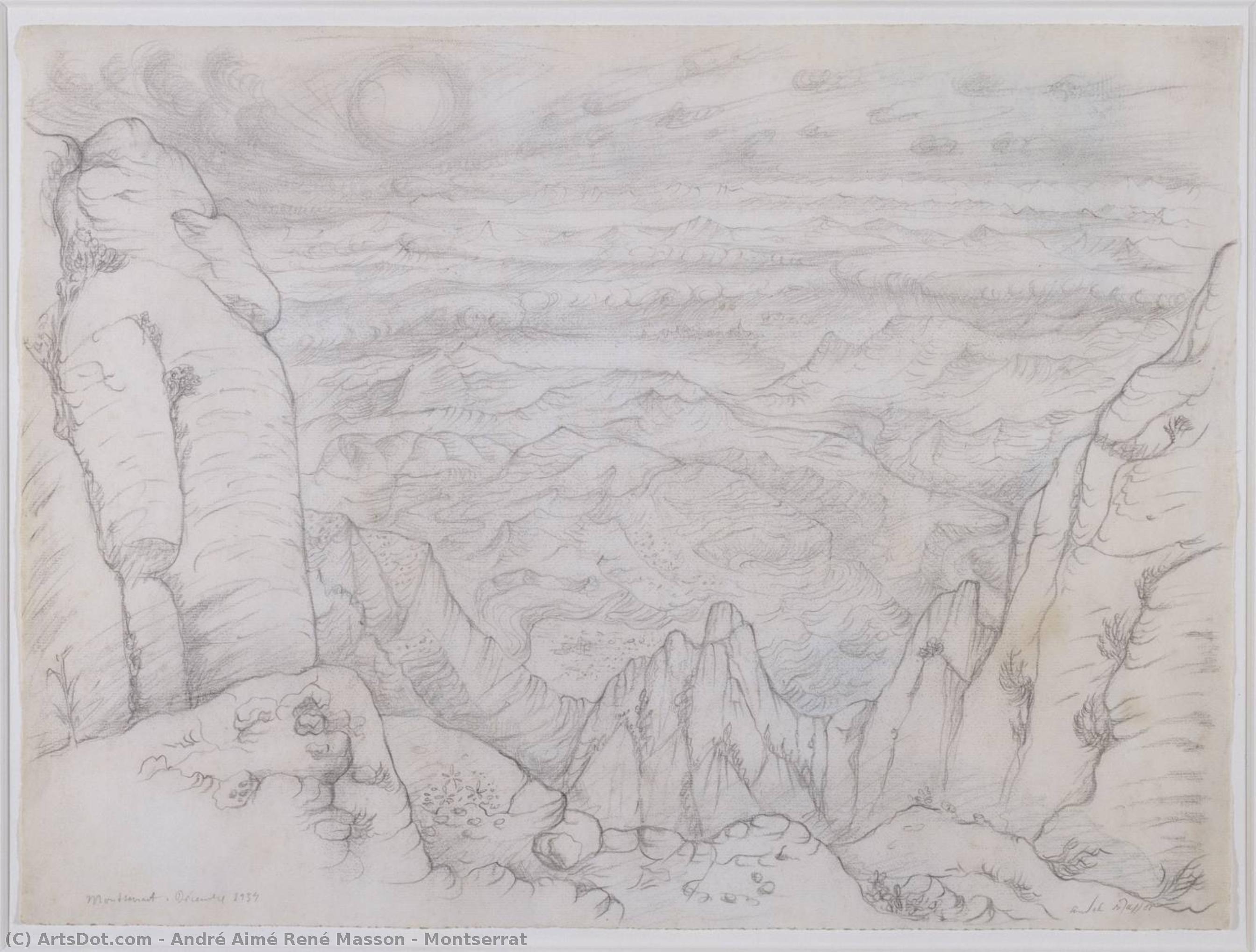
幻灯片播放Montserrat
 Acrylic On Paper
- Other
- Surrealist Movement
 1934
1934 47.0 x 63.0 cm
 泰特现代美术馆
 展开详情
展开详情
购买高分辨率增强版数字图像,其品质远超在线预览。
每一份文件都由我们的内部专家使用先进工具与专业的后期润色技术精心打造。我们确保每一张图像都具备卓越的清晰度、精准的色彩还原度以及细腻的细节表现。
最终文件将在 72 小时内通过电子邮件交付,并针对专业、编辑及印刷用途进行了优化。其品质与顶级设计工作室、出版社和画廊所信赖的标准完全一致。
每份数字图像订单均包含
专业数字图像交付,品质保障
选择 OriginalUniqueArt.com,您获得的不仅仅是一张图像——您收到的是经过专业级增强、精雕细琢的数字艺术作品,并享有满意保证。以下是您的订单中自动包含的所有内容:

邮件快速送达
您的高分辨率数字图像文件将在下单后 72 小时内通过电子邮件发送给您 —— 即可立即使用。

AI 增强型数字文件
您的艺术品经过专业优化,结合先进的 AI 技术与人工修饰,确保呈现极致的细节、清晰度与色彩准确度。

终身免费重发服务
不小心删除了文件或找不到了?没关系——我们将随时为您免费重发。

无需进口费用,始终如一
即刻拥有您的艺术作品,无需支付任何关税、税费或运费——数字下载始终免税。

色彩精准保证
我们通过专业工具与色彩管理技术,确保您的数字图像尽可能真实地还原原作色彩。

60天满意保证
如果您对所购买的数字图像不满意,我们将在60天内为您进行修改或退还100%的款项——无需任何解释。

100% 退款保证
如果不满意?在收到数字文件后的60天内,我们为您提供全额退款——无需任何理由。

批量订单优惠
购买 3 张图片可享 10% 折扣 - 购买 5 张可享 15% 折扣 - 购买 10+ 张可享 20% 折扣。非常适合创意项目、画廊和机构使用。
藏品详情
André Masson’s “Montserrat”: A Journey Into the Subconscious
André Masson's "Montserrat," painted in 1934, isn’t merely a landscape; it’s an invitation into the heart of the Surrealist mind. This graphite and chalk drawing on paper captures a rugged, almost violently sculpted mountain range under a dramatic, circular sun – a scene that feels both familiar and profoundly unsettling. Masson, a key figure in the Surrealist movement, employed his signature technique of automatic drawing to create an image brimming with raw emotion and symbolic depth, reflecting a fascination with the subconscious and primal forces.
The genesis of “Montserrat” lies within Masson’s exploration of automatism – a method he embraced wholeheartedly, believing it bypassed conscious control and allowed the unconscious to dictate the artistic process. He often began by throwing sand and glue onto a canvas, then meticulously building upon the resulting shapes, allowing them to organically inform the composition. This technique is vividly apparent in “Montserrat,” where jagged peaks emerge from seemingly random lines, suggesting a landscape born not of observation but of internal feeling. The drawing’s loose, expressive lines eschew traditional perspective, instead prioritizing the immediate impact and emotional resonance of the scene.
Deconstructing the Landscape: Form, Color, and Technique
The color palette is deliberately restrained – primarily shades of grey, white, and beige against a creamy background. This monochromatic approach amplifies the drawing’s textural qualities, emphasizing the rough surfaces of the mountains and the dynamic interplay between light and shadow. Masson masterfully utilizes hatching and cross-hatching to build up volume and create a sense of depth, mimicking the appearance of rock formations and atmospheric conditions. The composition itself is asymmetrical, with peaks arranged in a way that feels both precarious and powerful – mirroring perhaps the inherent instability of the subconscious mind.
Notice the deliberate lack of detail; Masson isn’t striving for photographic realism. Instead, he focuses on capturing the *essence* of the mountain range, reducing it to its most fundamental forms. The lines are not precise but rather suggestive, creating a dreamlike quality that aligns perfectly with the Surrealist aesthetic. The circular sun, dominating the upper center, acts as a potent symbol – representing enlightenment, clarity, or perhaps even the overwhelming force of the unconscious itself.
Symbolism and Emotional Resonance
“Montserrat” is rich in symbolic potential. The jagged peaks can be interpreted as challenges, obstacles, or even the fragmented nature of memory. The vastness of the landscape evokes feelings of solitude and isolation, while the dramatic lighting creates a sense of drama and tension. Considering Masson’s interest in primal expression, one might also read the drawing as an attempt to tap into something deeper – a connection with the earth, with instinct, or even with the darker aspects of human experience.
The painting's emotional impact is undeniably powerful. It doesn’t simply depict a mountain range; it invites us to contemplate our own internal landscapes, to confront the uncertainties and anxieties that lie beneath the surface of consciousness. “Montserrat” stands as a testament to Masson’s ability to translate complex psychological states into a visually arresting and deeply evocative work of art – a timeless exploration of the human spirit.
André Masson: Context and Legacy
Born in Balagny-sur-Thérain, France, in 1896, André Masson’s artistic journey was shaped by early exposure to Cubism and a later embrace of Surrealism. He collaborated extensively with other prominent figures of the movement, including Antonin Artaud and Joan Miró, fostering a vibrant artistic community centered around automatic drawing. His work has been exhibited widely throughout Europe and America, influencing generations of artists. Masson’s legacy extends beyond his own paintings; he played a crucial role in shaping the direction of Surrealist art, leaving an indelible mark on 20th-century visual culture.
艺术家简介
安德烈·马松:超现实主义的先驱与艺术探索者
安德烈·马松(André Masson,1896-1987)是一位法国画家、雕塑家和版画家,被誉为超现实主义运动的关键人物之一。他的艺术生涯充满了对传统边界的挑战和对内心世界的深刻探索。马松的作品以其大胆的实验性、强烈的象征意义以及对潜意识主题的关注而闻名于世,对后来的抽象表现主义等艺术流派产生了深远的影响。
早年生活与艺术启蒙
1896年1月4日,安德烈·马松出生在法国巴拉尼-苏尔-泰兰。他幼年时期便展现出对绘画的热情,十一岁时进入布鲁塞尔皇家美术学院学习,师从康斯坦特·蒙塔尔德。这段早期的学院派训练为他日后的艺术探索奠定了坚实的基础。起初,马松的作品受到立体主义的影响,他对毕加索和勃拉克等立体主义大师的创新手法表现出浓厚的兴趣,并尝试将其融入自己的创作中。然而,这种影响只是他艺术旅程的起点,很快,他便开始寻求更加自由、更加个人化的表达方式。
超现实主义时期与自动绘画
20世纪20年代,马松积极投身于超现实主义运动。在安德烈·布勒东等人的影响下,他开始深入研究弗洛伊德的精神分析理论,并将其应用于艺术创作中。自动绘画成为马松最具代表性的技法之一。这种技法强调摆脱理智的控制,让潜意识自由地引导画笔,在画布上留下无拘束、充满象征意义的线条和图案。他试图通过这种方式揭示人类内心深处的欲望、恐惧和幻想。马松与安东南·阿尔托、米歇尔·莱里斯、胡安·米罗、乔治·巴塔耶、让·杜比菲以及乔治·马尔金等超现实主义艺术家保持着密切的合作关系,共同推动了这场艺术运动的发展。
风格演变与战争经历
到了20世纪30年代末,马松逐渐远离了纯粹的超现实主义。他开始尝试更加结构化的绘画风格,受到安德烈·德兰等画家的影响,他的风景画变得更加写实和细腻。然而,这种转变并非完全的背离,而是他对艺术表现形式的一种新的探索。第二次世界大战期间,马松的作品被纳粹政权视为“堕落”艺术而遭到谴责。为了逃避迫害,他于1940年逃往美国,并在纽约得到了瓦里安·弗莱的帮助。这段经历对他的创作产生了深刻的影响,同时也为美国的抽象表现主义艺术家提供了重要的灵感和启发,特别是杰克逊·波洛克。
晚期作品与艺术遗产
战后,马松回到法国,定居在艾克斯-普罗旺斯。他将更多的精力投入到风景画的创作中,并逐渐形成了自己独特的风格。他的晚期作品更加注重对自然光线和色彩的表现,以及对绘画材料本身的探索。 安德烈·马松的作品不仅具有高度的艺术价值,更蕴含着深刻的思想内涵。他通过对潜意识主题的关注、对传统边界的挑战以及对艺术表现形式的创新,为现代艺术的发展做出了重要的贡献。他的作品至今仍然激励着无数艺术家不断探索新的可能性,并继续影响着当代艺术的进程。
- 代表作:《超越》、《岩石风景》、《恋人的变形》、《皮格马利翁》等。

安德烈·马松
1896 - 1987
基本信息
- 代表作品:
- 超越
- 岩石风景
- 恋人的变形
- 皮格马利翁
- 出生地: 法国巴拉尼-叙尔泰兰
- 出生日期: 1896年1月4日
- 受其影响的艺术家/流派:
- 杰克逊·波洛克
- 抽象表现主义
- 国籍: 法国
- 姓名: 安德烈·马松
- 影响他的艺术家: ['安德烈·德兰']
- 艺术运动或风格: 超现实主义,立体主义
- 逝世日期: 1987年

