
 实景预览
实景预览
 切换至版画销售渠道
 分享
分享 分享
分享
 详情
详情 指南
指南

 下载作品
下载作品
 相似作品
相似作品 X射线
X射线 幻灯片播放
幻灯片播放 问答
问答 统计数据
统计数据Untitled (Amategram)

- 30.0 x 40.0 cm


 展开全文
展开全文
获取远超网页预览效果的印刷级文件。我们销售的每一张数字图像均源自库存数据库中的高分辨率母版——宽度通常在 5,000 至 15,000 像素之间——因此您可以放心地进行大幅打印、局部裁剪或还原细腻的细节。
每一件作品在离开我们的工作室前都经过了精心的处理。数字影像专家会对照原作核对色彩,并在必要时进行校正,随后利用专业修图工具提升清晰度与细节表现——且始终忠实于艺术家的笔触与风格。最终呈现的图像宛如原作本身,而非仅仅是一张加了滤镜的扫描件。
您可以在最终定稿前进行审核:我们的专家将在 72 小时内通过电子邮件向您发送图像以供审阅。如果不满意?您可以要求改进或修正;若质量未达预期,亦可申请退款。
这也是出版商、设计工作室、画廊及印刷厂所信赖的品质。
每份数字图像订单均包含的内容
专业级数字交付,品质保障
选择 OriginalUniqueArt.com,您获得的不仅仅是一张图像——您收到的是经过专业级增强、精雕细琢的数字艺术作品,并享有满意保证。以下是您的订单中自动包含的所有内容:

邮件即时送达
您的高分辨率数字图像文件将在下单后 72 小时内通过电子邮件发送给您 —— 即可立即使用。

AI 增强型数字文件
您的艺术品经过专业优化,结合先进的 AI 技术与人工修饰,确保呈现极致的细节、清晰度与色彩准确度。

终身免费重发服务
不小心删除了文件或找不到了?没关系——我们将随时为您免费重发。

无需进口税费,始终如一
即刻拥有您的艺术作品,无需支付任何关税、税费或运费——数字下载始终免税。

色彩精准保障
我们通过专业工具与色彩管理技术,确保您的数字图像尽可能真实地还原原作色彩。

100天满意保证
如果您对所购数字图像不满意,我们将在100天内为您进行修改或提供100%的全额退款——无需任何理由。

100% 退款保证
不满意?在收到数字文件后的100天内,您可以申请全额退款——无需任何理由。

批量订购优惠
购买 3 张享 10% 折扣 - 购买 5 张享 15% 折扣 - 购买 10 张以上享 20% 折扣。非常适合创意项目、画廊及机构使用。
Echoes of Earth and Spirit: Exploring Ana Mendieta's Untitled (Amategram)
To stand before an image like Untitled (Amategram) is to encounter not merely charcoal on paper, but a profound dialogue between the self, the earth, and memory. Ana Mendieta’s work possesses an undeniable resonance, drawing the viewer into a space that feels both deeply personal and universally ancestral. This piece, executed in 1983, transcends simple representation; it is a ritualistic gathering of forms, rendered with the delicate yet powerful touch of charcoal. The monochromatic palette—a whisper of black against the warm, aged tan of the paper—immediately sets a tone of introspection, inviting contemplation into the quiet corners of the soul.
The Language of Form and Line
Mendieta’s technique here is masterful in its restraint. She employs loose, gestural charcoal lines that do not seek to define with photographic precision but rather suggest existence. The figures are simplified, almost primal silhouettes, arranged across the surface in a composition that feels both accidental and meticulously planned, like an unearthed pattern or a ceremonial grouping. There is a palpable sense of texture; one can almost feel the grit of the charcoal dust against the rough grain of the paper. This interplay between soft smudging and visible texture gives the work its haunting vitality. The forms themselves evoke femininity, fertility, and the enduring connection to origins—themes central to Mendieta’s lifelong artistic inquiry.
A Tapestry Woven by Exile and Return
Understanding Ana Mendieta requires acknowledging the weight of her life journey. Born in Havana, Cuba, her early life was irrevocably shaped by political upheaval and subsequent exile. This displacement—the forced separation from homeland and culture—did not break her spirit; instead, it channeled itself into an art that sought to reconnect with elemental truths: the earth, the body, the bloodline. Untitled (Amategram) speaks volumes about this journey. The 'Amategram' title hints at materials and traditions far removed from the gallery wall, grounding the ethereal figures in a tangible, cultural memory. It is an art born of necessity, a visual testament to survival.
Symbolism and Emotional Resonance for Your Space
For those considering bringing this powerful aesthetic into a curated interior or collection, the emotional impact is paramount. This piece does not shout; it murmurs secrets. Its mystery lends itself beautifully to spaces that value depth over flash—a sophisticated study, an intimate lounge, or a gallery wall requiring intellectual weight. The composition’s grid-like yet organic arrangement suggests community and collective identity, offering a focal point that encourages conversation. Reproducing this work allows one to harness its quiet power, transforming a mere decorative element into a profound meditation piece.
Acquiring the Echo: Reproduction Details
This reproduction captures the essence of Mendieta’s original charcoal drawing on paper, scaled here to 30 x 40 cm. By choosing this high-quality print, you are acquiring more than just an image; you are curating a piece of art history that speaks eloquently of resilience. The soft, diffused lighting captured in the reproduction maintains the work's atmospheric quality, ensuring that even when viewed from a distance, the subtle interplay between charcoal and tan background remains captivating.
常见问题与解答
在Ana Mendieta反复探讨的主题中,"Untitled (Amategram)"处于怎样的地位?
"Untitled (Amategram)" 描绘了 earth body, female form, totemic symbolism, bark paper texture, minimalist lines, ritualistic gestures, mexican folklore,而 Ana Mendieta 的创作主题则以 earth body performances, mexican indigenous rituals, female identity exploration, minimalist aesthetic vision, symbolic landscape engagement 见长。通过两者的对比,可以发现此作与艺术家惯用题材之间的内在联系。
我可以使用增强现实技术在我的房间里预览 Ana Mendieta 的《Untitled (Amategram)》 吗?
“Untitled (Amategram)” 支持增强现实(AR)预览:通过作品的 AR 效果预览 页面,您可以在兼容设备上查看该作品呈现在您专属空间的效果。
在“Untitled (Amategram)”中,融合了怎样的心境与情感?
Ana Mendieta 的《Untitled (Amategram)》 在整体 Serene 的氛围中,传达出一种 Mysterious 的情感。
艺术家简介
A Life Intertwined with Earth and Spirit
Ana Mendieta, born in Havana, Cuba, in 1948, was an artist whose work remains profoundly resonant decades after her untimely death. Her story is one of exile, displacement, and a fierce determination to reconnect with ancestral roots through art. The daughter of a prominent Cuban family – her father an attorney linked to former president Carlos Mendieta, her mother a chemist – young Ana’s life was irrevocably altered by the political upheaval following Castro's revolution. At just twelve years old, she was sent unaccompanied to Dubuque, Iowa, as part of Operation Peter Pan, a mass exodus of children fleeing the new regime. This separation from family and homeland became a defining trauma, deeply influencing her artistic trajectory. The initial years in America were marked by hardship: navigating language barriers, adjusting to foster homes, and grappling with a sense of profound cultural alienation. It wasn’t until 1966 that she was reunited with her mother and brother, followed later by her father after his release from a Cuban prison in 1979. This experience of being uprooted and searching for belonging would become central to the themes explored throughout her oeuvre.Forging an Earth-Body Dialogue
Mendieta’s artistic education began at the University of Iowa, where she earned both a Bachelor's and Master's degree in painting. However, it was within the progressive Intermedia program that her unique vision truly blossomed. Influenced by contemporaries like Vito Acconci and Lynda Benglis, she moved beyond traditional mediums to embrace performance, sculpture, film, and photography – all unified by a radical concept: an intimate dialogue between the human body and the natural world. This led to the development of what became known as her “earth-body” works, a series of ephemeral interventions where she imprinted her form onto landscapes, using earth, water, fire, and even her own blood as artistic materials. The *Silueta Series*, begun in 1973 and comprising over 200 works, is perhaps her most iconic achievement. These weren’t simply self-portraits; they were acts of spiritual communion, attempts to reclaim a lost connection to the earth and to ancestral feminine forces. She wasn't merely *in* the landscape, she sought to *become* part of it, dissolving boundaries between self and environment. The silhouettes, often created through casting her body in clay or creating voids in the earth, evoke ancient rituals and primal energies.Themes of Feminism, Identity, and Displacement
Mendieta’s art is deeply imbued with feminist concerns, addressing issues of violence against women and exploring the female experience from a uniquely personal and political perspective. Her work often alludes to the historical silencing and erasure of women, particularly within patriarchal structures. The use of her own body as both subject and medium was a powerful act of reclaiming agency and challenging conventional representations of femininity. Beyond feminism, Mendieta’s art grapples with the complexities of cultural identity and displacement. As a Cuban-American artist navigating two worlds, she explored themes of exile, longing, and the search for belonging. Her connection to Afro-Cuban Santería traditions also played a significant role, informing her use of natural symbols and ritualistic gestures. The earth itself became a repository of memory, a space where she could reconnect with her heritage and heal from the trauma of displacement. She wasn’t simply documenting landscapes; she was enacting a form of spiritual archaeology, excavating layers of personal and collective history.Recognition and a Tragic Legacy
Throughout her career, Ana Mendieta received numerous accolades, including National Endowment for the Arts grants, a John Simon Guggenheim Fellowship, and a Rome Prize. Her work was exhibited internationally, gaining recognition at prestigious institutions like the New Museum of Contemporary Art and the Hirshhorn Museum. Posthumously, she received the Visual Arts Lifetime Achievement Award from The Cintas Foundation in 2009, solidifying her place as a pivotal figure in post-World War II art. Her influence on contemporary artists is undeniable, inspiring generations to explore the body, nature, and identity in innovative ways. However, Mendieta’s life was tragically cut short in 1985 when she fell from her apartment window in New York City. The circumstances surrounding her death remain deeply controversial, with accusations leveled against her husband, minimalist sculptor Carl Andre. The ensuing legal proceedings and ongoing debate have cast a long shadow over her legacy, raising complex questions about artistic relationships, domestic violence, and accountability. Despite the pain and controversy surrounding her passing, Ana Mendieta’s art continues to resonate powerfully, reminding us of the enduring human need for connection – to ourselves, to our ancestors, and to the earth that sustains us. Her work stands as a testament to the transformative power of art and its ability to heal, empower, and challenge the status quo.Enduring Influence
- Pioneering Performance Art: Mendieta’s use of her body as both subject and medium broke new ground in performance art, influencing subsequent generations of artists.
- Feminist Iconography: Her exploration of female identity, violence against women, and the reclamation of the feminine form remains profoundly relevant today.
- Environmental Consciousness: Mendieta’s deep connection to nature and her emphasis on ecological themes anticipate contemporary concerns about environmental sustainability.
- Cultural Hybridity: As a Cuban-American artist, she challenged conventional notions of identity and belonging, paving the way for greater inclusivity in the art world.
- A Lasting Symbolism: The *Silueta Series* continues to captivate audiences with its haunting beauty and powerful symbolism, serving as a reminder of our interconnectedness with the natural world.
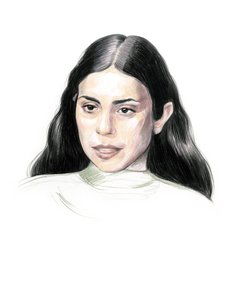
Ana Mendieta
1948 - 1985